


Toothpaste from China containing the toxic chemical diethylene glycol turned up in a toiletry kit provided by a Jhonghe (中和)hotel, the Bureau of Standards, Metrology and Inspection (BSMI) said yesterday.
"We found that the toothpaste sample contained as much as 4 percent diethylene glycol," Wang Cheng-huei (
There have been a series of incidents involving diethylene-glycol-tainted toothpastes from China in recent months. The tainted product has surfaced in the US, Costa Rica, Panama and Australia.
However, this is the first time that tainted toothpaste from China has been found in Taiwan.
Wang said the hotel involved was the Jhonghe branch of the Four Points by Sheraton, while the supplier was Mei Li Mei Corp (
seized
More than 1,500 single-use tubes of the toxic toothpaste were seized at the hotel, Wang said. Many more tubes have most likely already been used by guests, he said.
Diethylene glycol is a toxic, industrial chemical that is used in antifreeze. Its chemical properties are similar to glycerine, which is frequently used in toothpaste as a thickening agent.
The use of diethylene glycol in toothpaste is banned in Taiwan.
Although consumption of diethylene glycol is potentially lethal and has caused fatalities in past incidents involving tainted cough syrup, Wang urged the public not to panic.
"We have tested every single toothpaste on the market from China on multiple occasions," Wang said. "We've not yet found any violations [of the ban] until now."
Toothpaste used in toiletry kits may have lower standards, Wang said.
negative publicity
"But I am sure that both the hotel and the supplier will be extra vigilant in the future regarding their sources," Wang said. "The negative publicity is bad for business."
Authorities asked 57 hotels for samples of the toothpaste they provide in their rooms. Forty-seven hotels provided toothpaste samples for the tests, while 10 declined to give samples.
Only the sample from Four Points by Sheraton contained excessive amounts of diethylene glycol.
However, neither the hotel nor the hotel's supplier will face penalties. Nor can the BSMI require hotels to provide toothpaste samples.
"Since it is offered as a gift rather than an item for sale, the hotel [has the right to decline or] agree to provide a sample," Wang said.
Wang said that travelers are advised to bring their own toothpaste when they stay at hotels.

Yangmingshan National Park authorities yesterday urged visitors to respect public spaces and obey the law after a couple was caught on a camera livestream having sex at the park’s Qingtiangang (擎天崗) earlier in the day. The Shilin Police Precinct in Taipei said it has identified a suspect and his vehicle registration number, and would summon him for questioning. The case would be handled in accordance with public indecency charges, it added. The couple entered the park at about 11pm on Thursday and began fooling around by 1am yesterday, the police said, adding that the two were unaware of the park’s all-day live
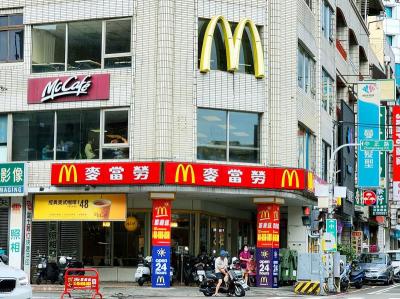
Fast food chain McDonald's is to raise prices by up to NT$5 on some products at its restaurants across Taiwan, starting on Wednesday next week, the company announced today. The prices of all extra value meals and sharing boxes are to increase by NT$5, while breakfast combos and creamy corn soup would go up by NT$3, the company said in a statement. The price of the main items of those meals, if ordered individually, would remain the same. Meanwhile, the price of a medium-sized lemon iced tea and hot cappuccino would rise by NT$3, extra dipping sauces for chicken nuggets would go up
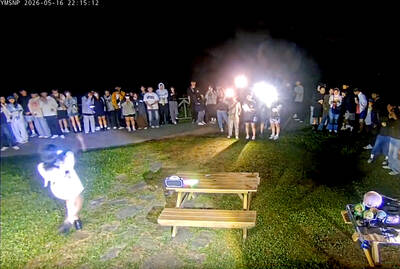
Yangmingshan National Park’s Qingtiangang (擎天崗) nature area has gone viral after a park livestream camera observed a couple in the throes of intimate congress, which was broadcast live on YouTube, drawing large late-night crowds and sparking a backlash over noise, bright lights and disruption to wildlife habitat. The area’s livestream footage appeared to show a couple engaging in sexual activity on a picnic table in the park on Friday last week, with the uncensored footage streamed publicly online. The footage quickly spread across social media, prompting a tide of visitors to travel to the site to “check in” and recreate the

Minister of Digital Affairs Lin Yi-ching (林宜敬) yesterday cited regulatory issues and national security concerns as an expert said that Taiwan is among the few Asian regions without Starlink. Lin made the remarks on Facebook after funP Innovation Group chief executive officer Nathan Chiu (邱繼弘) on Friday said Taiwan and four other countries in Asia — China, North Korea, Afghanistan and Syria — have no access to Starlink. Starlink has become available in 166 countries worldwide, including Ukraine, Malaysia, the Philippines and Vietnam, in the six years since it became commercial, he said. While China and North Korea block Starlink, Syria is not


 RSS
RSS