


Mosses and liverworts are everywhere in Taiwan, adding color and interest to both the most mundane and the most extreme of habitats.
A survey of the nation's flora over two years, conducted by a research team at the Council of Agriculture's Endemic Species Research Institute, has revealed that the country is home to a wide variety of moss and liverwort species, with more than 1,500 different species identified.
Some of the nation's species are rare globally, while others are found in isolated pockets in only a few regions, a researcher said yesterday.
Yang Chia-tung (楊嘉棟) said the institute launched a six-year moss and liverwort species survey project in 2005 and that the first phase of the research had recently been completed.
Over the past two years, Yang said, the research team has collected more than 3,000 moss and liverwort specimens. An analysis of those samples reveals that Taiwan has more than 1,500 moss and liverwort species, comparable to the number documented in Japan, which is famous for its flora conservation efforts, he said.
An especially encouraging finding is that Taiwan is home to 300 moss and liverwort species listed as rare, Yang said, adding that 150 of them are only found in Taiwan.
Since Taiwan's land area is only a quarter of that of Japan, Yang said, Taiwan is a world leader in terms of moss and liverwort diversity and density.
Mosses and liverworts are classified as bryophytes. They are usually green and small and are among the simplest of land-dwelling plants. Only a few species are aquatic.
Bryophytes lack some of the complex structures seen in other types of plants. For example, they do not produce flowers or seeds and most have no internal means for transporting water or nutrients. Most are confined to damp, sheltered areas.
Bryophytes have "an important and subtle ecological role, both in water-retention and the stabilization of mobile surfaces, such as landslips, scree slopes and sand dunes," Yang said.
Examination of any handful of moss will also reveal another important ecological role. These simplest of plants provide shelter and humidity for a remarkable diversity of tiny invertebrates, Yang said, adding that this constituted an integral part of the food chain in many important habitats.
Among the rare moss species found in Taiwan is the Riccio carpos, Yang said. In most areas around the world, this strain can now only grow in greenhouses with attentive care. The species is found in the wetlands of Puli Township (
An even more precious liverwort species is Takaki, which flourishes on the northern peak of Yushan at an elevation of more than 3,000m. Takaki is considered a "living fossil" because it has existed for tens of millions of years. The species can now only be found in a few isolated pockets across the globe at high altitudes, Yang said.
Another rare liverwort species found in certain mountainous areas is Lejeuneaceae, which usually grows on tree leaves, he said.
With its abundance in moss and liverwort species, Taiwan has emerged as a "hot spot" for the study and appreciation of bryophytes, Yang said.
A botanical garden in Missouri sent research fellows to Taiwan last year to collect bryophyte specimens. They returned to the US with more than 400 moss and liverwort specimens for display at their exhibition hall.
"Many nature science museums in Japan have also sent personnel to Taiwan to collect moss and liverwort specimens, and they have often been amazed by Taiwan's biodiversity," Yang said.
However, Taiwanese are unaware of this unusual variety of species, Yang said.
Industrial development, air and water pollution, as well as global warming are all threatening the survival of many moss and liverwort species, he said.
Yang said the Council of Agriculture was planning to review its Red Book of threatened wildlife species next year, including certain rare moss and liverwort species.

Trips for more than 100,000 international and domestic air travelers could be disrupted as China launches a military exercise around Taiwan today, Taiwan’s Civil Aviation Administration (CAA) said yesterday. The exercise could affect nearly 900 flights scheduled to enter the Taipei Flight Information Region (FIR) during the exercise window, it added. A notice issued by the Chinese Civil Aviation Administration showed there would be seven temporary zones around the Taiwan Strait which would be used for live-fire exercises, lasting from 8am to 6pm today. All aircraft are prohibited from entering during exercise, it says. Taipei FIR has 14 international air routes and
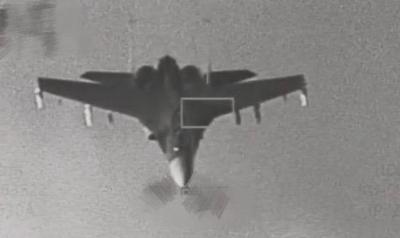
The Ministry of National Defense (MND) today released images of the military tracking China’s People's Liberation Army (PLA) movements during the latest round of Chinese drills around Taiwan. The PLA began "Justice Mission 2025" drills today, carrying out live-fire drills, simulated strikes on land and maritime targets, and exercises to blockade the nation's main ports. The exercises are to continue tomorrow, with the PLA announcing sea and air space restrictions for five zones around Taiwan for 10 hours starting from 8:30am. The ministry today released images showing a Chinese J-16 fighter jet tracked by a F-16V Block 20 jet and the

Snow fell on Yushan (Jade Mountain, 玉山) yesterday morning as a continental cold air mass sent temperatures below freezing on Taiwan’s tallest peak, the Central Weather Administration (CWA) said. Snowflakes were seen on Yushan’s north peak from 6:28am to 6:38am, but they did not fully cover the ground and no accumulation was recorded, the CWA said. As of 7:42am, the lowest temperature recorded across Taiwan was minus-5.5°C at Yushan’s Fengkou observatory and minus-4.7°C at the Yushan observatory, CWA data showed. On Hehuanshan (合歡山) in Nantou County, a low of 1.3°C was recorded at 6:39pm, when ice pellets fell at Songsyue Lodge (松雪樓), a
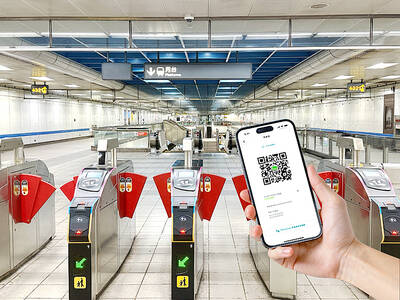
City buses in Taipei and New Taipei City, as well as the Taipei MRT, would on Saturday begin accepting QR code payments from five electronic payment providers, the Taipei Department of Transportation said yesterday. The new option would allow passengers to use the “transportation QR code” feature from EasyWallet, iPass Money, iCash Pay, Jkopay or PXPay Plus. Passengers should open their preferred electronic payment app, select the “transportation code” — not the regular payment code — unlock it, and scan the code at ticket readers or gates, General Planning Division Director-General Liu Kuo-chu (劉國著) said. People should move through the


 RSS
RSS