


After a decade of being paralyzed, Hong Cheng-chin (洪正清) and his wife Hsieh Mei-yun (謝美雲) almost gave up hope of having children.
Last year, however, with the help of reproduction technology offered at National Taiwan University Hospital, the couple -- who are both paralyzed and confined to wheelchairs -- had a baby girl and became the nation's first paralyzed couple to rear a child.
Doctors at the National Taiwan University Hospital employed in vitro fertilization as an alternative to Hong's fertility problems. The major hurdle, doctors said, was collecting sperm from the paraplegia-inflicted husband. The couple is able to have intercourse but Hong is unable to ejaculate.
"Spinal cord injuries in adult males often lead to erectile dysfunction or difficulty ejaculating," said Wang Yen-ho (王顏和), a physician at NTU Hospital.
"Unlike females, who can resume egg production after three or six months after a spinal cord injury, about 76 percent of the males who are paralyzed cannot ejaculate during intercourse," Wang said.
To collect semen from Hong, Wang applied a series of short, low-voltage electric pulses to Hong's pelvic nerves, which induced ejaculation. Using this method, called "electroejaculation," doctors successfully collected 0.4cc of semen.
Then gynecologists injected the extracted sperm to Hsieh's egg and put fertilized embryo to her uterus.
"We performed intracytoplasmic sperm injection to allow the sperm to directly enter the egg," said Chen Shee-uan (陳思原), the gynecologist at NTU Hospital, who helped the couple conceive.
"In the case where sperm has problems penetrating the egg, this method results in fertilization success rates equal to or higher than normal," Chen said.
Over the past decade, 14 couples where the male was paralyzed have used this reproduction technology to increase their chances of conception. Twelve of the 14 couples were successful.
This couple, however, will be the nation's first in which both the male and female are paralyzed were to successfully have a child. Their case will be published in the US medical journal, the Archive of Physical Medicine and Rehabilitation, according to Chen.
For Hsieh, having a child is a long-awaited dream.
"After the accident, I thought I would never have the chance to fulfill my dream of having a family," she said.
Hsieh became paralyzed when fell from her apartment when she was 24 years old. Even when she met her husband, who also became paralyzed at the age of 24, Hsieh still thought that a wheelchair-bound couple would never experience the bliss of raising children.
Yet after five years of marriage, the Hongs decided to try artificial reproduction at NTU hospital. Now their baby is 11 months old.
"We realized that wheelchair-bound people actually have a lot in common with healthy, normal people. We can still live our lives the way we want," Hong said.


China has reserved offshore airspace in the Yellow Sea and East China Sea from March 27 to May 6, issuing alerts usually used to warn of military exercises, although no such exercises have been announced, the Wall Street Journal (WSJ) reported yesterday. Reserving such a large area for 40 days without explanation is an “unusual step,” as military exercises normally only last a few days, the paper said. These alerts, known as Notice to Air Missions (Notams), “are intended to inform pilots and aviation authorities of temporary airspace hazards or restrictions,” the article said. The airspace reserved in the alert is

More than 6,000 Taiwanese students have participated in exchange programs in China over the past two years, despite the Mainland Affairs Council’s (MAC) “orange light” travel advisory, government records showed. The MAC’s publicly available registry showed that Taiwanese college and university students who went on exchange programs across the Strait numbered 3,592 and 2,966 people respectively. The National Immigration Agency data revealed that 2,296 and 2,551 Chinese students visited Taiwan for study in the same two years. A review of the Web sites of publicly-run universities and colleges showed that Taiwanese higher education institutions continued to recruit students for Chinese educational programs without

A bipartisan group of US senators has introduced a bill to enhance cooperation with Taiwan on drone development and to reduce reliance on supply chains linked to China. The proposed Blue Skies for Taiwan Act of 2026 was introduced by Republican US senators Ted Cruz and John Curtis, and Democratic US senators Jeff Merkley and Andy Kim. The legislation seeks to ease constraints on Taiwan-US cooperation in uncrewed aerial systems (UAS), including dependence on China-sourced components, limited access to capital and regulatory barriers under US export controls, a news release issued by Cruz on Wednesday said. The bill would establish a "Blue UAS
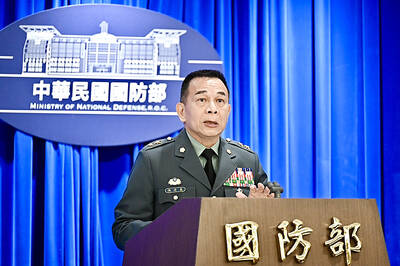
The Republic of China Army Command yesterday relieved Kinmen Defense Battalion commander after authorities indicted the officer on charges connected to using methamphetamine. The Kinmen District Prosecutors’ Office on Wednesday detained Colonel He (何) after the Coast Guard linked him to drug shipments and proceeded to charge him yesterday for using and possessing crystal meth. The man was released on a NT$50,000 bail and banned from leaving Kinmen, the office said. Army Chief of Staff Lieutenant General Chen Chien-yi (陳建義) told a news conference yesterday that He has been removed and another officer is taking over the unit as the acting commander. The military


 RSS
RSS