


Members of the Control Yuan yesterday reprimanded the Government Information Office (GIO) for a procedural flaw after the office implemented a plan to promote government policies by cooperating with local media.
"The GIO improperly implemented a plan to place propaganda in the media because the plan was not approved by the Cabinet," the Control Yuan report stated.
The office made a procedural flaw by obtaining the final confirmation from the Cabinet, according to the investigation report released yesterday.
Instead of entitling all of the government departments to purchase the air time and advertising space in the media to promote their own individual policies and achievements, the GIO had modified the traditional practice by combining all departmental promotional budgets to undertake a single annual bulk purchase of media spots.
The total budget for the plan was NT$1.1 billion, which the GIO said would entitle the government to effectively bargain with media organizations for optimal air time and advertising space.
The fund covers a NT$200-million promotion, which was scheduled to run between April 1 and June 30, and NT$900 million more for promotions running from July till next March.
Four local TV stations and one marketing consultation company were selected to help the GIO popularize government policies and integrate these ideas into TV soap operas and commercials.
"By not reporting to the Cabinet, the GIO obviously violated the Cabinet's instructions," the Control Yuan investigation stated.
The GIO was also reprimanded for shirking its responsibility of replying to the Legislative Yuan when lawmakers on the Education and Cultural Affairs Committee asked for a presentation of the details of the Executive Yuan's budget for the projects.
The GIO must take into account why it delayed its response to the Legislative Yuan's request because the office only offered a response on the last day of a five-day deadline set by lawmakers. The response, moreover, was nothing more than a note that the GIO could not give any details of the budgetary plan because it had already commissioned the Central Trust of China (
"The deed was improper and revealed a disregard for the legislature's power," Control Yuan members concluded.
The investigation paper nevertheless reasoned that the GIO's actions were within the limits of the law. The verdict exonerates the GIO from the accusations of some opposition lawmakers' speculation that the budgetary plan violated the Budgetary Law (預算法) and the Government Procurement Law (政府採購法).
"The Control Yuan members' opinion was accepted by the office," said Director-General of GIO Huang Hui-chen (黃輝珍) in response to the official correction.
Stressing that the plan was initiated in the hope of saving governmental expenditure and achieving better efficiency, Huang said his office will review the procedure.
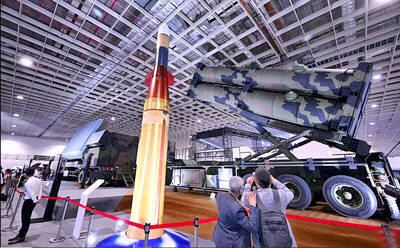
Taiwan is to commence mass production of the Tien Kung (天弓, “Sky Bow”) III, IV and V missiles by the second quarter of this year if the legislature approves the government’s NT$1.25 trillion (US$39.78 billion) special defense budget, an official said yesterday. Commenting on condition of anonymity, a defense official with knowledge of the matter said that the advanced systems are expected to provide crucial capabilities against ballistic and cruise missiles for the proposed “T-Dome,” an advanced, multi-layered air defense network. The Tien Kung III is an air defense missile with a maximum interception altitude of 35km. The Tien Kung IV and V
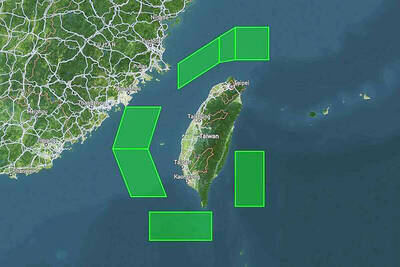
The disruption of 941 flights in and out of Taiwan due to China’s large-scale military exercises was no accident, but rather the result of a “quasi-blockade” used to simulate creating the air and sea routes needed for an amphibious landing, a military expert said. The disruptions occurred on Tuesday and lasted about 10 hours as China conducted live-fire drills in the Taiwan Strait. The Civil Aviation Administration (CAA) said the exercises affected 857 international flights and 84 domestic flights, affecting more than 100,000 travelers. Su Tzu-yun (蘇紫雲), a research fellow at the government-sponsored Institute for National Defense and Security Research, said the air
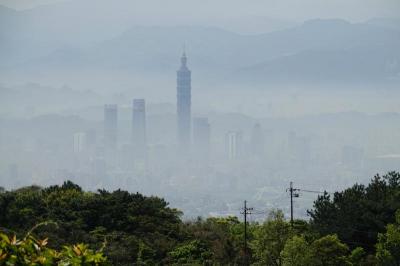
A strong continental cold air mass is to bring pollutants to Taiwan from tomorrow, the Ministry of Environment said today, as it issued an “orange” air quality alert for most of the country. All of Taiwan except for Hualien and Taitung counties is to be under an “orange” air quality alert tomorrow, indicating air quality that is unhealthy for sensitive groups. In China, areas from Shandong to Shanghai have been enveloped in haze since Saturday, the ministry said in a news release. Yesterday, hourly concentrations of PM2.5 in these areas ranged from 65 to 160 micrograms per cubic meter (mg/m³), and pollutants were
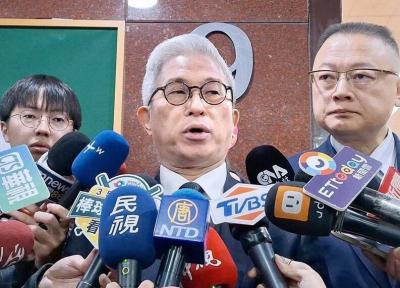
Taiwan’s armed forces have established response protocols for a wide range of sudden contingencies, including the “Wan Chun Plan” to protect the head of state, the Ministry of Defense (MND) said today. After US President Donald Trump on Saturday launched a series of airstrikes in Venezuela and kidnapped Venezuelan President Nicolas Maduro, concerns have been raised as to whether China would launch a similar “decapitation strike” on Taiwan. The armed forces regularly coordinate with relevant agencies and practice drills to ensure preparedness for a wide range of scenarios, Vice Minister of National Defense Hsu Szu-chien (徐斯儉) told reporters before a


 RSS
RSS