


In a bid to preserve the Hokkien language, educators yesterday urged the Ministry of Education to tightly regulate Hokkien textbooks for elementary and junior high schools.
"This is an important way to ensure that our students are building their Hokkien language ability on correct linguistic foundations and not on some loose and inconsistent basis," said Chu Yuan-kai (
Hokkien (河洛語), the language of the southern region of Fujian Province -- more commonly known as Min Nan Hua (閩南話) or Taiwanese -- is the first language of about 14.35 million people in Taiwan, or 67 percent of the population.
"As the Ministry of Education encourages national schools to dedicate themselves to promoting Taiwan-oriented values by teaching Hokkien in their curriculums, it is quite important to make sure that the language is being taught and learned correctly," Chu said.
According to Chu, schools offer a freestyle Hokkien curriculum, "meaning that teachers of Hokkien are free to get their teaching and classroom materials from the general market."
"However, most of the Hokkien writing publications we came across on the market nowadays use various incorrect and inconsistent styles," Chu said.
Writing of Hokkien has been distorted during this past century because of Japan's colonization and then the KMT's rule, during which the use of Hokkien was discouraged or banned, Chu said.
"The correct way to write Hokkien, which is made up of 15 consonant sounds and 30 vowel sounds, is to use Chinese characters to spell out every Hokkien syllable," Chu said.
"So using romanization or direct Chinese characters to represent the Hokkien sounds, or a combination of the English alphabet and Chinese characters are all incorrect," he said.
Chu added that all these incorrect methods of Hokkien writing have distorted the original essence of Hokkien writing.
Chu called on the Ministry of Education to canvass Hokkien linguistic specialists to compile standard classroom Hokkien materials.
"Only by ensuring students are building their Hokkien language on a correct basis will it help the government's efforts in enhancing the promotion and preservation of Taiwanese culture," Chu said.
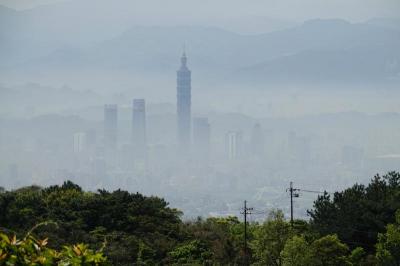
A strong continental cold air mass is to bring pollutants to Taiwan from tomorrow, the Ministry of Environment said today, as it issued an “orange” air quality alert for most of the country. All of Taiwan except for Hualien and Taitung counties is to be under an “orange” air quality alert tomorrow, indicating air quality that is unhealthy for sensitive groups. In China, areas from Shandong to Shanghai have been enveloped in haze since Saturday, the ministry said in a news release. Yesterday, hourly concentrations of PM2.5 in these areas ranged from 65 to 160 micrograms per cubic meter (mg/m³), and pollutants were
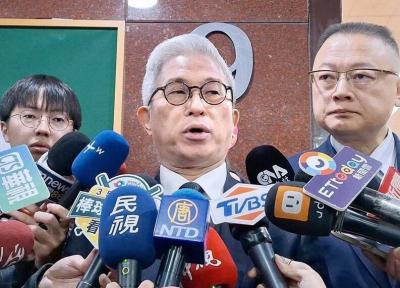
Taiwan’s armed forces have established response protocols for a wide range of sudden contingencies, including the “Wan Chun Plan” to protect the head of state, the Ministry of Defense (MND) said today. After US President Donald Trump on Saturday launched a series of airstrikes in Venezuela and kidnapped Venezuelan President Nicolas Maduro, concerns have been raised as to whether China would launch a similar “decapitation strike” on Taiwan. The armed forces regularly coordinate with relevant agencies and practice drills to ensure preparedness for a wide range of scenarios, Vice Minister of National Defense Hsu Szu-chien (徐斯儉) told reporters before a
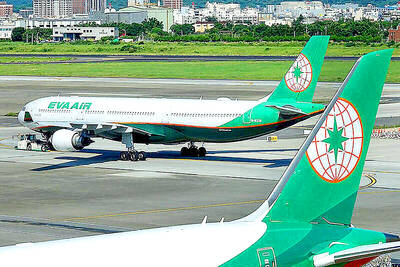
EVA Airways on Saturday said that it had suspended a pilot and opened an investigation after he allegedly lost his temper and punched the first officer several times as their plane was taxiing before takeoff at Los Angeles International Airport. According to a report published on Thursday by The Reporter, the incident occurred after the flight’s Malaysian first officer tried to warn the Taiwanese pilot, surnamed Wen (文), that he was taxiing faster than the speed limit of 30 knots (55.6kph). After alerting the pilot several times without response, the first officer manually applied the brakes in accordance with standard operating
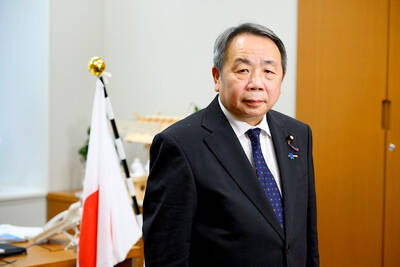
Japanese Councilor Hei Seki (石平) on Wednesday said that he plans to visit Taiwan, saying that would “prove that Taiwan is an independent country and does not belong to China.” Seki, a member of the Japan Innovation Party, was born in Chengdu in China’s Sichuan Province and became a naturalized Japanese in 2007. He was elected to the House of Concilors last year. His views on the Chinese Communist Party (CCP) — espoused in a series of books on politics and history — prompted Beijing to sanction him, including barring Seki from traveling to China. Seki wrote on X that he intends


 RSS
RSS