


To understand what made boxing legend Muhammad Ali tick, it helps to look at the history of his hometown Louisville, Kentucky, and the roiling social turmoil of his childhood in the segregated US south.
Ali, who was born in 1942, came of age in the 1950s. Dwight Eisenhower was US president and young Cassius Clay lived at 3302 Grand Avenue in the Kentucky city.
It was a middle class part of town, with lawyers and doctors living among the regular working folks. It was also a mainly black neighborhood.
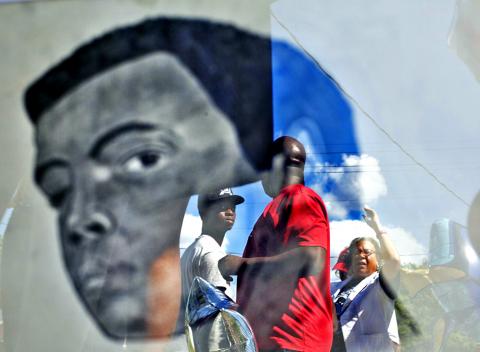
Photo: AP
The Clay house was a modest one. The family was quite proud of a fish pond they had in the backyard.
The future three-time heavyweight champion of the world shared a bedroom with his younger brother, Rudolph Valentino Clay. Their parents slept in the only other bedroom in the house.
Ali’s father, a sign painter, was known for his artistic abilities. His mother was loving and showed it, neighbors say.
Cassius and Rudy Clay were raised in the Baptist faith. Only later would they be known as Muhammad and Rahman Ali.
The brothers were best friends, loved eating ice cream and were noticed in their all-black school for being bigger than the other kids.
Racial segregation was a fact of life for the pair, but at their young age, they learned to adapt.
“Black people were not equal to white people in those days,” said Rahman Ali, now 72. “We mixed with our own kind. That’s how things were at that time.”
In the middle of the 20th century, the economy in Louisville — the largest city in the southern US state of Kentucky, the home of bourbon — was bouncing back from the difficulties sparked by Prohibition.
The place to see and be seen in Louisville was Fourth Street, the liveliest in town, and where the city’s high society went to window shop.
Bars and restaurants on the street were strictly whites only. Blacks often crossed the street to the other side to avoid being called “negro” — or worse.
“In some of the stores, you couldn’t try on clothes, you couldn’t sit at the lunch counters and eat,” said Joanna Smith, one of Ali’s high school classmates. “If you went to a shop and paid your money, you didn’t try the clothes, you just hoped that they fit you.”
In Louisville, as in many other US cities at the time, blacks had to sit in the back of buses and train cars, and drink at separate water fountains labeled “Colored.”
The local celebrity at the time was Colonel Harland Sanders, a restaurant owner whose face is still part of the logo for the fast-food chain Kentucky Fried Chicken (KFC).
Smith, a school principal who is now retired, relayed the story of one particularly humiliating day when she was six or seven years old, and was walking up to Fourth Street with her older sister.
“I can remember going to McCrory’s, that was a five-and-dime store. I was so tired so my sister picked me up and sat me on a stool and somebody said: ‘She shouldn’t sit here,’” she said.
McCrory’s has since closed its doors. So has Stewart’s Dry Goods, once the city’s largest department store. In the 1950s, its elegant Orchid Tea Room was quite popular. White women had lunch there, in hats and gloves.
Farther south on the street was the Brown Hotel, where former British prime minister David Lloyd George was the first to sign the guest register in 1923. Generations of whites danced under its crystal chandeliers.
In 1928, the Loew’s Theater opened on Fourth Street, with a magnificent multicolored rococo facade. It, too, was only for whites.
The list goes on. Fontaine Ferry Park, with its skating rink and wooden roller coasters? No blacks allowed. The Walgreens drugstore? Same thing.
What must the young Cassius — entering his teens — have been thinking? We know at least one of his dreams at the time — to own a red Schwinn bicycle.
He eventually got one, but it was stolen soon thereafter.
Cassius, disgusted, went to see police.
He spoke to officer Joe Martin, promising that he would “whup” the thief.
Martin, who was the head of boxing for the city’s recreation department, urged Cassius to come learn to box at the Columbia Gym.
And such was the start of a storied career.
Cassius started getting up at 5am to run in Chickasaw Park, the only public park open to blacks. He tested his sprinting skills against city buses. Nothing would stop him from being “The Greatest.”
However, he was marked by a childhood lived in the shadow of whites.
“Everything good and with authority is white,” Ali once said. “I want a dip of chocolate and a dip of vanilla, and I bet you a thousand to one, that every time, they put the chocolate on the bottom and the vanilla on the top.”
Sixty-two years after the theft of that red Schwinn, the US’ first black president is in the White House. Louisville made peace with its segregationist past, and blacks and whites will come together today to bid farewell to Ali, The Champ for all.


“I don’t remember the moment, but ever since I was a kid, that’s the first thing I loved,” two-time NBA All-Star Isaiah Thomas said of his lifelong romance with basketball. However, that journey unfolded against the limitations of his size in a game where height often dictates opportunity — a reality he confronted throughout his career. At 175cm, Thomas is less than 2cm taller than the average Taiwanese adult male, while NBA players during his career stood at about 200cm on average. Compared with the NBA’s average career length of less than five years, Thomas’ 13-season career stands out as

Hans Niemann declares he would become a “stone cold killer” in a Netflix documentary released on Tuesday about his feud with five-time classical world champion Magnus Carlsen, a pledge that injects new edge into the lingering fallout from the cheating scandal that shook elite chess. “I’m gonna be a stone cold killer the rest of my life,” the US’ Niemann says in the film. “I’m going to become the best player in the world, and no one is going to believe that now, but this clip will play over and over again in 10 years — just wait.” “I just
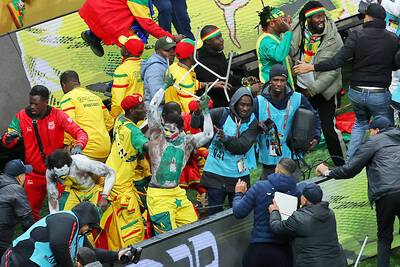
Dakar and Rabat have longstanding ties, but relations have been strained since the Africa Cup of Nations (AFCON) final, which Senegal won in mid-January before being stripped of the title, which was transferred to Morocco. Now, the AFCON trophy is something of a thorn in the two countries’ sides. On Rue Mohamed V, the street where Moroccan vendors are based in the Senegalese capital, a police van is parked. “The police have been on high alert since the Confederation of African Football [CAF] decided to award the title to Morocco, but there have been no incidents,” a local resident said.
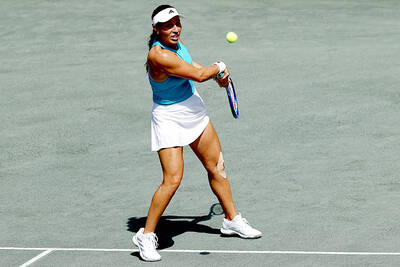
Top seeded Jessica Pegula on Friday once again fought back from a set down to reach the WTA Charleston Open semi-finals with a 3-6, 6-3, 6-2 win against Russia’s Diana Shnaider. Defending champion Pegula has lost the first set in all three of her matches at the tournament so far, but again dug deep to maintain her hopes of retaining the title. The world No. 5 from the US took 2 hours, 10 minutes to defeat 19th-ranked Shnaider, relying on a formidable service game that included eight aces. Shnaider battled well in the first two sets and broke early for a 2-0 lead


 RSS
RSS