


The Taijimen Victims Self-help Association (太極門受害者自救會) yesterday claimed that there may have been an exchange of services between Vice President Annette Lu (呂秀蓮) and Hong Shih-ho (
The association held a press conference yesterday afternoon before members of the Tai Ji Men Qigong Academy were to perform at the Global Peace Assembly.
The association is comprised of former disciples of the academy who claim to have been cheated by it. Association members said the funds for the forum had been largely donated by Hong, also known as Hong Tao-tze (
He was indicted by the Taipei District Prosecutors' Office for fraud and tax evasion in 1997 and is currently on trial.
Some 1,800 people accused Hong of taking money from them while they were studying with him.
Chu Hui-ying (
She believes that the peace forum was actually initiated by Hong. However, she did not present evidence to support the allegations.
"Lu's presence in the Assembly will mislead the public into believing it's a legitimate group and this may influence the judicial process," Chu said."They [Hong and academy collegues] are attempting to erase their disgraced image by frequent contact with celebrities and politicians in order to influence their trial."
The association's claim was denied by the vice president's office, which said the funds had been raised by Lu and that it hadnot received any donations from Hong.
A Lu aide, Edward Kuo (
He said Hong was only participating in the forum because he had invited some of the foreign guests.

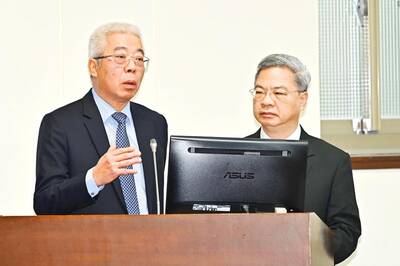
Taiwan has arranged for about 8 million barrels of crude oil, or about one-third of its monthly needs, to be shipped from the Red Sea this month to bypass the Strait of Hormuz and ease domestic supply pressures, CPC Corp, Taiwan (CPC, 台灣中油) said yesterday. The state-run oil company has worked with Middle Eastern suppliers to secure routes other than the Strait of Hormuz, through which about 20 percent of the world’s oil and liquefied natural gas typically passes, CPC chairman Fang Jeng-zen (方振仁) said at a meeting of the legislature’s Economics Committee in Taipei. Suppliers in Saudi Arabia have indicated they
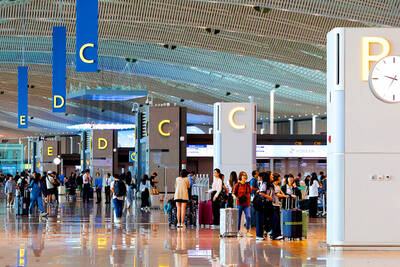
South Korea has adjusted its electronic arrival card system to no longer list Taiwan as a part of China, a move that the Ministry of Foreign Affairs said would help facilitate exchanges between the two sides. South Korea previously listed “Taiwan” as “Taiwan (China)” in the drop-down menus of its online arrival card system, where people had to fill out where they came from and their next destination. The ministry had requested South Korea make a revision and said it would change South Korea’s name on Taiwan’s online immigration system from “Republic of Korea” to “Korea (South),” should the issue not be

Tainan, Taipei and New Taipei City recorded the highest fines nationwide for illegal accommodations in the first quarter of this year, with fines issued in the three cities each exceeding NT$7 million (US$220,639), Tourism Administration data showed. Among them, Taipei had the highest number of illegal short-term rental units, with 410. There were 3,280 legally registered hotels nationwide in the first quarter, down by 14 properties, or 0.43 percent, from a year earlier, likely indicating operators exiting the market, the agency said. However, the number of unregistered properties rose to 1,174, including 314 illegal hotels and 860 illegal short-term rental
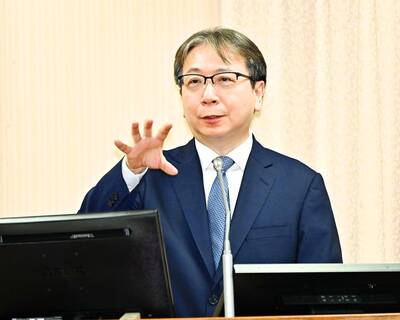
AIR ALERT: China’s reservation of airspace over the Yellow Sea and East China Sea could be an attempt to test the US’ response ahead of a Trump-Xi meeting, the NSB head said China’s attempts to infiltrate Taiwan are systematic, planned and targeted, with activity shifting from recruiting mid-level military officers to rank-and-file enlisted personnel, National Security Bureau (NSB) Director-General Tsai Ming-yen (蔡明彥) said yesterday. The Chinese Communist Party’s (CCP) integrates national security, intelligence operations and “united front” efforts into a dense network to conduct intelligence gathering and espionage in Taiwan, Tsai said at a meeting of the legislature’s Foreign Affairs and National Defense Committee. It uses specific networks to screen targets through exchange activities and recruiting local collaborators to establish intelligence-gathering organizations, he said. China is also shifting who it targets to lower-ranking military personnel,


 RSS
RSS