


Head of the Hone Shee Group (
Chang, whose group built the luxurious Ta Shee Resort (大溪山莊) in 1987, was accused of illegal occupation by the grandchildren of a Taoyuan County land owner, Huang Shih-chiao (黃師樵), who claims rights to the plots of land on which the entrance to the resort was built.
Ta Shee Resort, situated in Taoyuan County, is one of the nation's most exclusive golf club resorts, attracting notable figures and political leaders such as former president Lee Teng-hui (李登輝) and KMT Chairman Lien Chan (連戰).
The Huang family heir said Hone Shee built the entrance to its Ta Shee Resort in 1993 on plots of land that belonged to them, without authorization from the family.
Inheriting the disputed land in 1999, Huang's two grandsons and a granddaughter are now suing Chang for illegal occupation and are also seeking civil compensation from the developer.
Testifying at the first hearing of the case at Taipei District Court yesterday, Chang insisted he had obtained a written agreement to use the land, as early as 1987, from the original owners of the land -- the plaintiffs' grandfather and another land owner, Chiang Shih-pi (江石筆).
Chiang said he had managed to negotiate with the plaintiffs' father over use of the land after their grandfather died. He said he believed the Huang family and Hon Shee had reached a "consensus" over the use of the land, as both parties seemed satisfied with the situation for the last 10 years.
He also argued Hon Shee had wanted to purchase the land, with the agreement of the Huang family. But, he said, the deal had been deadlocked due to inheritance problems over the land.
The Huang family lawyer, however, said the family denied they had reached any sort of "consensus" over Hon Shee's occupation of the land and that the land dispute had been ongoing.
The plaintiffs also said Chang was lying about the agreement he said he obtained from the family's grandfather and asked him to show an original copy of the agreement as proof.
They said that while Chang claimed he obtained the agreement in 1987, the family's grandfather had in fact been dead since around 1980 and couldn't have possibly signed the agreement.
The Huang family also accused Chang of forgery as they said he had used a "forged" agreement to gain permission from Taoyuan authorities in 1988 to build on the land.
Aside from filing the suit against Chang in August, the Huangs are also seeking damages through a civil suit, and have asked Hone Shee to return profits that it acquired from "unlawful" use of the family's land over the past years. The trial continues.

CREDIT-GRABBER: China said its coast guard rescued the crew of a fishing vessel that caught fire, who were actually rescued by a nearby Taiwanese boat and the CGA Maritime search and rescue operations do not have borders, and China should not use a shipwreck to infringe upon Taiwanese sovereignty, the Coast Guard Administration (CGA) said yesterday. The coast guard made the statement in response to the China Coast Guard (CCG) saying it saved a Taiwanese fishing boat. The Chuan Yu No. 6 (全漁6號), a fishing vessel registered in Keelung, on Thursday caught fire and sank in waters northeast of Diaoyutai Islands (釣魚台). The vessel left Keelung’s Badouzih Fishing Harbor (八斗子漁港) at 3:35pm on Sunday last week, with seven people on board — a 62-year-old Taiwanese captain surnamed Chang (張) and six
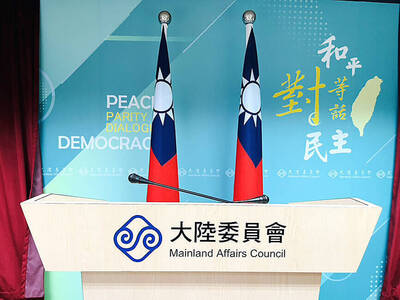
RISKY BUSINESS: The ‘incentives’ include initiatives that get suspended for no reason, creating uncertainty and resulting in considerable losses for Taiwanese, the MAC said China’s “incentives” failed to sway sentiment in Taiwan, as willingness to work in China hit a record low of 1.6 percent, a Ministry of Labor survey showed. The Directorate-General of Budget, Accounting and Statistics (DGBAS) also reported that the number of Taiwanese workers in China has nearly halved from a peak of 430,000 in 2012 to an estimated 231,000 in 2024. That marked a new low in the proportion of Taiwanese going abroad to work. The ministry’s annual survey on “Labor Life and Employment Status” includes questions respondents’ willingness to seek employment overseas. Willingness to work in China has steadily declined from

The Legislative Yuan’s Finance Committee yesterday approved proposed amendments to the Amusement Tax Act (娛樂稅法) that would abolish taxes on films, cultural activities and competitive sporting events, retaining the fee only for dance halls and golf courses. The proposed changes would set the maximum tax rate for dance halls and golf courses at 50 and 20 percent respectively, with local governments authorized to suspend the levies. Article 2 of the act says that “amusement tax shall be levied on tickets sold or fees charged by amusement places, facilities or activities” in six categories: “Cinema; professional singing, story-telling, dancing, circus, magic show, acrobatics
INFLATION UP? The IMF said CPI would increase to 1.5 percent this year, while the DGBAS projected it would rise to 1.68 percent, with GDP per capita of US$44,181 The IMF projected Taiwan’s real GDP would grow 5.2 percent this year, up from its 2.1 percent outlook in January, despite fears of global economic disruptions sparked by the US-Iran conflict. Taiwan’s consumer price index (CPI) is projected to increase to 1.5 percent, while unemployment would be 3.4 percent, roughly in line with estimates for Asia as a whole, the international body wrote in its Global Economic Outlook Report published in the US on Monday. The figures are comparatively better than the IMF outlook for the rest of the world, which pegged real GDP growth at 3.1 percent, down from 3.3 percent


 RSS
RSS