


Taiwan's growing unemployment is expected to rise further according to predictions from the Council of Labor Affairs (CLA, 勞委會) based on the government's most recent statistics.
According to the Directorate-General of Budget, Accounting and Statistics (DGBAS, 主計處), the national unemployment rate in August was 3.16 percent, higher than the average rate of 2.89 percent from January to August this year, while the number of unemployed was estimated as 311,000 for August.
DGBAS statistics show that unemployment has doubled over the past 10 years.
Adding to the unemployment problem is the rise in the average duration of unemployment to 22.5 weeks, almost six months.
Extended unemployment of this kind can significantly impact the incomes of families of the unemployed, according to the CLA's most recent report.
Before 1996, the unemployment rate had remained steady at about 1.6 percent.
Last year the overall unemployment rate, having been affected by the 921 earthquake and the Asian financial crisis, jumped to 2.9 percent, the highest since 1967.
Chen Chu (陳菊), chairwoman of the CLA, said the high unemployment was due to the country's poor economic situation.
She also said that the problem of structural unemployment had grown. Structural unemployment is brought about by changes to the economic structure and affects people who lack the skills to transfer to jobs in new industries.
Chen expected the unemployment problem to deepen because of the trend towards automated production, corporate mergers and acquisitions and the boom in knowledge-based industries.
To combat the problem, the CLA plans to promote vocational training and to seek to increase job opportunities in the public sector. Chen also said that reducing the number of foreign laborers would be among the council's primary policy objectives.
Wu Chung-chi (吳忠吉), professor of economics at National Taiwan University, predicted the unemployment problem would last for several more years, because, "Currently, unemployed people laid off by traditional industries, mostly male and classified as unskilled laborers, are incapable of working in the technical and service industries that are constantly developing on the island, since these require professional skills and [employers in this sector] tend to recruit women."
"Traditional industries are shrinking, because of the trend to embrace relatively capital- and technology-intensive industries. In addition, they just cannot compete with their Chinese and Southeast Asian counterparts which benefit from cheap labor costs," Wu said.
"These industries, therefore, either take on foreign laborers, whose wages are lower or transfer their businesses to places with cheaper labor costs. Only at the point at which companies no longer have any interest in moving overseas and the scale of such industries in Taiwan is ensured will the growing unemployment problem be eased," Wu said.
Wu said there is no cure for such unemployment at this stage. "Most of the current unemployed are poorly educated and unable to furnish themselves with the new skills and vocational training required for a new job," he said.
"As to reducing the number of foreign laborers, I think that will only push more labor-intensive industries out of the country to seek cheaper labor, which will not help unemployment among unskilled laborers," Wu said.
"But the ultimate solution to unemployment is to cultivate more professionals that are able to learn and fit in with the trends of industrial development," Wu said, echoing Chen's suggestion.

South Korea has adjusted its electronic arrival card system to no longer list Taiwan as a part of China, a move that the Ministry of Foreign Affairs said would help facilitate exchanges between the two sides. South Korea previously listed “Taiwan” as “Taiwan (China)” in the drop-down menus of its online arrival card system, where people had to fill out where they came from and their next destination. The ministry had requested South Korea make a revision and said it would change South Korea’s name on Taiwan’s online immigration system from “Republic of Korea” to “Korea (South),” should the issue not be

Tainan, Taipei and New Taipei City recorded the highest fines nationwide for illegal accommodations in the first quarter of this year, with fines issued in the three cities each exceeding NT$7 million (US$220,639), Tourism Administration data showed. Among them, Taipei had the highest number of illegal short-term rental units, with 410. There were 3,280 legally registered hotels nationwide in the first quarter, down by 14 properties, or 0.43 percent, from a year earlier, likely indicating operators exiting the market, the agency said. However, the number of unregistered properties rose to 1,174, including 314 illegal hotels and 860 illegal short-term rental
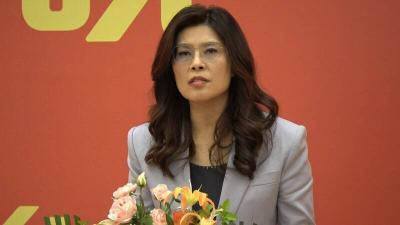
Both sides of the Taiwan Strait share a political foundation based on the “1992 consensus” and opposition to Taiwanese independence, Chinese Nationalist Party (KMT) Chairwoman Cheng Li-wun (鄭麗文) today said during her meeting with Chinese President Xi Jinping (習近平). Both sides of the Strait should plan and build institutionalized and sustainable mechanisms for dialogue and cooperation based on that foundation to make peaceful development across the Strait irreversible, she said. Peace is a shared moral value across the Strait, and both sides should move beyond political confrontation to seek institutionalized solutions to prevent war, she said. Mutually beneficial cross-strait relations are what the
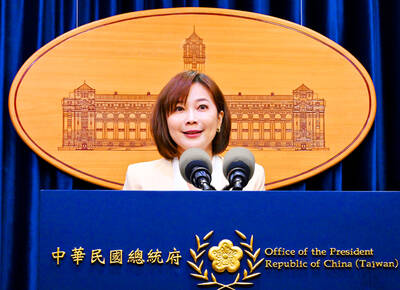
ECONOMIC COERCION: Such actions are often inconsistently applied, sometimes resumed, and sometimes just halted, the Presidential Office spokeswoman said The government backs healthy and orderly cross-strait exchanges, but such arrangements should not be made with political conditions attached and never be used as leverage for political maneuvering or partisan agendas, Presidential Office spokeswoman Karen Kuo (郭雅慧) said yesterday. Kuo made the remarks after China earlier in the day announced 10 new “incentive measures” for Taiwan, following a landmark meeting between Chinese President Xi Jinping (習近平) and Chinese Nationalist Party (KMT) Chairwoman Cheng Li-wun (鄭麗文) in Beijing on Friday. The measures, unveiled by China’s Xinhua news agency, include plans to resume individual travel by residents of Shanghai and China’s Fujian


 RSS
RSS