


Last Friday's crash of a Taiwan air force Mirage 2000-5 jet fighter off the coast of Hsinchu has highlighted both the urgency for effective prevention of air accidents caused by bird strikes and the complexity of problems surrounding the issue, analysts said yesterday.
"We are discouraged by the incident, but we have not yet given up hope for a solution to the potential threat to flight safety by birds," said Civil Aeronautics Administration (CAA) technician Wang Chi-hsin (
"Our current resources will not allow for preventative measures to be taken in advance of air accidents caused by bird strikes. All we can do now is to log data on accidents caused by them," Wang said.
"The data bank will help us know what kinds of birds pose the biggest threat to both civilian and military aircraft as well as [the birds'] usual flight routes and hours. It will help us to avoid such bird strike threats in the future," he said.
Wang pointed out that bird strikes occur far more frequently than is apparent, because only serious damage to aircraft is ever reported.
"Although Taiwan has standards equivalent to those of Europe or the US for its preventive measures against bird-strike accidents, it has a greater burden than other countries in carrying out the task," Wang said.
"Taiwan's airport density and flight frequency are both among the highest in the world. And airports in many other developed countries are not plagued by pigeons as badly as Taiwan's airfields are," he said.
"The government has so far given over NT$500 million in compensation to residents in the vicinity of airports for having removed their roof-top pigeon cages," he said.
"But there are still five military airports which are plagued by pigeon problems," he said, though defense minster Tang Fei (-
"The military has to solve the problem on its own because military airports are not under the scope of civil aviation law if they are not used concurrently by civilian aircraft.
"Even if pigeon-raising activities are eliminated from around all Taiwan's airports, there still remains the problem of other types of birds. These include stray pigeons and migratory birds" he said.
Wang noted that pigeons are by far the greatest threat to aircraft in Taiwan.
Last Friday's crash of a Mirage 2000-5 was initially suspected to have been caused by a pigeon having been sucked into the plane's engine, but the air force said yesterday that a migratory bird seemed to be the more likely cause.
"It seems that Hsinchu Air Base, from which the Mirage took off, has been attracting more and more migratory birds in recent years," said Chinese Wild Bird Federation (??華民國3?儘騝|) secretary-general Lai Peng-chih (賴鵬智).
"The phenomenon might have resulted from the destruction of several natural habitats for birds in the Hsinchu area. The air base there became an ideal alternative for the birds," Lai said.
"Migratory birds should not be blamed for intruding into airspace and causing accidents since they fly into airports mainly because nearby natural environments have become unfit for them," he said.
"It is hard to say which side -- whether man or birds -- must take the blame in this matter," he added.
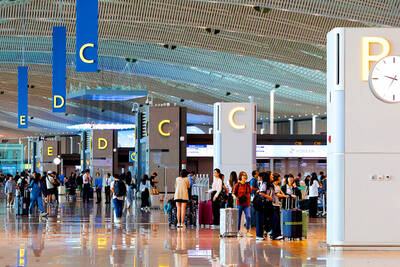
South Korea has adjusted its electronic arrival card system to no longer list Taiwan as a part of China, a move that the Ministry of Foreign Affairs said would help facilitate exchanges between the two sides. South Korea previously listed “Taiwan” as “Taiwan (China)” in the drop-down menus of its online arrival card system, where people had to fill out where they came from and their next destination. The ministry had requested South Korea make a revision and said it would change South Korea’s name on Taiwan’s online immigration system from “Republic of Korea” to “Korea (South),” should the issue not be

Tainan, Taipei and New Taipei City recorded the highest fines nationwide for illegal accommodations in the first quarter of this year, with fines issued in the three cities each exceeding NT$7 million (US$220,639), Tourism Administration data showed. Among them, Taipei had the highest number of illegal short-term rental units, with 410. There were 3,280 legally registered hotels nationwide in the first quarter, down by 14 properties, or 0.43 percent, from a year earlier, likely indicating operators exiting the market, the agency said. However, the number of unregistered properties rose to 1,174, including 314 illegal hotels and 860 illegal short-term rental
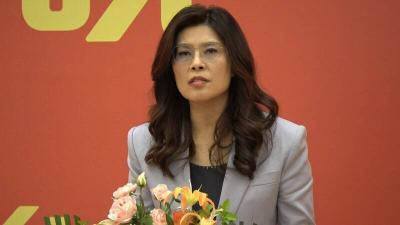
Both sides of the Taiwan Strait share a political foundation based on the “1992 consensus” and opposition to Taiwanese independence, Chinese Nationalist Party (KMT) Chairwoman Cheng Li-wun (鄭麗文) today said during her meeting with Chinese President Xi Jinping (習近平). Both sides of the Strait should plan and build institutionalized and sustainable mechanisms for dialogue and cooperation based on that foundation to make peaceful development across the Strait irreversible, she said. Peace is a shared moral value across the Strait, and both sides should move beyond political confrontation to seek institutionalized solutions to prevent war, she said. Mutually beneficial cross-strait relations are what the
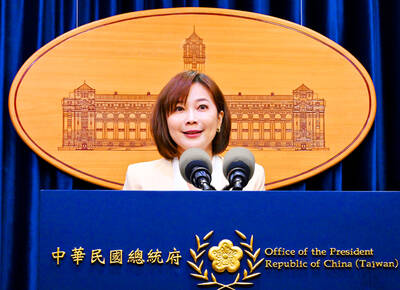
ECONOMIC COERCION: Such actions are often inconsistently applied, sometimes resumed, and sometimes just halted, the Presidential Office spokeswoman said The government backs healthy and orderly cross-strait exchanges, but such arrangements should not be made with political conditions attached and never be used as leverage for political maneuvering or partisan agendas, Presidential Office spokeswoman Karen Kuo (郭雅慧) said yesterday. Kuo made the remarks after China earlier in the day announced 10 new “incentive measures” for Taiwan, following a landmark meeting between Chinese President Xi Jinping (習近平) and Chinese Nationalist Party (KMT) Chairwoman Cheng Li-wun (鄭麗文) in Beijing on Friday. The measures, unveiled by China’s Xinhua news agency, include plans to resume individual travel by residents of Shanghai and China’s Fujian


 RSS
RSS