


KMT party elder Chen Li-fu (
Lien and Soong were joined by a virtual who's who of KMT and government officials yesterday at the Grand Hotel in Taipei.
Lien praised Chen as a living example of the rich history of the Republic of China.
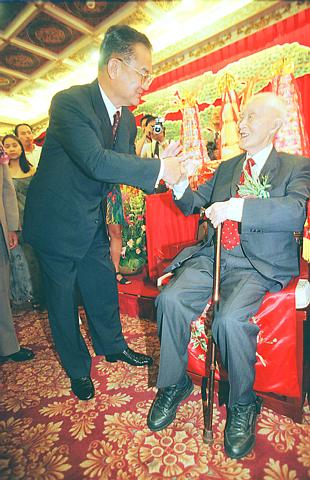
PHOTO: CHUANG CHUNG-LUNG, LIBERTY TIMES
Chen, meanwhile, reportedly had a private discussion with Soong, giving the presidential candidate two words of advice -- "work harder."
Chen, who came to Taiwan in 1949 as a trusted follower of then-president Chiang Kai-shek (蔣介石), rose to power in the KMT along with his brother, Chen Kuo-fu (陳果夫).
The pair led a powerful faction known as the C-C Clique, which dominated the party's Organizational Department between 1927 and 1949 and wielded considerable influence over both the media and the secret police.
Chen served in a variety of posts in both the party and the KMT government in both Nanjing and wartime Chongqing, but was perhaps known for his ultra-conservative outlook and his fervent anti-communism.
After the government established itself in Taiwan, however, the faction began to lose power.
In the summer of 1949, Chiang abolished the party's Central Standing Committee, putting in its place a Central Reform Committee that consisted of only six members -- including his son, Chiang Ching-kuo (
A major restructuring of the KMT eventually left Chen shut out of the party's inner circle. After a brief period of involvement in educational affairs on the island, Chen went into self-exile in the US, where he remained until the early 1980s before returning to Taiwan.
However, Chen remained active while in the US, publishing numerous works on Confucianism and Chinese herbal medicine and even managing a chicken farm while living in New Jersey.
Several of Chen's well-wishers yesterday made note of Chen's advocacy of traditional Chinese medicine -- a crucial factor, they said, in his legendary longevity.

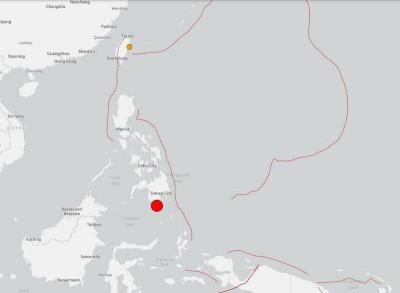
A magnitude 7.8 earthquake struck off the southern coast of Mindanao in the Philippines at 7:38am today, prompting the US Tsunami Warning System to issue an alert for neighboring countries, including Taiwan. The system issued a purple alert indicating a "tsunami threat." The potential threat zone includes Taiwan, the Philippines, Papua New Guinea, Yap and Palau. A spokesperson for Indonesia disaster mitigation agency said there were no reports of damage so far. Arlene Hollero, disaster chief of Maasim town in the Philippines' Sarangani Province, said their evacuation was underway in coastal villages and there were no reported casualties so far. DZBB radio, broadcasting from the
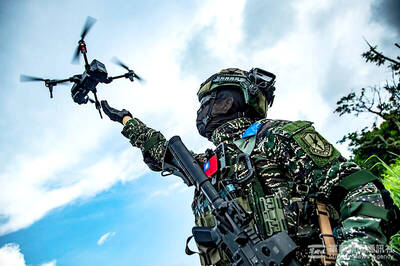
RESILIENCE: Taiwan plays a key role in semiconductors, energy, information infrastructure and advanced manufacturing, AIT Director Raymond Greene said Taiwan’s continued investment in deterrence and resilience remains vital, especially in uncrewed systems and other emerging technologies, American Institute in Taiwan (AIT) Director Raymond Greene said yesterday. Greene made the remarks at the annual National Strategic Summit on Supply Chain Resilience held by the Research Institute for Democracy, Society and Emerging Technology (DSET), a government-backed think tank. As Taiwan last year became the US’ fourth-largest trading partner and supply chain security is becoming more important, cooperation in emerging technologies continues to deepen between the two countries, he said. The US is committed to accelerating innovation, building key infrastructure, strengthening cooperation

The National Chungshan Institute of Science and Technology yesterday showcased its locally developed variants of the Vision 60 robotic patrol dog, which it plans to deploy on the nation’s outlying territories in the South China Sea. The variants were produced under the Joint Lab project — created by the institute and domestic companies — and assembled with domestically produced motors, lenses and artificial intelligence (AI) systems alongside licensed tech from the US, Missile and Rocket Systems Research Division deputy director Jen Kuo-kang (任國光) told the media event at a military base in Taipei’s Dazhi (大直) area. Taiwan has built up its strengths
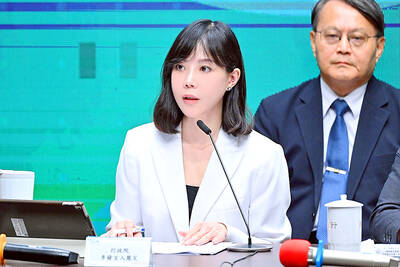
RIGHT DIRECTION: Taiwan’s efforts to prevent forced labor include a proposal to ‘fully prohibit’ employers from withholding workers’ documents, an official said Taiwan is to establish a mechanism to restrict imports of goods linked to forced labor, the Executive Yuan said yesterday, after the US proposed imposing additional tariffs on Taiwanese goods over labor concerns. “The Ministry of Labor and the Ministry of Economic Affairs are to establish an interministerial review procedure,” Executive Yuan spokesperson Michelle Lee (李慧芝) said at a news briefing in Taipei. “The government is to use the Foreign Trade Act [貿易法] as the legal basis to restrict imports of goods produced with forced labor” and bring its supply chain governance more in line with international standards on human rights, resilience


 RSS
RSS