


When you buckle up in a car or on a plane, you probably feel safer. So, when you board a train and find no seatbelts, you might wonder why. This absence is not due to neglect. __1__
The challenge comes down to how seatbelts would work on trains. Take the two-point belt for example. It secures only your waist, so when a crash happens, your lower body stays fixed while your head and upper body could slam into the seat in front of you. __2__ The force could be strong enough to break your neck or damage internal organs.
Three-point belts, like those found in cars, include both lap and shoulder straps, which limit dangerous body movement. But this creates a problem. In cars, the vehicle’s frame supports the upper strap, taking the pressure off the seat. On trains, however, there is no wall or frame next to the aisle seat. __3__ To withstand the weight of a person being thrown forward, the seat would need a much stronger and more rigid inner structure.
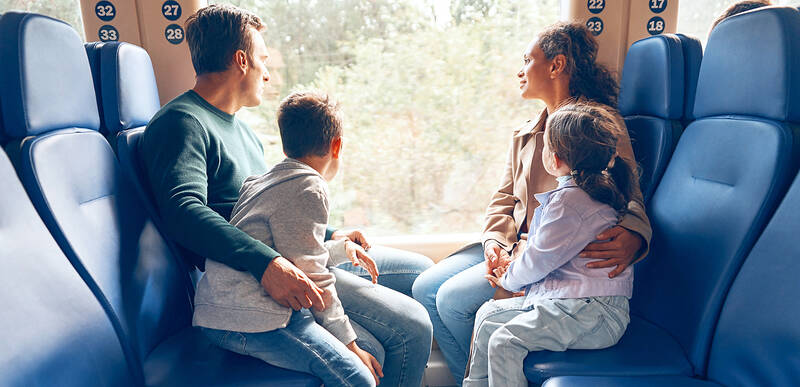
Photo: AdobeStock I 照片: AdobeStock
However, strengthening the seats comes at a cost. This change turns the train into a dangerous space for standing passengers. Since train design allows for standing, some people will always remain unbelted. During a sudden collision, these passengers get thrown forward. __4__ Even worse, they could strike the passengers who are secured in their seats and unable to move out of the way.
A better safety solution for trains involves seats designed to balance two needs. They must be flexible enough to absorb impact energy, yet stiff enough to contain passengers between rows and prevent them from hitting other people or objects.
在汽車裡或飛機上繫上安全帶時,你可能會感到更安全。所以當你搭上火車卻發現沒有安全帶時,可能會感到疑惑。沒有安全帶並非疏忽所致。而是源自於讓火車與眾不同的根本性差異。
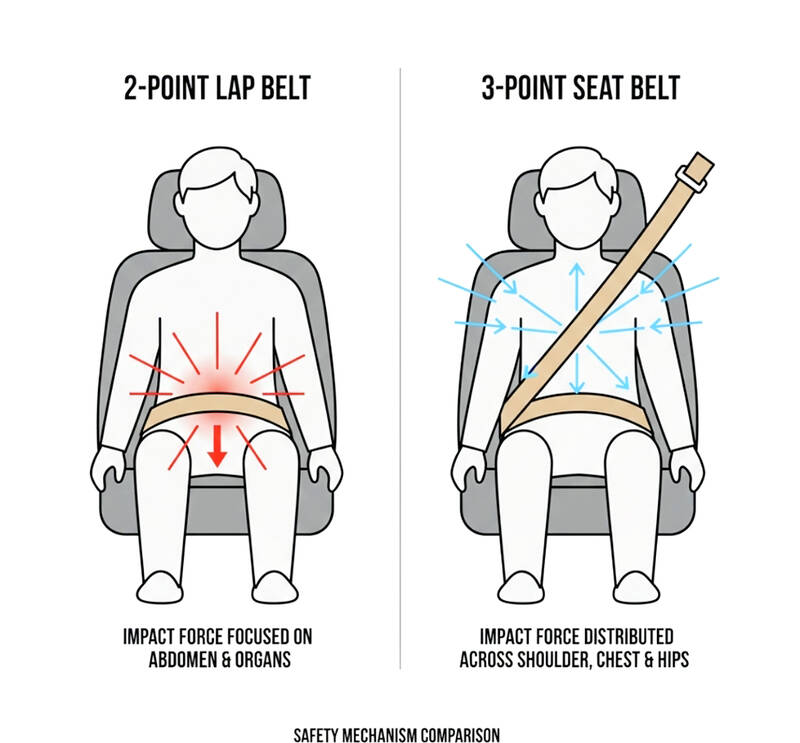
Photo: Ivy English I 照片: 常春藤解析英語
這項難題歸結於安全帶在火車上會如何發揮作用。以兩點式安全帶為例。它只能繫緊腰部,因此一旦發生碰撞,下半身會保持固定,而頭部和上半身可能會大力撞上前方座椅。火車事故通常會有高速急煞,這會讓情況變得更糟。衝擊力可能大到足以導致頸部斷裂或造成內臟傷害。
汽車裡的那種三點式安全帶有腰帶和肩帶,可以限制可能導致危險的身體晃動。但這又造成一個問題。在汽車上,車身框架支撐著位於上方的安全帶,減輕了座椅的壓力。然而,在火車上,靠走道的座椅旁沒有牆壁或框架。這意味著座椅本身得夠堅固才能將乘客固定在座位上。為了承受某個人被往前拋的重量,座椅會需要更堅固、更堅硬的內部結構。
然而,加固座椅是有代價的。對站立的乘客來說,這種改變讓火車變成了危險的空間。由於火車的設計讓乘客可以站立,因此總會有一些人是不會繫上安全帶的。突然發生碰撞時,這些乘客會被往前拋。他們不會摔在柔軟的表面上,而是會撞到堅硬的座椅。更糟的是,他們可能會撞到那些被繫緊在座位上、無法躲避的乘客。
比較好的火車安全解決方案是設計能夠平衡兩種需求的座椅。座椅必須柔韌到能吸收衝擊能量,而同時又必須堅固到能將乘客固定在一排排座位之間,以防止他們撞到其他人或物體。
What Did You Learn?
(A) Instead, it stems from fundamental differences that set trains apart.
(B) Rather than falling against a soft surface, they would hit the hard seats.
(C) Long belts hanging from empty seats might trip passengers on crowded trains.
(D) This means the seat alone must be strong enough to hold the passenger in place.
(E) Train accidents often involve sudden, high-speed stops, which would make matters worse.
答案: 1. A 2. E 3. D 4. B
Words in Use
1. neglect n. 疏忽
Thomas was fired for neglect of his duties at the company.
湯瑪斯因為怠忽公司職責而被解僱。
2. secure vt. 扣緊,拴牢
Bill used a heavy lock to secure his expensive bike to the fence.
比爾用厚重的鎖將自己昂貴的腳踏車拴在圍籬上。
3. crash n. 撞擊事故
Fortunately, no one was hurt in the car crash on the highway.
幸好這場公路車禍沒有人受傷。
4. fixed a. 固定的
Susie was asked to stare at the fixed point on the wall during the eye test.
蘇西在視力檢查時被要求注視牆上一個固定點。
5. an internal organ 內臟
internal a. 內部的
organ n. 器官
The heart is an internal organ that pumps blood through the body.
心臟是負責將血液輸送到全身的內臟。
Practical Phrases
1. come down to. . . 歸結於……
Winning the game comes down to who makes fewer mistakes.
要贏得這場比賽歸結於誰出錯較少。
2. Take. . . for example. 以……為例。
Modern technology helps us learn. Take the internet for example. It has information on everything.
現代科技幫助我們學習。以網路為例。一切資訊它都有。
3. come at a cost 有代價,付出代價
Melinda’s success came at a cost, as she lost touch with some of her friends.
梅琳達的成功是有代價的,因為她和一些朋友失聯了。
4. allow for. . . 使……得以發生
This new software design allows for faster processing of data.
這個新的軟體設計讓資料處理能更快速。

Taiwan Travelogue, the novel by Taiwanese author Yang Shuang-zi and translated into English by Lin King, won the prestigious International Booker Prize in London on May 19. It marks the first time a Taiwanese literary work has received the International Booker Prize, setting a historic milestone both for Taiwanese literature and for the award itself. Prior to this achievement, Taiwan had only once appeared on the Booker radar, when Taiwanese author Wu Ming-yi was longlisted for the Booker Prize in 2018 with The Stolen Bicycle. The International Booker Prize honors works of fiction translated into English and published in the UK or Ireland.
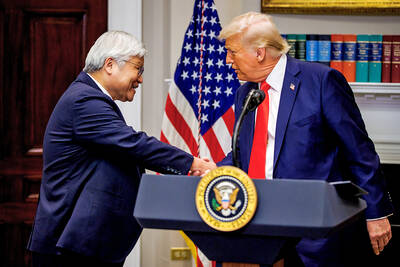
A: Time magazine recently released its list of “The 100 Most Influential People of 2026.” It’s categorized into six groups: Artists, Pioneers, Titans, Icons, Leaders and Innovators. B: TSMC chairman C.C. Wei made the list this year. Which category is he in? A: Wei is actually among the Pioneers, with figures including Disney CEO Josh D’Amaro and MrBeast — the first YouTuber ever to surpass 400 million subscribers. B: Led by Wei, Taiwan’s “silicon shield” TSMC is the sixth-largest company in the world. A: As Nvidia founder Jensen Huang wrote in his introduction, “C.C. Wei is truly one of the
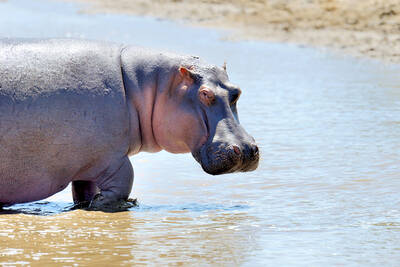
The animal kingdom is full of surprises that challenge our understanding of biology. From remarkable feeding mechanisms to extreme defense strategies, some creatures possess traits so unusual that they seem like pure fiction. Here are four fascinating examples that show nature’s endless creativity. The humble snail may appear simple, but its mouth tells a different story. Snails possess a ribbon-like tongue called a radula, densely covered with anywhere from 1,000 to 12,000 tiny teeth. This structure works like a cheese grater, allowing them to scrape and grind food with surprising efficiency. Far from being passive creatures, snails are actually
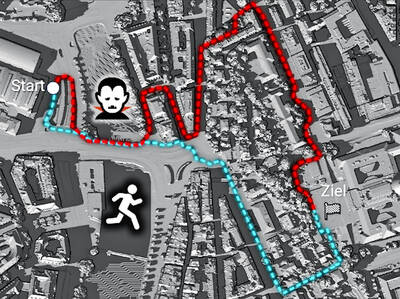
As climate change and urbanization push city temperatures higher, walking outdoors is becoming increasingly uncomfortable in many parts of the world, especially when prolonged time spent in sunlight is involved. As a result, outdoor lovers are now seeking cooler, shaded walking routes. However, most mainstream map apps still do not __1__ shaded footpaths. Enter routing.osm.ch — a Swiss web-based route planner that introduces a novel solution to this problem. Its “Vampire mode,” named after the legendary creatures’ fear of being __2__ natural light, was developed by a Swiss research team led by Professor Stefan Keller. The platform combines open data from


 RSS
RSS