


1. 他病了三天。
ˇ He has been sick for three days.
χ He has been sick since three days.

Photo: AdobeStock l 照片:AdobeStock
註︰這裡現在完成時態 have / has been 表示從過去某一時日到現在的一段時間存在的行為或狀態,與它連用的時間副詞應為 「for +若干時」,如 for a year, for three hours 等,意思是歷時多少。
2. 他自從星期三以來都很忙。
ˇ He has been busy since Wednesday.
Photo: AdobeStock l 照片:AdobeStock
χ He has been busy from Wednesday.
註︰「自從……以來」,該用 since。說從某一天(某一時刻)到某一天(某一時刻)才用 from,如 from Monday till Friday。
3. 房間角落裡散放著一些零星物件。
ˇ There were some odds and ends lying in the corner of the room.
χ There were some odds and ends lying at the corner of the room.
註︰「在房間角落裡」該用介詞 in。例如:
He stood in the corner.
There is a lamp in the corner of the room.
at the corner 指房子外部的拐角。例如:
A little boy squatted at the corner of the hut.
I’ll be waiting for you at the street corner at three o’clock sharp.
A tree stood at the corner of the wall.
此外,on the corner 則往往指物件表面的角。例如:
The girl put the apple on the corner of the table.
4. 俄國官方否認干預美國選舉。
ˇ Russian officials have denied accusations of interference in the US election.
χ Russian officials have denied accusations of interference of the US election.
註︰interference 與 interfere 一樣,後面用 in 或 with。用 in 表示 「干預」,用 with 表示「妨礙」或「打擾」。
5. 她丈夫過世時,她身體狀況已經很差了。
ˇ When her husband died she was already in poor health.
χ When her husband died she was already of poor health.
註︰「身體健康」應說 in good health,「身體不健康」說 in poor health, in delicate health 等。
Exercises :
A. 我們決不容忍任何對人事部門作業的干涉。
We will not tolerate any interference __________ the procedures of the personnel department.
1. with
2. in
3. for
4. of
B. 這台車雖舊,車況卻很不錯。
The car was still __________ good condition despite its age.
1. with
2. in
3. for
4. of
Answers: A. 1 B. 2
文章由書林出版公司提供:
www.bookman.com.tw
蘇正隆 — 台灣翻譯學學會前理事長、師大翻譯研究所兼任副教授; 編著《走讀自然.花言樹語》,《英語的對與錯》,《世紀病毒:必讀防疫英文知識與詞彙》...等。國家教育研究院中英雙語詞彙審議委員;研究領域為翻譯、術語及詞典編譯,從事植物與人文導覽數十年,亦曾應邀遠赴國外大學做植物人文導覽。
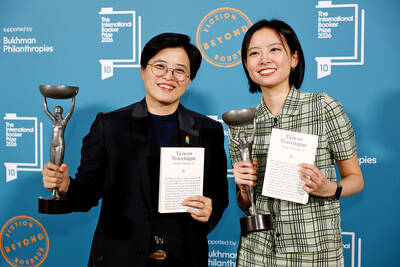
Taiwan Travelogue, the novel by Taiwanese author Yang Shuang-zi and translated into English by Lin King, won the prestigious International Booker Prize in London on May 19. It marks the first time a Taiwanese literary work has received the International Booker Prize, setting a historic milestone both for Taiwanese literature and for the award itself. Prior to this achievement, Taiwan had only once appeared on the Booker radar, when Taiwanese author Wu Ming-yi was longlisted for the Booker Prize in 2018 with The Stolen Bicycle. The International Booker Prize honors works of fiction translated into English and published in the UK or Ireland.
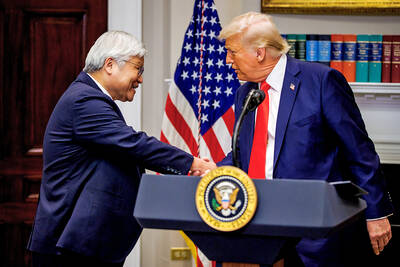
A: Time magazine recently released its list of “The 100 Most Influential People of 2026.” It’s categorized into six groups: Artists, Pioneers, Titans, Icons, Leaders and Innovators. B: TSMC chairman C.C. Wei made the list this year. Which category is he in? A: Wei is actually among the Pioneers, with figures including Disney CEO Josh D’Amaro and MrBeast — the first YouTuber ever to surpass 400 million subscribers. B: Led by Wei, Taiwan’s “silicon shield” TSMC is the sixth-largest company in the world. A: As Nvidia founder Jensen Huang wrote in his introduction, “C.C. Wei is truly one of the
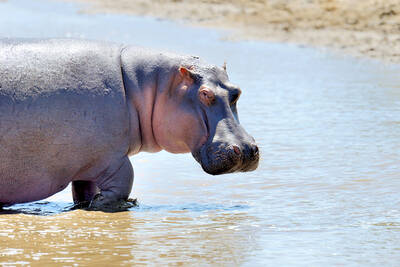
The animal kingdom is full of surprises that challenge our understanding of biology. From remarkable feeding mechanisms to extreme defense strategies, some creatures possess traits so unusual that they seem like pure fiction. Here are four fascinating examples that show nature’s endless creativity. The humble snail may appear simple, but its mouth tells a different story. Snails possess a ribbon-like tongue called a radula, densely covered with anywhere from 1,000 to 12,000 tiny teeth. This structure works like a cheese grater, allowing them to scrape and grind food with surprising efficiency. Far from being passive creatures, snails are actually

A: In the 2026 Time 100 list, besides TSMC chairman C.C. Wei in the Pioneers category, Blackpink’s Jennie also stands out in the Artists group. B: What about the Titans and Icons? A: The Titans include legendary fashion designer Ralph Lauren, Google CEO Sundar Pichai, and Intel CEO Tan Lip-bu. The Icons include actor Wagner Moura, Olympic gold figure skater Alysa Liu and singer Victoria Beckham. B: What about the Leaders and Innovators? I bet US President Donald Trump and Chinese President Xi Jinping are on the list. A: You got it. Other Leaders include Japanese PM Sanae


 RSS
RSS