


Dos & Don’ts — 想想看,這句話英語該怎麼說?
1. 你為什麼在會上一言不發?
ˇ Why didn’t you say anything at the meeting?

Photo: AdobeStock l 圖片:AdobeStock
χ Why didn’t you say anything on the meeting?
註︰不是「在…上」都用 on,「在會上」是 at the meeting,「在報紙上」是 in the newspaper,「在快車道上」是 in the fast lane。
2. 別為這些小事擔憂。

Photo: AdobeStock l 圖片:AdobeStock
ˇ Don’t get upset about such trifles.
χ Don’t get upset for such trifles.
註︰「為某事擔憂(焦慮)」應該用 get upset about / over, worry about, worry over;不可用 get upset for, worry for。
3. 王先生不在家。
ˇ Mr. Wang is not at home.
χ Mr. Wang is not in home.
註︰「在家」是 at home。在某人家,如 at my home, at your home 也都用 at。
若指「回家了」,則不用 at。
例如:Mr. Wang is home.(王先生回來了。)
4. 他很努力,因此在課業上進步很多。
ˇ He worked hard. As a result, he made great progress in his studies.
χ He worked hard with a result, he made great progress in his studies.
註︰作為一種結果,應說 as a result 或 with the result that。
5. 這兩個字詞意思有什麼區別?
ˇ What is the difference in meaning between these two words?
χ What is the difference of meaning of the two words?
註︰二者之間的區別,應說 the difference between these two 或 between A and B。二者之間在某方面的區別,用 difference in, the difference in style / in character/in quality 等。
Exercises:
A. 我在報上讀到政府說情況有所好轉,但東西還是越來越貴。
I’ve read __________ the newspaper that the government is saying things are getting better, but for us, a lot of things are more expensive.
1. in
2. between
3. of
4. on
B. 這兩個方法有什麼不同?
What is the difference __________ these two methods?
1. in
2. between
3. of
4. for
Answers: A. 1 B. 2
文章由書林出版公司提供:
www.bookman.com.tw
蘇正隆 — 台灣翻譯學學會前理事長、師大翻譯研究所兼任副教授; 編著《走讀自然.花言樹語》,《英語的對與錯》,《世紀病毒:必讀防疫英文知識與詞彙》...等。國家教育研究院中英雙語詞彙審議委員;研究領域為翻譯、術語及詞典編譯,從事植物與人文導覽數十年,亦曾應邀遠赴國外大學做植物人文導覽。
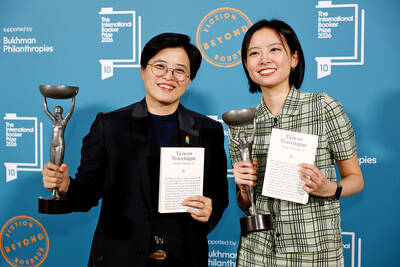
Taiwan Travelogue, the novel by Taiwanese author Yang Shuang-zi and translated into English by Lin King, won the prestigious International Booker Prize in London on May 19. It marks the first time a Taiwanese literary work has received the International Booker Prize, setting a historic milestone both for Taiwanese literature and for the award itself. Prior to this achievement, Taiwan had only once appeared on the Booker radar, when Taiwanese author Wu Ming-yi was longlisted for the Booker Prize in 2018 with The Stolen Bicycle. The International Booker Prize honors works of fiction translated into English and published in the UK or Ireland.
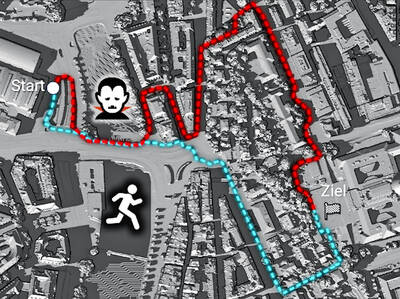
As climate change and urbanization push city temperatures higher, walking outdoors is becoming increasingly uncomfortable in many parts of the world, especially when prolonged time spent in sunlight is involved. As a result, outdoor lovers are now seeking cooler, shaded walking routes. However, most mainstream map apps still do not __1__ shaded footpaths. Enter routing.osm.ch — a Swiss web-based route planner that introduces a novel solution to this problem. Its “Vampire mode,” named after the legendary creatures’ fear of being __2__ natural light, was developed by a Swiss research team led by Professor Stefan Keller. The platform combines open data from
Cities around the world are testing “robotaxis,” hoping that autonomous vehicles will ease traffic and reduce emissions. However, recent analyses suggest these expectations may be overly optimistic. According to consulting firm Kearney, robotaxis could actually make congestion worse rather than better. Because self-driving rides are expected to be cheaper and more convenient than traditional taxis, more people may choose them over walking, biking, or using public transportation. This shift would put more cars on already crowded roads. Another concern is “deadheading,” which refers to robotaxis traveling without passengers between rides. Since autonomous fleets need to reposition themselves throughout the day, these

1. 該協會於全球九十個國家擁有逾一百萬名會員。 ˇ The association consists of over 1 million members in 90 countries. χ The association consists in over 1 million members in 90 countries. 註:consist of 是「由……組成」,而consist in是「在於」、「就是」,比較下列句子: Our department consists of three sections. Success consists in perseverance. Happiness consists in doing one’s duty. 2. 我們的任何錯誤將來都可能帶來麻煩。 ˇ Any mistakes on our part now may lead to problems later on. χ Any mistakes on our part now may lead into problems later on. 註:說「導致」、「引起」用lead to,如to lead to trouble,to lead to disaster,to lead to problems,to lead to something unpleasant等。表示「向某物內部的動向」可用into,如go into a room,to come into a building,to get into trouble等。 3. 這本書是E.M.福斯特的作品,不是喬治.歐威爾。 ˇ This book was written by E. M. Foster, not


 RSS
RSS