


1. 我曾聽人談起他,但我不認識他。
ˇ I have heard of him, but I have never met him.
χ I have heard him, but I have never met him.

Photo: AdobeStock 圖片:AdobeStock
註:「聽到別人提起某人或談論過某人」,用 hear of。若不用 of,意為「聽到過某人講話、演奏、唱歌、唸書、走路、敲門」等等。
2. 誰在敲門?
ˇ Who is knocking at the door?
Photo: AdobeStock 圖片:AdobeStock
χ Who is knocking the door?
註:knock 為不及物動詞。通常說 to knock at/on the door。例如:
Knock before you enter. = Knock at the door before you go in.
Come in! Don’t knock! = Don’t knock at the door.
3. 雷達的發明對飛行安全意義重大。
ˇ The invention of radar was of great significance for aircraft safety.
χ The invention of radar was great significance for aircraft safety.
註:great significance 表示「重大意義」、 「意味深長」,不可作為形容詞來修飾主詞, 須用 of great significance,of significance = significant。因為 of +名詞=形容詞,所以 of interest = interesting,of importance = important,of use = useful。significance, use 等前面可以加 great, little, no 等以示程度,例如 of great use, of little use, of no use。但是格言 It is no use crying over spilt milk.(事已至此,徒悲無益)中就不用 It’s of no use。口語上常用 It’s no use to... 或 There is no use... 為句子開頭。
4. 莎莉總是不聽老師講課。老是在胡思亂想。
ˇ Sally never listens to the teacher. She is always woolgathering.
χ Sally never listens the teacher. She is always woolgathering.
註:listen 是不及物動詞,表示「聽什麼」,後面接to。
Listen to me.(聽我說。)
Listen to the teacher.(聽老師的話。)
Listen to the broadcast program.(聽廣播節目。)
5. 本文介紹 AI 對就業的衝擊。
ˇ This article tells us about the impact of AI on jobs.
χ This article tells us the impact of AI on jobs.
註:動詞 to tell 只有在 to tell him a story/the news 等句子中可以有間接、直接受詞。不可任意類推說 *tell us the 或 *tell you my life,必須說 tell us about... 或 tell us something about...。
Exercises
A. 女演員緋聞意外地未引起大眾或媒體興趣。
News of the actress’s relationship is surprisingly __________ no interest to the public or the press.
1. of 2. for 3. on 4. to
B. 這位默默無聞籃球新秀將來會是籃壇巨星。
The young basketball player that you haven’t heard __________ is a soon-to-be superstar.
1. for 2. of 3. to 4. about
Answers: A. 1 B. 2
文章由書林出版公司提供:
www.bookman.com.tw
蘇正隆 — 台灣翻譯學學會前理事長、師大翻譯研究所兼任副教授; 編著《走讀自然.花言樹語》,《英語的對與錯》,《世紀病毒:必讀防疫英文知識與詞彙》...等。國家教育研究院中英雙語詞彙審議委員;研究領域為翻譯、術語及詞典編譯,從事植物與人文導覽數十年,亦曾應邀遠赴國外大學做植物人文導覽。
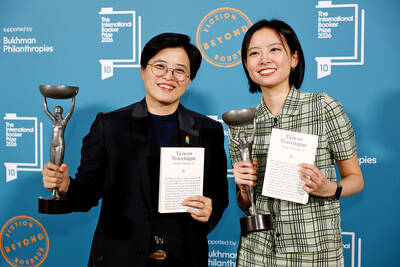
Taiwan Travelogue, the novel by Taiwanese author Yang Shuang-zi and translated into English by Lin King, won the prestigious International Booker Prize in London on May 19. It marks the first time a Taiwanese literary work has received the International Booker Prize, setting a historic milestone both for Taiwanese literature and for the award itself. Prior to this achievement, Taiwan had only once appeared on the Booker radar, when Taiwanese author Wu Ming-yi was longlisted for the Booker Prize in 2018 with The Stolen Bicycle. The International Booker Prize honors works of fiction translated into English and published in the UK or Ireland.
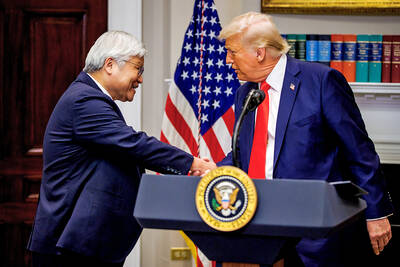
A: Time magazine recently released its list of “The 100 Most Influential People of 2026.” It’s categorized into six groups: Artists, Pioneers, Titans, Icons, Leaders and Innovators. B: TSMC chairman C.C. Wei made the list this year. Which category is he in? A: Wei is actually among the Pioneers, with figures including Disney CEO Josh D’Amaro and MrBeast — the first YouTuber ever to surpass 400 million subscribers. B: Led by Wei, Taiwan’s “silicon shield” TSMC is the sixth-largest company in the world. A: As Nvidia founder Jensen Huang wrote in his introduction, “C.C. Wei is truly one of the
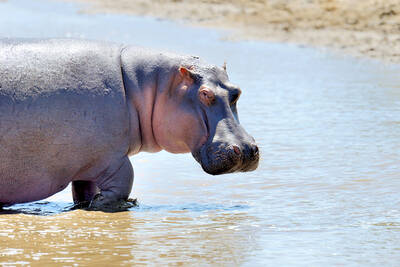
The animal kingdom is full of surprises that challenge our understanding of biology. From remarkable feeding mechanisms to extreme defense strategies, some creatures possess traits so unusual that they seem like pure fiction. Here are four fascinating examples that show nature’s endless creativity. The humble snail may appear simple, but its mouth tells a different story. Snails possess a ribbon-like tongue called a radula, densely covered with anywhere from 1,000 to 12,000 tiny teeth. This structure works like a cheese grater, allowing them to scrape and grind food with surprising efficiency. Far from being passive creatures, snails are actually

A: In the 2026 Time 100 list, besides TSMC chairman C.C. Wei in the Pioneers category, Blackpink’s Jennie also stands out in the Artists group. B: What about the Titans and Icons? A: The Titans include legendary fashion designer Ralph Lauren, Google CEO Sundar Pichai, and Intel CEO Tan Lip-bu. The Icons include actor Wagner Moura, Olympic gold figure skater Alysa Liu and singer Victoria Beckham. B: What about the Leaders and Innovators? I bet US President Donald Trump and Chinese President Xi Jinping are on the list. A: You got it. Other Leaders include Japanese PM Sanae


 RSS
RSS