


In 2024, the number of pet cats in Taiwan surpassed 1.31 million, a 50 percent jump from 2022. This sharp rise shows a growing interest in cat ownership. But with more cats comes a type of household waste many people overlook: used cat litter. Unlike food scraps or packaging, it’s harder to manage and often ends up in landfills.
While many cat owners choose traditional mineral-based litter for its affordability, this popular option comes with hidden environmental costs. Most mineral litter is made from non-renewable resources and involves environmentally destructive mining processes. Plus, because it can’t be incinerated or easily broken down, it adds weight and volume to household waste. This strains waste systems and can even damage garbage trucks by clogging their compacting mechanisms.
To tackle this issue, businesses have developed eco-friendly alternatives made from natural materials. Cat litter made from tofu residue or wood shavings is biodegradable, absorbs moisture well, and is easier to dispose of. Other types use recycled paper, which reduces waste while giving discarded materials a new purpose.
In Taiwan, some creative solutions have emerged. Used tea leaves, which are usually thrown away, have found new life as cat litter. Treated with beneficial microbes, this litter provides natural odor control and antibacterial properties. Another exciting innovation comes from I-Shou University, where a group of students has developed an eco-friendly cat litter made from rice husks. This agricultural byproduct is often discarded after harvest. The students’ invention soaks up moisture effectively and can even be flushed down the toilet, offering both convenience and sustainability.
These examples show that everyday tasks like taking care of pets can inspire smart, eco-friendly ideas. Even if you don’t have a cat, they’re a reminder that small choices can make a big difference.
西元 2024 年,臺灣的寵物貓數量突破 131 萬,比 2022 年暴增了 50%。這項驟升顯示出人們對飼養貓咪的興趣日益高漲。但是隨著寵物貓數量增加,許多人會忽略的一種家庭垃圾也隨之增加:用過的貓砂。不同於廚餘或包裝材料,貓砂較難處理,且通常最後會被送進垃圾掩埋場。
許多貓主人因為價格實惠所以選用傳統礦物貓砂,但這種廣受歡迎的選項伴隨著隱藏的環境成本。大多數的礦砂由不可再生資源製造,並涉及對環境有破壞性的採礦過程。此外,由於礦砂無法焚燒或輕易分解,因此會增加家庭垃圾的重量與體積。這會對廢棄物處理系統造成壓力,甚至會因為堵塞壓縮裝置而損壞垃圾車。
為了解決這個問題,業者們研發了採用天然材料製成的環保替代選擇。舉例來說,用豆腐渣或木屑製成的貓砂可行生物分解、吸水性佳,也更容易處理。另一些則使用回收紙製成,如此一來不僅減少垃圾,也為廢棄物賦予新的用途。
在臺灣,也出現了一些創意解決辦法。通常會被丟棄的茶葉渣,如今搖身一變成為貓砂。這種茶葉貓砂經過有益的微生物處理,具有天然除臭與抗菌效果。另一個令人振奮的創新來自義守大學,在那裡一群學生研發出以稻殼製成的環保貓砂。這種農業副產物常在收割後被丟棄。這群學生的發明吸水力好,甚至可以直接沖進馬桶,兼具便利與永續性。
這些例子顯示出像照顧寵物這樣的日常任務也能激發出聰明又環保的點子。即使你沒有養貓,這些發明也提醒我們微小的選擇也能帶來巨大的改變。
MORE INFORMATION
litter n.(供寵物便溺的)貓砂
surpass vt. 超過
landfill n. 垃圾掩埋場
affordability n. 可負擔性
incinerate vt. 焚化;焚燒
clog v.(使)堵塞
residue n. 渣滓;殘餘物
shavings n.(刨削下來的)薄片(恆用複數)
biodegradable adj. 可行生物分解的
discard vt. 拋棄;扔掉
microbe n. 微生物
odor n. 氣味;臭氣
antibacterial adj. 抗菌的
husk n.(種子或果實的)外殼
byproduct n. 副產品
KEY VOCABULARY
1. mineral n. 礦物;礦物質
Natural minerals like quartz and iron are important resources for making tools, machines and electronics.
天然礦物如石英和鐵是製作工具、機械與電子產品的重要資源。
2. renewable adj.(能源)可再生的
Solar and wind energy are two of the most popular forms of renewable energy sources today.
太陽能與風能是當今最受歡迎的其中兩種再生能源。
3. break down 分解
Plastic takes hundreds of years to break down completely in the environment.
塑膠在環境中完全分解需要好幾百年。
4. compact v. 壓縮;壓緊
Please compact your trash before throwing it away to save space in the trash can.
請在丟垃圾前壓縮它,以節省垃圾桶的空間。
5. mechanism n. 機械裝置;機制
The mechanism of the clock ensures it keeps accurate time.
時鐘的機械裝置確保它保持準確的時間。
6. agricultural adj. 農業的
Advances in agricultural technology have helped farmers grow more food using fewer resources.
農業技術的進步使農民能用更少資源種出更多糧食。
7. flush v. 沖水;臉紅
After using the toilet, please remember to flush and wash your hands properly.
如廁後請記得沖水並確實洗手。
8. sustainability n. 永續性 Sustainability in farming means using techniques that preserve soil and water.
農業中的永續性意味著使用能保護土壤和水源的技術。
9. reminder n. 提醒
I set a reminder on my phone so I wouldn’t forget to attend the online meeting.
我在手機上設了提醒,以免忘記參加線上會議。
空中美語APP+︰全新AI學習,限時免費!(學習音檔) https://www.english4u.net/qr/app.html
文章由AMC空中美語授權使用: https://www.english4u.net

A: South Korean supergroup BTS is finally staging a comeback tomorrow, releasing their new album in nearly four years: “Arirang.” B: And to promote their new album, BTS will hold a comeback concert at the Gwanghwamun Plaza in downtown Seoul this weekend. According to police estimates, the show could attract a crowd of at least 260,000 fans. A: What about their new world tour? When will it start? B: The upcoming world tour will kick off from Gaoyang on April 9, and Kaohsiung will be included this time. A: Really? Hurry up and tell me the dates of the Kaohsiung shows. Maybe we

A: K-pop supergroup BTS is set to tour Taiwan at the end of the year, putting on three shows in Kaohsiung on Nov. 19, 21 and 22. B: But before that, VieShow Cinemas across Taiwan will launch the “BTS World Tour ‘Arirang’ in Japan Live Viewing” from the Tokyo Dome on April 18. A: In recent years, BTS’ junior groups — Tomorrow X Together (TXT) and CORTIS, which debuted under the same label in 2019 and 2025 respectively — have also quickly become global sensations. B: I like those two groups, too. Didn’t TXT just perform at the Taipei Dome recently? Their popularity

K-pop oozes with talent, flair and hard work, but the spectacularly successful South Korean music industry also has a dark side — sometimes with tragic results. After BTS’s comeback concert on Saturday, AFP looks at the intense competition, the grueling training, the tight control over stars’ lives and the sometimes obsessive fan behavior in the industry. 300 GROUPS South Korean record labels launch dozens of new groups every year in the hope they will become the next BTS or Blackpink, but with some 300 outfits already out there, the big time is elusive. The tiny minority of the thousands of young hopefuls
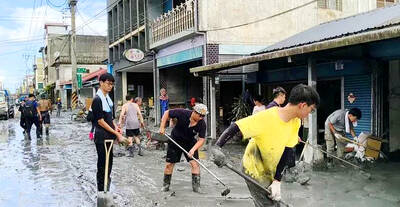
Heavy rain brought by Typhoon Ragasa caused the barrier lake above Matai’an Creek in Hualien’s Guangfu Township to overflow on Sept. 23 of last year. The sudden rush of water and mud destroyed a major bridge and swept through nearby villages, leaving significant damage in its wake. The barrier lake was formed in July, when heavy rain caused landslides and blocked the creek’s natural flow. As rainwater built up, the lake grew increasingly unstable. When Typhoon Ragasa hit, the water level rose rapidly and finally overflowed. In the aftermath, volunteers across Taiwan, known as “shovel supermen,” stepped in


 RSS
RSS