


K-pop oozes with talent, flair and hard work, but the spectacularly successful South Korean music industry also has a dark side — sometimes with tragic results.
After BTS’s comeback concert on Saturday, AFP looks at the intense competition, the grueling training, the tight control over stars’ lives and the sometimes obsessive fan behavior in the industry.
300 GROUPS

Photo: Reuters 照片:路透
South Korean record labels launch dozens of new groups every year in the hope they will become the next BTS or Blackpink, but with some 300 outfits already out there, the big time is elusive.
The tiny minority of the thousands of young hopefuls who make it past the audition phase can then face 15-hour days of gym sessions, singing lessons, promotional shoots and dance practice.
They sometimes sleep not at home but in bunk beds in shared houses, with tight control over their lives, including what they eat, their weight and their looks.
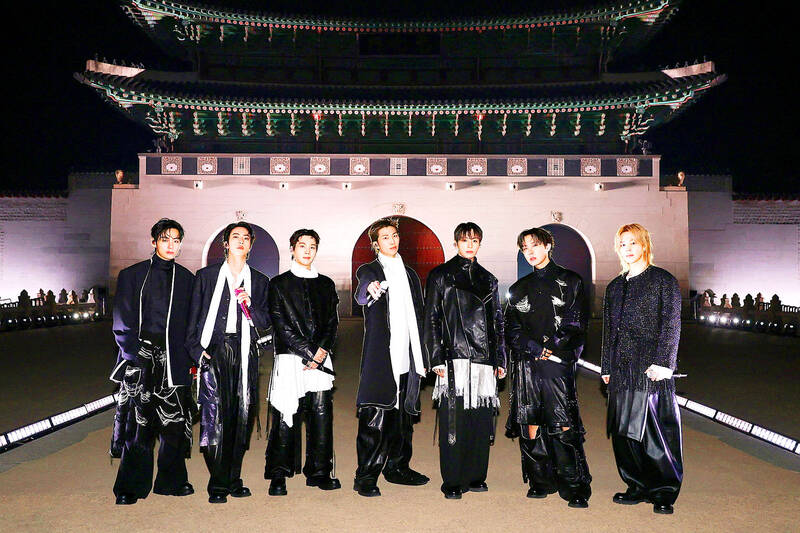
Photo: Reuters 照片:路透
In a 2020 interview with AFP, former Nine Muses member Ryu Sera likened it to a “factory-like mass-production system,” with people treated like “replaceable products.”
But industry bosses argue that the competitive structure is what keeps K-pop so successful.
The balance of power between labels and K-pop stars was once heavily skewed, with “slave contracts” mandating unequal profit-sharing and binding artists for well over a decade.
After a legal battle involving idol group TVXQ, the fair trade commission revised standard contracts, with changes introduced in 2009 that cap initial deals at seven years.
NO DATING
Fans can become obsessive, and anger over rumors that their beloved stars may be romantically involved has become a hallmark of the industry.
When Jung Kook of BTS was rumored to be dating Aespa member Winter, fans sent a truck carrying a billboard to the headquarters of BTS label HYBE accusing him of “deceit.”
Karina of Aespa faced similar trouble when she acknowledged her relationship with an actor in 2024, drawing the ire of fans who also dispatched a truck.
“Do you not receive enough love from your fans?” it read.
Karina delivered her “sincere apologies” in a handwritten letter, vowing she would “not disappoint” her fans again. Shortly afterwards, the couple broke up.
Others have taken things to dangerous extremes.
In 2024, Sunwoo from The Boyz was assaulted when a fan hid in an emergency stairwell to confront him. The group’s label said it had also detected a tracking device on their vehicle.
This month, a Brazilian woman was indicted on charges of stalking BTS’s Jung Kook. She allegedly rang his doorbell and left a letter 23 times in one month — “out of love.”
Kim Seong-sheen, a professor of creative convergence education at Hanyang University in Seoul, blames the way the industry has structured the relationship between groups and fans.
“Fans have come to occupy the role not of simple consumers but of participants who invest their emotions and time,” Kim told AFP.
“The industry has long operated on the premise of controlling idols’ private lives and sustaining an illusion of intimacy to maintain that engagement.”
CYBERBULLYING
The industry has seen a number of suspected suicides, most recently in 2023 when Moonbin, 25, from boy band ASTRO, was found dead at his home.
While mental health professionals caution it is rare that there is only one trigger factor, some performers have been subjected to intense cyberbullying and harsh scrutiny of their personal lives, both by fans and their management.
Bang Si-hyuk, creator of BTS and chairman of HYBE, questioned in a 2023 CNN interview whether such criticism was “justifiable,” suggesting conditions were no better in Western pop.
Cultural commentator Kim Do-hoon said a deeper problem lies in the industry’s hierarchical structure between management and singers.
Unlike many groups elsewhere, K-pop bands are assembled by agencies that invest time and capital to train them in a top-down system.
BTS was created in the same manner.
(AFP)
K-pop(韓國流行音樂)人才濟濟,充滿魅力,許多人為此辛勤付出,但南韓音樂產業在光鮮亮麗的背後,也有陰暗的一面,甚至有時會導致悲劇發生。
防彈少年團(BTS)上週六舉行了回歸演唱會,法新社也藉此檢視了這個產業中激烈競爭、嚴苛訓練、對藝人生活的高度控管,以及部分粉絲近乎偏執的行為。
約有300個團體
南韓唱片公司每年推出數十個新團體,希望能打造下一個BTS或BLACKPINK,但在目前已有約300個團體活躍的情況下,要脫穎而出極為困難。
成千上萬懷抱明星夢的年輕人中,只有極少數能通過甄選;而即使成功出道,也可能面臨每天長達15小時的密集訓練,包括健身、聲樂課、宣傳拍攝與舞蹈練習。
他們有時不住家裡,而是跟其他人一起住宿舍、睡上下舖,生活受到嚴格控管,包括飲食、體重與外貌。
前女團Nine Muses成員柳世羅在2020年接受法新社訪問時,將這種制度形容為「像工廠一樣的大量生產系統」,人被當作「可替換的產品」。
業界老闆們則認為,正是這種高度競爭的結構,造就了K-pop的成功。
過去,經紀公司與藝人之間的權力極度不對等,「奴隸合約」要求不公平的分潤,且動輒綁約超過十年。
在東方神起(TVXQ)引發的法律爭議後,南韓公平交易委員會修訂標準合約,並於2009年起實施新法規,將初始合約期限上限設為七年。
禁止戀愛
粉絲有時會有極端的行為,對偶像的戀情感到憤怒,這已成為產業的典型現象之一。
當BTS成員柾國傳出與aespa成員Winter交往時,部分粉絲甚至出動卡車,載著抗議看板到其經紀公司HYBE總部,指控他「欺騙粉絲」。
aespa成員Karina在2024年承認與一名演員交往後,也遭遇類似情況,粉絲同樣派出抗議卡車,質疑她:「你從粉絲那裡得到的愛還不夠嗎?」
Karina隨後以手寫信公開「誠摯道歉」,並承諾未來「不會讓粉絲失望」。不久後,這段戀情宣告結束。
有些情況甚至演變為危險事件。
2024年,男團THE BOYZ成員善旴曾被粉絲埋伏,在緊急樓梯間遭襲擊。其經紀公司也表示,曾在他們的車上發現追蹤器。
本月,一名巴西女子因涉嫌跟蹤BTS成員柾國而遭起訴。據稱她去柾國住處按門鈴並留下信件,一個月內就有23次。她聲稱所做的這一切是「出於愛」。
漢陽大學創意融合教育學教授金成信(音譯)指出,問題的根源,在於該產業建構藝人團體與粉絲間關係的方式。
他向法新社表示:「粉絲已不只是單純的消費者,而是投入情感與時間的參與者」。
「這個產業長期以來透過控制偶像的私生活,並維持一種親密關係的幻象,來鞏固這種參與感」。
網路霸凌
K-pop產業近年發生多起疑似自殺的事件,最近一次是在2023年,男團ASTRO成員文彬於家中身亡,年僅25歲。
心理健康專家指出,這類悲劇通常不會只有單一原因,但部分藝人確實承受來自粉絲與經紀公司的強烈網路霸凌,以及對其私生活的嚴苛審視。
BTS的打造者、HYBE董事長房時爀在2023年接受CNN訪問時質疑,這些批評是否「合理」,並指出西方流行音樂產業的情況未必更好。
文化評論者金度勳則認為,更深層的問題在於經紀公司與藝人之間階級分明的權力結構。
不同於許多其他地區的音樂團體,K-pop團體多由經紀公司由上而下組建〔而非成員由下而上自發組成〕,並投入大量時間與資源進行培訓。
BTS也是在這樣的體制下誕生。
(台北時報林俐凱編譯)

When people think of Spain, they often picture bullfights and flamenco—but there’s another celebration you shouldn’t miss. Every March, Valencia comes alive with “Las Fallas.” Its origins go back centuries to when carpenters burned wooden scraps they no longer needed to welcome spring as winter ended. Over time, the custom evolved from bonfires to giant street sculptures called fallas. This tradition has since developed into a UNESCO-recognized event that attracts millions of visitors. This festival centers on the ritual burning of falla monuments. Each monument is made up of several ninots: giant puppets that are crafted all year by local artists.

A: South Korean supergroup BTS is finally staging a comeback tomorrow, releasing their new album in nearly four years: “Arirang.” B: And to promote their new album, BTS will hold a comeback concert at the Gwanghwamun Plaza in downtown Seoul this weekend. According to police estimates, the show could attract a crowd of at least 260,000 fans. A: What about their new world tour? When will it start? B: The upcoming world tour will kick off from Gaoyang on April 9, and Kaohsiung will be included this time. A: Really? Hurry up and tell me the dates of the Kaohsiung shows. Maybe we

A: K-pop supergroup BTS is set to tour Taiwan at the end of the year, putting on three shows in Kaohsiung on Nov. 19, 21 and 22. B: But before that, VieShow Cinemas across Taiwan will launch the “BTS World Tour ‘Arirang’ in Japan Live Viewing” from the Tokyo Dome on April 18. A: In recent years, BTS’ junior groups — Tomorrow X Together (TXT) and CORTIS, which debuted under the same label in 2019 and 2025 respectively — have also quickly become global sensations. B: I like those two groups, too. Didn’t TXT just perform at the Taipei Dome recently? Their popularity

Heavy rain brought by Typhoon Ragasa caused the barrier lake above Matai’an Creek in Hualien’s Guangfu Township to overflow on Sept. 23 of last year. The sudden rush of water and mud destroyed a major bridge and swept through nearby villages, leaving significant damage in its wake. The barrier lake was formed in July, when heavy rain caused landslides and blocked the creek’s natural flow. As rainwater built up, the lake grew increasingly unstable. When Typhoon Ragasa hit, the water level rose rapidly and finally overflowed. In the aftermath, volunteers across Taiwan, known as “shovel supermen,” stepped in


 RSS
RSS