


Heavy rain brought by Typhoon Ragasa caused the barrier lake above Matai’an Creek in Hualien’s Guangfu Township to overflow on Sept. 23 of last year. The sudden rush of water and mud destroyed a major bridge and swept through nearby villages, leaving significant damage in its wake.
The barrier lake was formed in July, when heavy rain caused landslides and blocked the creek’s natural flow. As rainwater built up, the lake grew increasingly unstable. When Typhoon Ragasa hit, the water level rose rapidly and finally overflowed.
In the aftermath, volunteers across Taiwan, known as “shovel supermen,” stepped in to help. Wearing rain boots and carrying shovels, they cleared thick mud, delivered food and supplies, and helped residents clean their homes. Their efforts and unity have become a powerful symbol of hope not only to the community but to the entire island.
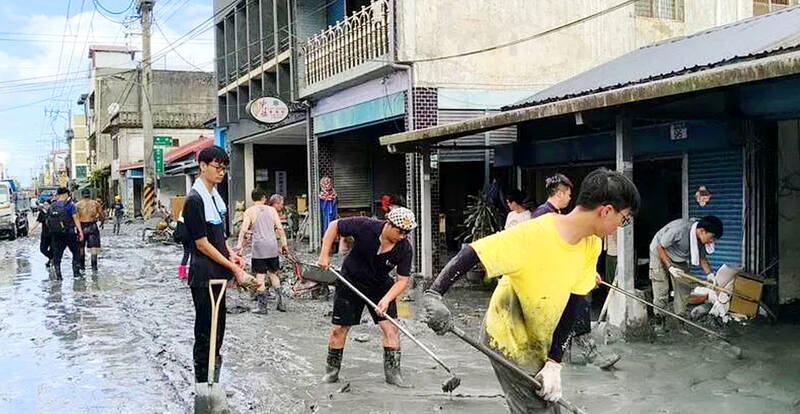
Photo: Liberty Times I 照片:自由時報
2025 年九月二十三日,颱風樺加沙帶來的豪雨導致花蓮光復鄉馬太鞍溪上游的堰塞湖溢流。突如其來的湍急水、泥流沖毀了一座主要橋樑、橫掃附近村莊,肆虐後留下嚴重損害。
這座堰塞湖於七月形成,當時的豪雨導致山崩,且阻擋了馬太鞍溪的自然流向。隨著雨水積聚,這座湖變得愈來愈不穩固。當颱風樺加沙來襲時,水位迅速上升,最終溢流。
災後,來自全臺各地被稱為「鏟子超人」的志工投入救援。他們穿著雨靴、手持鏟子,清除厚重淤泥、運送食物與物資,並協助居民清理家園。他們的努力與團結成為希望的強力象徵,不只對該社區來說是如此,對臺灣全島來說也是如此。
What Did You Learn?
Why did the barrier lake above Matai’an Creek overflow?
參考答案 :
Typhoon Ragasa’s heavy rain caused the water level to rise rapidly.
Words in Use
1. shovel n. 鏟子
Farmers use shovels to clear their fields.
農夫用鏟子清理田地。
2. destroy vt. 摧毀,破壞
A strong typhoon destroyed several houses.
強颱摧毀了好幾棟房屋。
3. unstable a. 不穩固的,不穩定的
An unstable ladder can cause serious accidents.
不穩的梯子可能會導致嚴重意外。
4. volunteer n. 志工
Lily works as a volunteer at an animal shelter.
莉莉在動物之家當志工。
5. unity n. 團結,統一
A sense of unity filled the team before they started the game.
那支隊伍比賽前,隊內充滿團結的氛圍。
Practical Phrases
1. sweep through. . . 橫掃……
sweep三態為:sweep, swept, swept。
Wildfires swept through the forest after weeks of drought.
乾旱數週後,野火席捲了整片森林。
2. leave. . . in one’s wake ……過後留下……
The scandal left chaos in its wake.
這起醜聞發生後留下了一陣騷亂。
3. build up 漸漸增加
Traffic built up quickly during rush hour.
在尖峰時段,車潮迅速增加。
4. step in 介入,插手
The experienced nurse instantly stepped in when the patient fainted.
那名病患昏倒時,資深護理師立即介入。
聽文章朗讀及講解: https://ivy.pse.is/455bfu
本文出自常春藤解析英語雜誌: www.ivy.com.tw

Candles were made from animal fats in ancient times. As knowledge and materials improved, people began making them with beeswax and vegetable wax, which burned more cleanly and produced less odor. Before __1__ lighting, candles were considered highly valuable. In many religions, they came to symbolize life and wisdom. Even today, candles are frequently used in religious rituals and for cultural celebrations. The __2__ toward industrial candle making began in 1834, when Joseph Morgan patented a machine that could produce molded candles without interruption. His __3__ marked the start of mechanized production, though for many decades, candles were still

Every few years, the World Baseball Classic (WBC) offers sports fans a real World Series. At its finest, as in the shocking upset on Tuesday last week of the US team by Italy, the games generate the kind of electricity fans feel at the FIFA World Cup. That’s exactly how Major League Baseball (MLB), which owns the WBC, wants it. The tournament, first played in 2006, was designed to boost the league’s profile beyond North America and help it become a global game. In most respects, it’s done better than expected. Yet as the WBC grows, the structure, timing and staging of
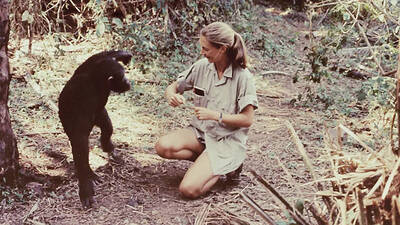
Jane Goodall, the pioneering scientist whose groundbreaking research changed our understanding of chimpanzees and reshaped the study of animal behavior, has died at the age of 91. The Jane Goodall Institute confirmed that she passed away from natural causes in California in October 2025 while on a speaking tour. Born in England, Goodall gained international fame in the 1960s after traveling to Tanzania to study wild chimpanzees under the guidance of anthropologist Louis Leakey. At the time, she had no formal scientific training, yet she lived among the animals and recorded their behavior in remarkable detail. Her discovery that

Dos & Don’ts — 想想看,這句話英語該怎麼說? 1. 她德語說得和她老師一樣流利。 ˇ Her German is as fluent as her teacher’s. ˇ She speaks German as fluently as her teacher (does). χ Her German is as fluent as her teacher. 註︰這裏所比的是「她的德語」和「她老師的德語」,而不是把她的德語和她的老師這個人相比,所以必須說 her teacher’s,即 her teacher’s German。或把「她說德語」和「她老師說德語」比較。 2. 一般認為北部人生活步調和南部人不同。 ˇ The people of the North are generally described as different from those of the South in terms of pace of life. χ The people of the North are generally described as different from the South in terms of pace of life. 註︰所不同者是北部人和南部人,而不是北部人和南部地區的比較,所以應加 those of,those 代替 the people,以免重複。 3. 他的新小說和上一本風格不同。 ˇ The style of his new novel is different from that of his last one. ˇ His new


 RSS
RSS