


對話 Dialogue
清清:氣象預報說週末好像有寒流,天氣這麼冷,我只想宅在家裡。
Qīngqīng: Qìxiàng yùbào shuō zhōumò hǎoxiàng yǒu hánliú, tiānqì zhème lěng, wǒ zhǐ xiǎng zhái zài jiālǐ.
Photo: Wikipedia / 照片:Wikipedia
華華:說到這個,我週末想約剛認識的新朋友出去玩,但寒流來的話戶外活動可能不太合適,我還不知道要做什麼好。
Huáhua: Shuō dào zhège, wǒ zhōumò xiǎng yuē gāng rènshí de xīn péngyǒu chūqù wán, dàn hánliú lái de huà hùwài huódòng kěnéng bú tài héshì, wǒ hái bù zhīdào yào zuò shénme hǎo.
清清:要不要考慮去玩密室脫逃?我以前跟朋友去過,很好玩,而且不怕風吹雨淋。
Qīngqīng: Yào bú yào kǎolǜ qù wán mìshì tuōtáo? Wǒ yǐqián gēn péngyǒu qù guò, hěn hǎowán, érqiě bú pà fēng chuī yǔ lín.
華華:我覺得不錯,可是我們才剛認識,會不會太尷尬?
Huáhua: Wǒ juéde búcuò, kěshì wǒmen cái gāng rènshí, huì bú huì tài gāngà?
清清:不會啦!玩密室脫逃需要大家一起合作,反而更容易變熟。
Qīngqīng: Bú huì la! Wán mìshì tuōtáo xūyào dàjiā yìqǐ hézuò, fǎn’ér gèng róngyì biàn shóu.
華華:說的也是。但是解不出來的話好像有點糗。
Huáhua: Shuō de yěshì. Dànshì jiě bù chūlái de huà hǎoxiàng yǒudiǎn qiǔ.
清清:你可以先找簡單的主題,要是解不出來也可以請關主給提示。
Qīngqīng: Nǐ kěyǐ xiān zhǎo jiǎndān de zhǔtí, yàoshì jiě bù chūlái yě kěyǐ qǐng guānzhǔ gěi tíshì.
華華:好主意!那我等下傳訊息問問他。
Huáhua: Hǎo zhǔyì! Nà wǒ děngxià chuán xùnxí wèn wèn tā.
翻譯 Translation
Qingqing: The weather forecast says there’s going to be a cold front this weekend. It’s so cold — I just want to stay home.
Huahua: Speaking of the cold, I want to invite a new friend out this weekend, but if the cold front comes, outdoor activities might not be suitable. I still don’t know what to do.
Qingqing: How about trying an escape room? I went with my friends before. It was really fun, and you don’t have to worry about wind or rain.
Huahua: Sounds good, but we just met. Wouldn’t it be a bit awkward?
Qingqing: Nah. You need to work together in escape rooms, so it actually helps people bond faster.
Huahua: That’s true. But if we can’t solve the puzzles, that might be a little embarrassing.
Qingqing: You can start with a simple theme. If you get stuck, you can always ask the game master for hints.
Huahua: Great idea. I’ll message him later and ask.
生詞 Vocabulary
1. 戶外活動 (hùwài huódòng) outdoor activities
2. 宅 (zhái) stay at home; be a homebody
3. 風吹雨淋 (fēngchuī yǔlín) exposed to wind and rain; endure the elements
4. 尷尬 (gāngà) awkward; embarrassing
5. 糗 (qiǔ) embarrassing; awkward; make a fool of oneself
6. 關主 (guānzhǔ) game master; person running a challenge (e.g., in escape rooms)
7. 提示 (tíshì) hint; clue
8. 傳訊息 (chuán xùnxí) send a message; text someone
教材音檔 Audio Files
國立清華大學華語中心提供
By National Tsing Hua University Chinese Language Center:

A: Wow, US climber Alex Honnold has announced that he’s going to free-climb Taipei 101 on Jan. 24. And the challenge, titled “Skyscraper Live,” will be broadcast worldwide live on Netflix at 9am. B: Oh my goodness, Taipei 101 is the world’s tallest green building. Is he crazy? A: Honnold is actually the climber in the 2019 film “Free Solo” that won an Oscar for best documentary, and was directed by Taiwanese-American Jimmy Chin and his wife. He’s a legendary climber. B: Didn’t Alain Robert, “the French Spiderman,” also attempt to scale Taipei 101 in 2004? A: Yes, but

A: There are always adventurers who want to conquer Taipei 101 as a world-class landmark. Didn’t someone once parachute from the top of it? B: Yeah, that’s right. Austrian extreme sportsman Felix Baumgartner once parachuted from the rooftop observation deck in 2007 without permission. He died earlier last year in a powered paragliding crash at the age of 56. A: Hollywood superstar Tom Cruise also almost jumped off Taipei 101 for “Mission Impossible 3.” B: What? But I didn’t see the building in the movie. A: The news says that the film’s producers applied to the Taipei City

People use far more than just spoken language to communicate. Apart from using our voices to pronounce words, we also use body language, which includes countless facial expressions. Most people know that smiles and frowns indicate pleasure and displeasure, or that wide eyes with raised eyebrows typically show surprise. However, there is a lot more to learn about how facial expressions can help or hinder communication. People often unintentionally reveal their emotions through very tiny facial movements known as “microexpressions.” The term was popularized by psychologist Paul Ekman, who found that people from cultures across the world generally recognize
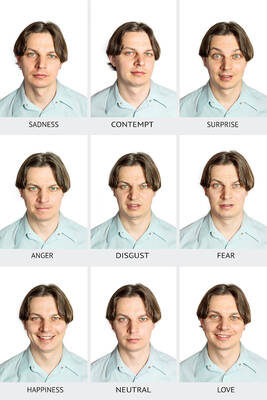
Continued from yesterday(延續自昨日) https://www.taipeitimes.com/News/lang Microexpressions appear quickly and can disappear in the blink of an eye. They typically last only a fraction of a second, yet they reveal a person’s true emotions. Here’s how to recognize the seven microexpressions. Happiness: The corners of the lips move upward and back, lifting the cheeks. Crow’s feet also form near the outside of the eyes. Sadness: The corners of the mouth turn downward, creating a frown. The eyebrows may also draw closer together. Disgust: The muscles around the nose and eyebrows tighten toward the bridge of the nose. The upper lip rises slightly to reveal the teeth. Surprise:


 RSS
RSS