


A: The 62nd Golden Horse Awards ceremony is set for next weekend. So what are the nominees for Best Narrative Feature?
B: The nominees are: A Foggy Tale, The Waves Will Carry Us, Left-Handed Girl, Queerpanorama and Mother Bhumi.
A: What about the nominees for Best Leading ActorActress?

Photo: Liberty Times 照片:自由時報
B: Richie Koh, Will Or, Joseph Chang, Chang Chen and Lan Wei-hua are nominated for Best Leading Actor. Caitlin Fang, Rene Liu, Ariel Lin, Alexia Kao and Fan Bingbing are nominated for Best Leading Actress.
A: It’s a shame that many of those movies haven’t even been released yet. Meanwhile, some blockbusters won zero nominations this year. This may well affect the audience’s interest in the award show.
A: 第62屆金馬獎下週末即將登場!今年入圍最佳劇情片的有哪些?
B: 入圍的有︰《大濛》、《人生海海》、《左撇子女孩》、《眾生相》、《地母》。
A: 那入圍最佳男/女主角的有哪些?
B: 男主角有︰許瑞奇、柯煒林、張孝全、張震、藍葦華;女主角有︰方郁婷、劉若英、林依晨、高伊玲、范冰冰。
A: 可惜他們的電影大多還沒上映,幾部賣座強片又全數槓龜,多少會影響影迷觀注的熱度。
(By Eddy Chang, Taipei Times/台北時報張迪)
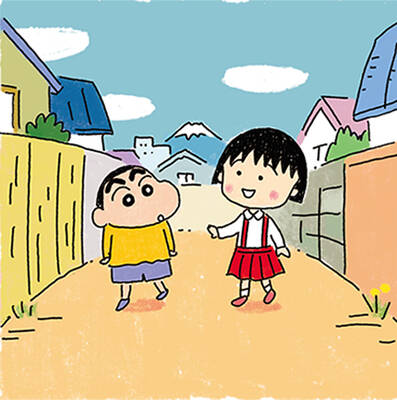
A: Popular humorous Japanese manga series “Chibi Maruko-chan” and “Crayon Shin-chan” will collaborate for their respective 40th and 35th anniversaries, publishing three crossover stories in April. B: Both were made into TV animation series, becoming huge hits in Asia. What are the crossover stories about? A: The first story features Shin-chan and his family visiting Maruko-chan’s hometown, Shizuoka City, where they run into each other. B: Wow, that sounds interesting. And then? A: The follow-ups feature Maruko-chan and her family visiting Shin-chan’s hometown, Kasukabe City. I bet the interactions between the two families will be funny. A: 熱門日本漫畫《櫻桃小丸子》、《蠟筆小新》4月將合作,為紀念小丸子40週年與小新35週年,推出三篇跨界聯動漫畫! B:
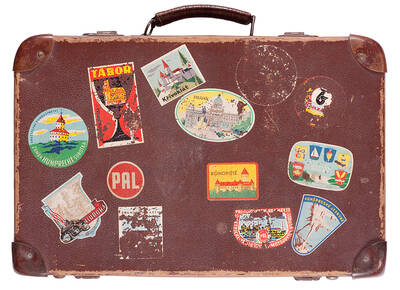
Travel fever is back, and it’s contagious. After years of being kept home during the COVID-19 pandemic, people are once again eager to explore the world. Rather than just book any trip, travelers are getting smarter about how they scratch that travel itch. Microcation Defined as four days or fewer and over 160km away from home, the microcation perfectly matches the post-pandemic mindset. After long periods of remaining indoors, people are making up for lost time by taking short, frequent getaways throughout the year. These brief trips avoid the work-life imbalance that comes with long absences. With only a few days away, one’s
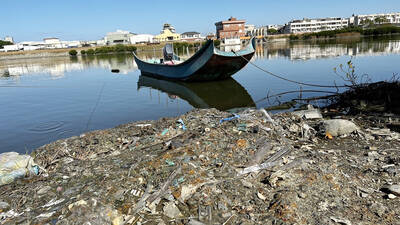
Many consumers are guilty of filling drawers or closets with old laptops, cellphones, fitness trackers and other electronic devices once they are no longer needed. It’s hard to know where to recycle such items, or it seems costly and inconvenient to do so. The world generates millions of tons of electronic waste — also called e-waste — each year. According to the UN’s most recent estimate, people worldwide produced 62 million metric tons of e-waste in 2022, and only about 22 percent of it was properly recycled. The US’ Environmental Protection Agency estimates that less than a quarter of e-waste is

Dos & Don’ts — 想想看,這句話英語該怎麼說? 1. 我們很早到達電影院。 ˇ We arrived at the theater very early. χ We arrived the theater very early. 註︰arrive 為不及物動詞,後面如果有受詞要用 at 或 in。例如:They arrived in Taipei yesterday.。一般大地方,如國家、省、大城市等前面用 in,凡小地方城鎮、學校等則用 at。 2. 開車半小時以後,我們到達了海灘。 ˇ After half an hour’s drive, we got to the beach. χ After half an hour’s drive, we got the beach. 註︰come, go, get(來、去、到達)某地時,在表示地點的名詞前面應該用 to,如 go to school, go to Taipei, come to Shanghai 等。如果這些動詞後面所跟的是 here, there, home 等副詞,則不用 to。 3. 明天我會回辦公室。 ˇ I will be back in the office tomorrow. χ I will be back to office tomorrow. 註︰to be back 一語裡的 back 是副詞,不是介詞,所以後面要用 at (the market) 或 in (the office)。 假如假期結束,要回學校上課了則可說: ? Kids will be back


 RSS
RSS