


A: So you’re reading Jin Yong’s martial arts novel again?
B: Yup, Jin’s novels are so fascinating, especially the trilogy: “Legends of the Condor Heroes,” “Return of the Condor Heroes,” and “Heaven Sword and Dragon Saber.”
A: The late novelist published his first story in 1955, which means this year marks the 70th anniversary of his “wuxia” world.
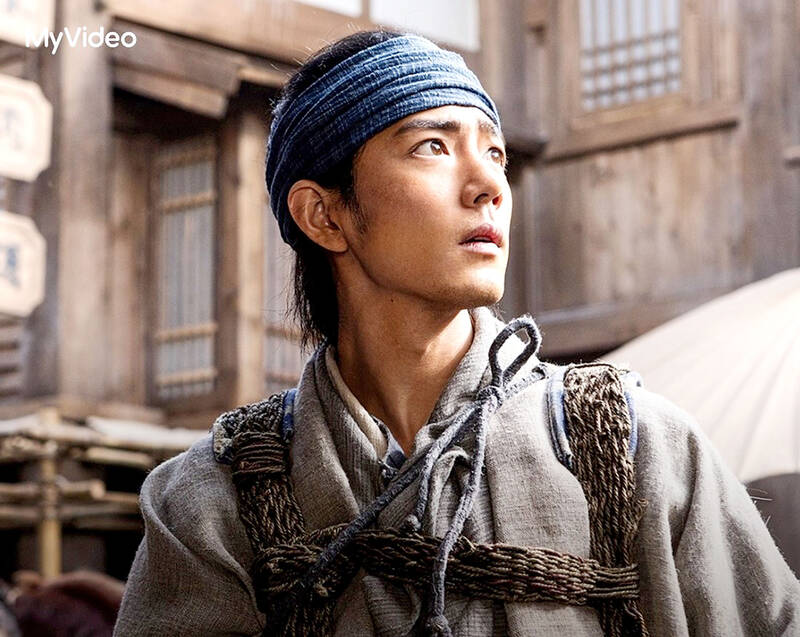
Photo: MyVideo 照片:MyVideo提供
B: Wasn’t an English version of “Legends of the Condor Heroes” also released in 2018?
A: Yes, but the debate over the translation of kung fu moves continues — like the evil move “Nine Yin Skeleton Claw.”
A: 你又在重讀金庸的武俠小說啦?
B: 對啊他的小說真是引人入勝,特別是射鵰三部曲︰《射鵰英雄傳》、《神鵰俠侶》、《倚天屠龍記》。
A: 金庸自1955年開始連載首部小說,今年正是他的武俠世界70週年!
B: 《射鵰英雄傳》不是在2018年還出過英文翻譯版嗎?
A: 不過書中各種功夫招式的翻譯仍持續引發爭論––例如邪惡的「九陰白骨爪」。
(By Eddy Chang, Taipei Times/台北時報張迪)

Many of us face common health challenges: tired eyes from long screen use, the search for anti-aging support and the need for weight control without resorting to restrictive diets. While no single food is a miracle cure, berries offer targeted, evidence-based nutritional support that’s easy and delicious to add to your daily routine. For overall immunity and healthy skin, vitamin C is essential. Strawberries provide roughly 10 percent more vitamin C than oranges, while blackcurrants deliver three to four times as much. These tasty fruits also contain abundant polyphenols, which help the body manage oxidative stress, support overall

A: Why didn’t you come to work earlier this week? Did you go anywhere for fun? B: I went to Thailand with friends to celebrate the 2026 Water Festival, also known as the Songkran Festival. The three-day annual celebrations ran from April 13 to 15. Everyone was having water fights in the streets. A: I know that “Songkran” is the traditional New Year in Southeast Asia, usually celebrated in mid-April. B: And we also attended the 2026 Siam Songkran Music Festival this time. The EDM shows by Martin Garrix — who has been crowned the World’s No. 1 DJ by “DJ

A: Apart from the Thai Water Festival, Taiwan’s three major Matsu pilgrimages are among Asia’s largest annual folk activities. B: This year, “Baisha-ma” of the Baishatun Gongtian Temple in Miaoli County was the first to kick off her pilgrimage, with the deity departing on April 12 and returning on the 20. A: Then “Dajia-ma” of the Dajia Jenn Lann Temple in Taichung will set off next, departing tonight before midnight and returning on April 26. B: And what about “Beigang-ma” of Yunlin County’s Beigang Chao-tian Temple? When will she launch her procession? A: Typically, “Beigang-ma” begins her procession on the eve of her lunar

The US-Israeli war with Iran, which began on Feb. 28, has killed thousands of people, destabilized the Middle East and rocked global energy markets by effectively closing the strait. WHAT IS THE STRAIT OF HORMUZ? Lying between Oman and Iran and linking the Gulf north of it with the Gulf of Oman to the south and the Arabian Sea beyond, the strait is 33km wide at its narrowest point, with a shipping lane just 3km wide in either direction. Perhaps the world’s most important energy shipping channel, the waterway is about 167km long. Following through on an old threat, Tehran effectively closed the strait


 RSS
RSS