


Continued from yesterday(延續自昨日)
https://www.taipeitimes.com/News/lang
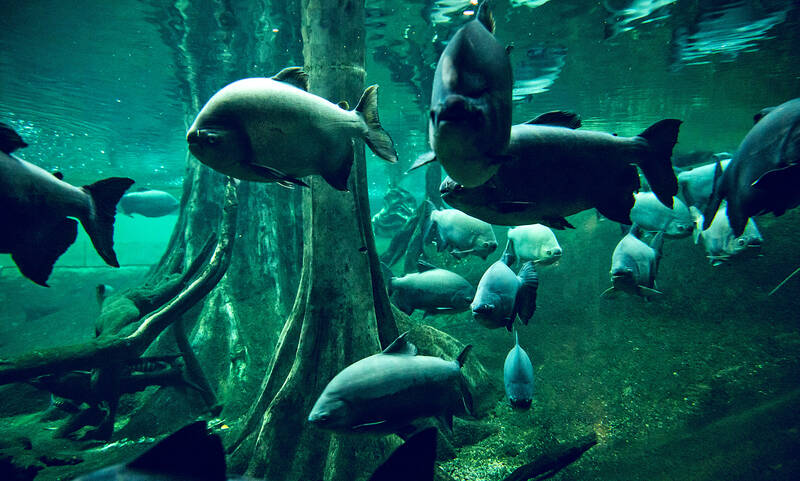
“Piranhas” may make great material for horror and adventure stories, but in reality, they rarely attack humans. While people fear piranhas, it is often humans who pose a greater threat to them through overfishing, pollution, and habitat disruption.
Photos: Adobestock I 照片︰Adobestock
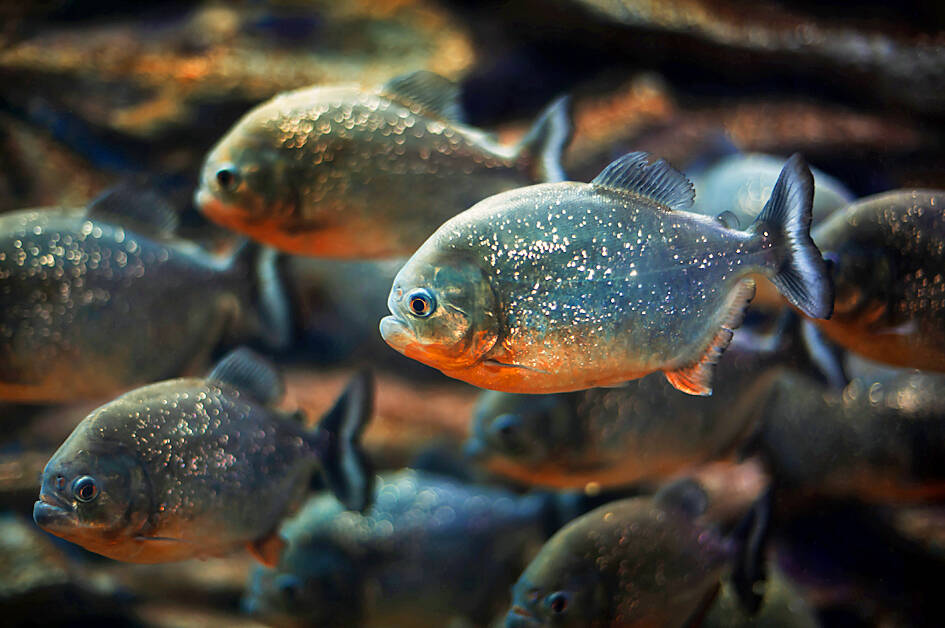
In many parts of the Amazon, piranhas have long been a common food source and are often grilled or cooked in soup. Their razor-sharp, triangular teeth are also used by locals to make tools for cutting and carving. These teeth are tightly packed, interlock like a saw blade, and are strong enough to remain useful even after the fish has died. Remarkably, piranhas shed and regrow their teeth in sections throughout their lives.
Although they play an important role in their native ecosystems, piranhas can become harmful when introduced to other parts of the world. They are traded internationally as food, exotic pets, or aquarium displays. However, many of them end up being released into local waterways, where they become invasive. Outside the Amazon, they can harm local fish populations by competing for food and space, thereby upsetting the natural balance.
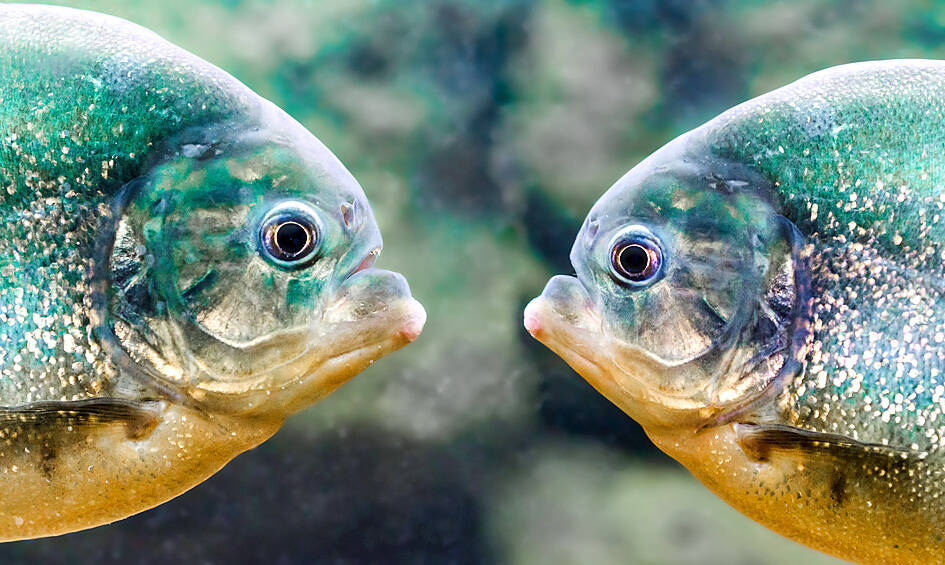
Though often misunderstood, piranhas are more than just sharp teeth and scary stories. They are respected by locals, feared by outsiders, and deeply affected by human actions. Understanding their true nature is the first step toward protecting both them and the ecosystems they call home.
Photos: Adobestock I 照片︰Adobestock
食人魚可能是恐怖和冒險故事的絕佳素材,但實際上,牠們很少攻擊人類。雖然人們害怕食人魚,但往往是人類對牠們造成的威脅更大,因人類會過度捕撈、造成汙染和擾亂牠們的棲息地。
在亞馬遜的許多地方,食人魚長久以來都是一種常見的食物來源,經常被燒烤或煮成湯。當地人也利用牠們鋒利的三角形牙齒來製作切割和雕刻的工具。這些牙齒排列緊密、像鋸片一樣相互咬合,且堅固到即使魚死了之後仍然有用處。值得注意的是,食人魚在其一生中會分段脫落和重新長出牙齒。
儘管食人魚在其原生的生態系統中發揮了重要作用,但當牠們被引入世界其他地方時,可能會變得有害。牠們在國際上被交易,作為食物、外來寵物,或水族館觀賞生物。然而,有許多食人魚最終被野放到當地的水道,在那裡變成外來入侵物種。在亞馬遜以外的地方,牠們會透過爭奪食物和空間而危害當地的魚群,從而打亂自然平衡。
Photos: Adobestock I 照片︰Adobestock
儘管經常遭誤會,食人魚卻不僅僅是鋒利的牙齒和可怕的故事。牠們受到當地人的尊敬、被外人懼怕,且深受人類行為的影響。了解牠們真實的本性是保護牠們及其家園生態系統的第一步。
What Did You Learn?
1. Which of the following people is most likely to be attacked by piranhas?
(A) A man falling into the Amazon River without any injuries.
(B) A diver swimming near where piranhas lay eggs.
(C) A tourist taking pictures of piranhas from a boat.
(D) A person fishing on a frozen lake in winter.
2. Why do piranhas gather in large groups, according to the Day 1 passage?
(A) To build nests together.
(B) To attack humans more easily.
(C) To stay safe when they encounter bigger creatures.
(D) To communicate better when they chase their prey.
3. What can be a potential consequence of introducing piranhas to non-native environments?
(A) They fight over resources with local species.
(B) They increase biodiversity in local ecosystems.
(C) They help balance the local fish population.
(D) They threaten other animals’ status as pets.
答案:1. (B) 2. (C) 3. (A)
Words in Use
1. habitat n. (動物的)棲息地
Wetlands provide a crucial habitat for a wide variety of birds.
溼地為各種鳥類提供了重要的棲息地。
2. disruption n. 擾亂;中斷
A power outage led to a major disruption in the factory’s production schedule.
停電導致該工廠的生產計畫被大大擾亂了。
3. grill vt. 燒烤
Grilling fish over an open fire gives it a smoky flavor.
在明火上烤魚會有煙燻的風味。
4. carving n. 雕刻
Stone, wood, and ivory are common carving materials.
石頭、木頭和象牙都是常見的雕刻材料。
5. blade n. 刀片
Mom noticed a small chip in the blade of the kitchen knife.
媽媽發現廚房菜刀的刀片上缺了一小角。
Practical Phrases
1. in reality 實際上,事實上
The suspect told the police he was out of town last night, but in reality, he was home.
那名嫌犯告訴警方他昨晚出城去了,但他其實是待在家裡。
2. pose a/an + Adj. + threat to. . .
對……構成……的威脅
Typhoons pose a serious threat to crops.
颱風對農作物構成嚴重的威脅。
3. introduce A to B 把A引進B
The software company plans to introduce new functions to its existing platform.
那家軟體公司打算在其現有的平臺上引進新功能。
4. end up V-ing 最終∕結果∕到頭來……
Brad will end up burning out if he continues working that hard.
布萊德如果繼續那麼拚命工作,最後會累垮。
5. compete for. . . 競爭∕角逐……
Only two athletes will compete for the gold medal in the final race.
只有兩名運動員會在決賽中角逐金牌。
聽文章朗讀及講解: https://ivy.pse.is/455bfu
本文出自常春藤解析英語雜誌: www.ivy.com.tw

A: Taiwan legalized same-sex marriage on May 24, 2019, so this week marks the seventh anniversary of that milestone. By the end of 2024, a total of 32,126 LGBT couples had tied the knot. B: How many of them got married to foreign partners? A: In 2024, there were 504 cross-border same-sex marriages. By the end of that year, there were 130 cross-strait same-sex marriages between Taiwanese and Chinese — accounting for only about 0.4 percent of the total. B: I’ve heard that a seven-year marriage brings the “seven-year itch.” I bet some couples regret their decisions now. A:

A: While Taiwan is celebrating the 7th anniversary of legalizing same-sex marriage, a poll shows that the support rate for same-sex marriage rose sharply from 37.4 percent seven years ago to 69.9 percent last year. B: Actually, I’m a bit curious about the size of Taiwan’s LGBT population. A: I’m not sure. But if we take a Gallup poll in the US as an example, 9.3 percent of American adults identified as LGBT in 2024. B: Wow, is it because the Americans are relatively open? In many other countries, the figures hover around 5 percent. A: Based on this,

Taiwan Travelogue, the novel by Taiwanese author Yang Shuang-zi and translated into English by Lin King, won the prestigious International Booker Prize in London on May 19. It marks the first time a Taiwanese literary work has received the International Booker Prize, setting a historic milestone both for Taiwanese literature and for the award itself. Prior to this achievement, Taiwan had only once appeared on the Booker radar, when Taiwanese author Wu Ming-yi was longlisted for the Booker Prize in 2018 with The Stolen Bicycle. The International Booker Prize honors works of fiction translated into English and published in the UK or Ireland.
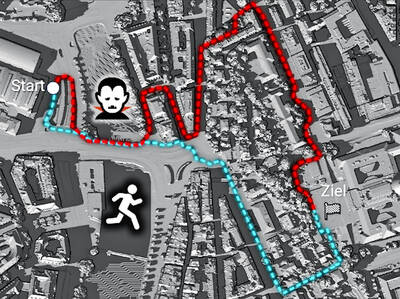
As climate change and urbanization push city temperatures higher, walking outdoors is becoming increasingly uncomfortable in many parts of the world, especially when prolonged time spent in sunlight is involved. As a result, outdoor lovers are now seeking cooler, shaded walking routes. However, most mainstream map apps still do not __1__ shaded footpaths. Enter routing.osm.ch — a Swiss web-based route planner that introduces a novel solution to this problem. Its “Vampire mode,” named after the legendary creatures’ fear of being __2__ natural light, was developed by a Swiss research team led by Professor Stefan Keller. The platform combines open data from


 RSS
RSS