


The Australian government will legislate for a ban on social media for children under 16, Prime Minister Anthony Albanese said on Thursday last week, in what it calls a world-leading package of measures that could become law late next year.
Australia is trialing an age-verification system to assist in blocking children from accessing social media platforms, as part of a range of measures that include some of the toughest controls imposed by any country to date.
Albanese cited the risks to physical and mental health of children from excessive social media use, in particular the risks to girls from harmful depictions of body image, and misogynist content aimed at boys.
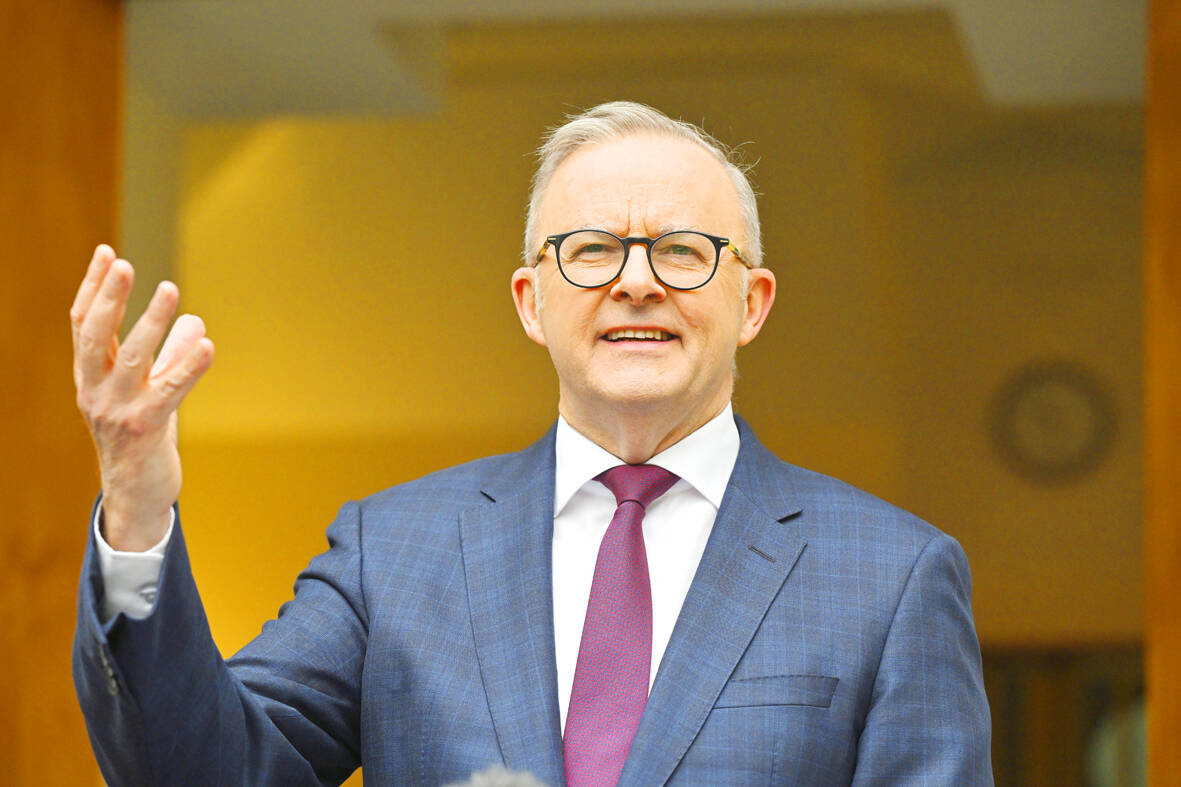
Photo: AP 照片:美聯社
“If you’re a 14-year-old kid getting this stuff, at a time where you’re going through life’s changes and maturing, it can be a really difficult time and what we’re doing is listening and then acting,” he said.
A number of countries have already vowed to curb social media use by children through legislation, although Australia’s policy is one of the most stringent.
No jurisdiction so far has tried using age verification methods such as biometrics or government identification to enforce a social media age cut-off, two of the methods being trialed.
Photo: Pixabay 照片:Pixabay
Australia’s other world-first proposals are the highest age limit set by any country, no exemption for parental consent and no exemption for pre-existing accounts.
Legislation will be introduced into the Australian parliament this year, with the laws coming into effect 12 months after being ratified by lawmakers, Albanese said.
The opposition Liberal Party has expressed support for a ban.
“What we are announcing here and what we will legislate will be truly world leading,” Communications Minister Michelle Rowland said.
Rowland said platforms impacted would include Meta Platforms’ Instagram and Facebook, as well as Bytedance’s TikTok and Elon Musk’s X. Alphabet’s YouTube would likely also fall within the scope of the legislation, she added.
TikTok declined to comment, while Meta, Alphabet and X did not respond to requests for comment.
The Digital Industry Group (DIGI), a representative body which includes Meta, TikTok, X and Alphabet’s Google as members, said the measure could encourage young people to explore darker, unregulated parts of the Internet while cutting their access to support networks.
“Keeping young people safe online is a top priority ... but the proposed ban for teenagers to access digital platforms is a 20th century response to 21st century challenges,” said DIGI Managing Director Sunita Bose.
“Rather than blocking access through bans, we need to take a balanced approach to create age-appropriate spaces, build digital literacy and protect young people from online harm,” she added.
France last year proposed a ban on social media for those under 15, though users were able to avoid the ban with parental consent.
The US has for decades required technology companies to seek parental consent to access the data of children under 13, leading to most social media platforms banning those under that age from accessing their services.
(Reuters)
澳洲總理安東尼‧艾班尼斯上週四表示,澳洲政府將立法禁止16歲以下兒童使用社群媒體,稱這是領先世界的一套措施,可能在明年底成為法律。
為防止兒童使用社群媒體平台,澳洲正試驗一種年齡驗證系統,這屬於一系列措施之一,其中的一些比目前任何國家所實施的管制還要嚴格。
艾班尼斯列舉了過度使用社群媒體對兒童身心健康的危害,尤其是對身體形象的有害描述對女孩造成的風險,以及針對男孩所散布的厭女內容。
「如果你是個14歲的孩子,在你的生命經歷變化和成熟的時候看到這些東西,可能會讓這段時期變得很難熬,而我們所能做的就是傾聽,然後採取行動」,他說。
一些國家已誓言要透過立法來限制兒童使用社群媒體,但澳洲的政策是最嚴格的之一。
到目前為止,尚未有國家或地區的法律嘗試使用生物識別或身分證件識別等年齡驗證方法來強制執行社群媒體使用者年齡限制,這兩種方法正在試驗中。
澳洲的提案獨步全球之處包括:所管制的年齡上限是所有國家中最高的、即便父母同意也不能豁免,以及既有帳戶之不能例外。
艾班尼斯表示,相關立法將於今年送交澳洲國會,經議員批准後12個月生效。
對實施禁令,反對黨澳洲自由黨表示支持。
通訊部長蜜雪兒‧羅蘭表示:「我們在這裡所宣布的,以及我們將立法的內容,會是真正領先全球的」。
羅蘭表示,將受影響的平台包括Meta公司旗下的Instagram和Facebook,以及字節跳動(Bytedance)的TikTok,還有伊隆‧馬斯克的X。谷歌母公司Alphabet旗下的YouTube也可能會列入管制。
TikTok拒絕置評,而Meta、Alphabet及X皆未做出回應。
成員包括Meta、TikTok、X及Alphabet旗下谷歌在內的代表機構澳洲數位產業協會(DIGI)表示,這項措施可能會讓年輕人轉向網路中更黑暗、不受監管的部分,同時切斷他們跟支持網路的聯繫。
DIGI董事總經理蘇妮塔‧伯斯表示:「保護少年的網路安全是首要任務……但禁止青少年使用數位平台,是在用20世紀的方法來處理21世紀的問題」。
她補充說:「我們需要採取平衡的方法來創造適合年齡的空間,培養數位素養並保護年輕人免受網路傷害,而不是以禁令來阻止他們上這些網站」。
法國去年提議禁止15歲以下青少年使用社群媒體,但用戶可在父母同意的情況下免受禁令限制。
數十年來,美國一直要求科技公司必須徵求家長同意才能取得13歲以下兒童的資料,這讓大多數社群媒體平台因此禁止13歲以下兒童使用其服務。
(台北時報林俐凱編譯)

Taiwan Travelogue, the novel by Taiwanese author Yang Shuang-zi and translated into English by Lin King, won the prestigious International Booker Prize in London on May 19. It marks the first time a Taiwanese literary work has received the International Booker Prize, setting a historic milestone both for Taiwanese literature and for the award itself. Prior to this achievement, Taiwan had only once appeared on the Booker radar, when Taiwanese author Wu Ming-yi was longlisted for the Booker Prize in 2018 with The Stolen Bicycle. The International Booker Prize honors works of fiction translated into English and published in the UK or Ireland.

A: While Taiwan is celebrating the 7th anniversary of legalizing same-sex marriage, a poll shows that the support rate for same-sex marriage rose sharply from 37.4 percent seven years ago to 69.9 percent last year. B: Actually, I’m a bit curious about the size of Taiwan’s LGBT population. A: I’m not sure. But if we take a Gallup poll in the US as an example, 9.3 percent of American adults identified as LGBT in 2024. B: Wow, is it because the Americans are relatively open? In many other countries, the figures hover around 5 percent. A: Based on this,
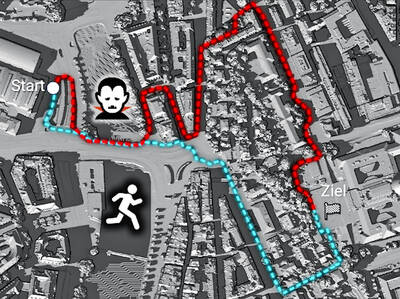
As climate change and urbanization push city temperatures higher, walking outdoors is becoming increasingly uncomfortable in many parts of the world, especially when prolonged time spent in sunlight is involved. As a result, outdoor lovers are now seeking cooler, shaded walking routes. However, most mainstream map apps still do not __1__ shaded footpaths. Enter routing.osm.ch — a Swiss web-based route planner that introduces a novel solution to this problem. Its “Vampire mode,” named after the legendary creatures’ fear of being __2__ natural light, was developed by a Swiss research team led by Professor Stefan Keller. The platform combines open data from

Cities around the world are testing “robotaxis,” hoping that autonomous vehicles will ease traffic and reduce emissions. However, recent analyses suggest these expectations may be overly optimistic. According to consulting firm Kearney, robotaxis could actually make congestion worse rather than better. Because self-driving rides are expected to be cheaper and more convenient than traditional taxis, more people may choose them over walking, biking, or using public transportation. This shift would put more cars on already crowded roads. Another concern is “deadheading,” which refers to robotaxis traveling without passengers between rides. Since autonomous fleets need to reposition themselves throughout the day, these


 RSS
RSS