


Continued from yesterday(延續自昨日)
https://www.taipeitimes.com/News/lang
One style of slow running that has recently gained popularity is running at a niko niko pace. Niko niko running was developed by Hiroaki Tanaka, a Japanese professor and researcher. The name niko niko literally means “smile” in Japanese, perfectly reflecting the essence of this running style. Instead of pushing yourself through strenuous exercise, the focus of niko niko running is on enjoying yourself.

Photo: Ivy English I 照片:常春藤
Dr. Tanaka spent decades perfecting the concept of the niko niko pace. The general rule of thumb is that individuals run at an intensity below 50% of their VO2 max, which is the amount of oxygen our bodies use during exercise. For most people, this pace is just slightly faster than walking. Jogging at the niko niko pace should allow people to effortlessly maintain a conversation.
Despite its slow speed, maintaining proper posture is essential in niko niko running. This involves taking shorter, quicker steps—about 180 per minute—and landing on the mid-foot rather than the heel. Dr. Tanaka recommends that individuals stand tall while jogging with their back straight and shoulders relaxed. Of course, people should jog with smiles on their faces.
Running at a niko niko pace activates only the slow-twitch fibers in the muscles. This enables people to run for long periods without getting fatigued. Exercising over long periods releases chemicals and hormones that make us feel energized and keep us in a good mood. Next time you go for a run, try slowing down and jogging at the niko niko pace. You might just end the run with a smile on your face.
近來變得受歡迎的一種超慢跑風格是以「niko niko」的速度跑。微笑超慢跑是由日本教授兼研究者田中宏曉所創立。niko niko這個名稱在日語的字面意思是「微笑或笑咪咪」,完美地反映了這種跑步風格的本質。與逼迫自己進行費勁的運動相反,微笑超慢跑的重點是享受自我。
田中博士花了數十年的時間完善niko niko速度的概念。一般的經驗法則是,個人跑步的強度應該低於他們最大攝氧量的50%,這是我們在運動時身體使用的氧氣量。對於大多數人來說,這個速度只略快於行走。以niko niko的速度慢跑應該會讓人能夠輕鬆地保持對話。
即使微笑超慢跑的速度很慢,跑步時保持正確的姿勢是必要的。這包括採取較短、較快的步伐—大約每分鐘一百八十步的步頻—並確保自己是以腳掌中央著地而非腳後跟。田中博士建議跑步時人們要保持挺直站姿,背部挺直且肩膀放鬆。當然,人們在慢跑時應該面帶微笑。
以niko niko的速度慢跑時會啟動的只有我們肌肉的慢縮肌纖維。這使人們能夠長時間跑步而不感到疲勞。長時間運動會釋放讓我們感到精力充沛、心情愉快的化學物質和荷爾蒙。下次你去跑步時,試著減慢速度,以niko niko的速度慢跑。你可能最後會面帶微笑結束這段慢跑。
What Did You Learn?
1. According to the Day 1 passage, which of the following are NOT a benefit of slow jogging?(多選題)
(A) It is essential for marathon training.
(B) It reduces the risk of getting injured.
(C) It enhances fat-burning efficiency.
(D) It improves heart and lung health.
(E) It promotes jogging pleasure.
(F) It increases muscle size.
2. Which phrase in the Day 2 passage means “a practical and approximate way of doing or measuring something?”
答案:
1. (A)、(F)
2. rule of thumb / Rule of thumb.
Word in Use
1. literally adv. 照字面地
When it comes to translating Chinese to English, don’t translate words literally.
說到中翻英,千萬不要逐字翻譯。
2. reflect vt. 反映
I like that talk show because it reflects my political views.
我喜歡那個談話節目,因為它反映出我的政治觀點。
3. essence n. 本質,精髓
The essence of the poem lies in its ability to capture the beauty of nature in just a few words.
這首詩的精髓在於它能夠用寥寥數語捕捉自然之美。
4. perfect vt. 使完美;改善
To perfect your musical skills, you need to practice as much as possible.
要使音樂技巧臻於完美,你就得儘量練習。
5. oxygen n. 氧氣
A fire needs oxygen in order to sustain itself.
火焰需要氧氣來維持燃燒。
Practical Phrases
1. gain (in) popularity 越來越受歡迎
Organic vegetables are gaining popularity day by day.
有機蔬菜日益受到歡迎。
2. push oneself through... 強迫∕鞭策某人自己進行或堅持……
Despite feeling tired, Rita pushed herself through the last few kilometers of the marathon.
儘管感到疲累,瑞塔仍強迫自己走完馬拉松的最後幾公里。
3. the / a rule of thumb 經驗法則
A good rule of thumb for everyone is not to walk alone in dark alleys at night.
有個很好的經驗法則告訴我們夜晚不要單獨走在暗巷裡。
聽文章朗讀及講解: https://ivy.pse.is/455bfu
本文出自常春藤解析英語雜誌: www.ivy.com.tw
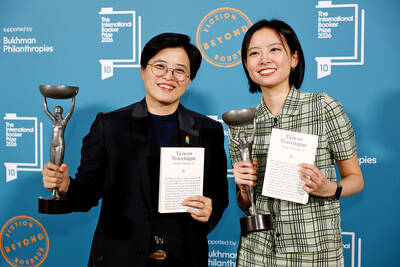
Taiwan Travelogue, the novel by Taiwanese author Yang Shuang-zi and translated into English by Lin King, won the prestigious International Booker Prize in London on May 19. It marks the first time a Taiwanese literary work has received the International Booker Prize, setting a historic milestone both for Taiwanese literature and for the award itself. Prior to this achievement, Taiwan had only once appeared on the Booker radar, when Taiwanese author Wu Ming-yi was longlisted for the Booker Prize in 2018 with The Stolen Bicycle. The International Booker Prize honors works of fiction translated into English and published in the UK or Ireland.
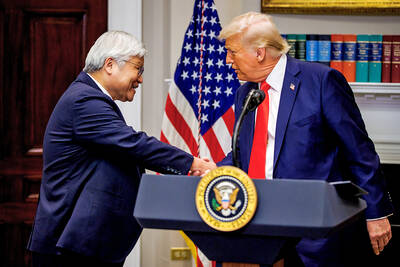
A: Time magazine recently released its list of “The 100 Most Influential People of 2026.” It’s categorized into six groups: Artists, Pioneers, Titans, Icons, Leaders and Innovators. B: TSMC chairman C.C. Wei made the list this year. Which category is he in? A: Wei is actually among the Pioneers, with figures including Disney CEO Josh D’Amaro and MrBeast — the first YouTuber ever to surpass 400 million subscribers. B: Led by Wei, Taiwan’s “silicon shield” TSMC is the sixth-largest company in the world. A: As Nvidia founder Jensen Huang wrote in his introduction, “C.C. Wei is truly one of the
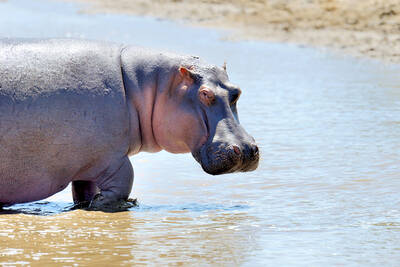
The animal kingdom is full of surprises that challenge our understanding of biology. From remarkable feeding mechanisms to extreme defense strategies, some creatures possess traits so unusual that they seem like pure fiction. Here are four fascinating examples that show nature’s endless creativity. The humble snail may appear simple, but its mouth tells a different story. Snails possess a ribbon-like tongue called a radula, densely covered with anywhere from 1,000 to 12,000 tiny teeth. This structure works like a cheese grater, allowing them to scrape and grind food with surprising efficiency. Far from being passive creatures, snails are actually

A: In the 2026 Time 100 list, besides TSMC chairman C.C. Wei in the Pioneers category, Blackpink’s Jennie also stands out in the Artists group. B: What about the Titans and Icons? A: The Titans include legendary fashion designer Ralph Lauren, Google CEO Sundar Pichai, and Intel CEO Tan Lip-bu. The Icons include actor Wagner Moura, Olympic gold figure skater Alysa Liu and singer Victoria Beckham. B: What about the Leaders and Innovators? I bet US President Donald Trump and Chinese President Xi Jinping are on the list. A: You got it. Other Leaders include Japanese PM Sanae


 RSS
RSS