


Foreigners on their first visit to Taiwan may find two local dishes a little off-putting. The first one is stinky tofu, a dish aptly named after its distinctive, fermented smell. Its origin story appears later in this book. The second dish which seems disturbing to some visitors is the chillingly named coffin bread (also known as treasure chest). Once they have eaten some coffin bread, however, they are big fans of it.
第一次來台灣的外國人可能會對兩道小吃敬謝不敏。一道是臭豆腐,以其發酵的臭味得名,本書後面會詳細介紹。另一道讓遊客感到不安的,就是聽起來令人不寒而慄的棺材板,又稱做官財板。然而他們一旦嘗過以後一定會深深愛上。
off-putting (adj.) 令人不快的,令人厭惡的
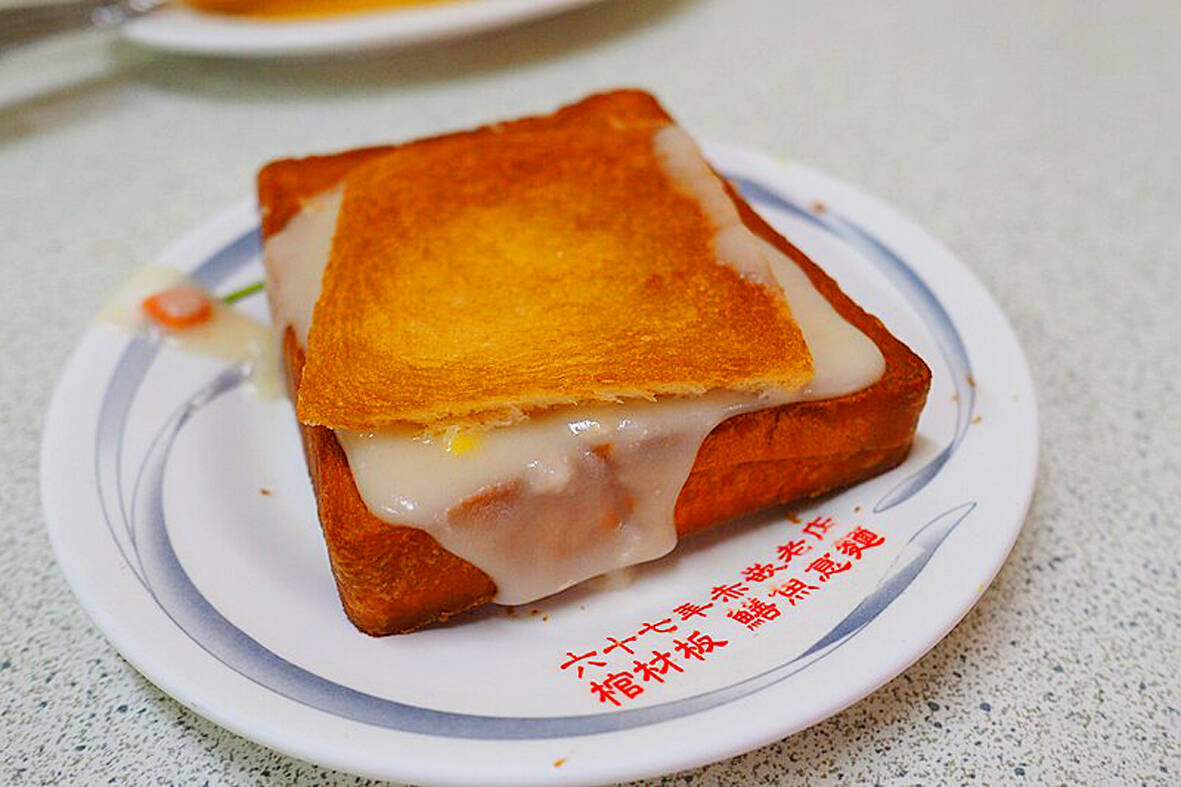
Photo: Wiki Commons 照片:WikI Commons
chillingly (adv.) 令人膽寒地,使人恐懼地
Coffin bread is similar to bread bowl soup, a Western dish consisting of a round loaf of bread hollowed out and filled with soup. Actually, coffin bread is closer in appearance to a hollowed-out French toast. The toasted or fried bread of coffin bread is hollowed out, filled with creamed chicken or ham, along with vegetables like carrots, peas and corn kernels. The top part of the bread that was removed to hollow it out is then placed on top of the bread, giving it a coffin-like appearance.
棺材板和西餐的麵包盅很相似,麵包盅是將濃湯放進挖空的圓麵包中,而棺材板看起來比較像挖空的法式吐司,麵包會先烤過或炸過,中間挖空後,填滿裹著奶油醬的雞肉或火腿,以及胡蘿蔔、豌豆和玉米粒等蔬菜,再將切下的麵包蓋回頂部,從而創造出棺材的視覺效果。
bread bowl soup (n. phr.) 麵包盅
Coffin bread, or treasure chest, was created at a restaurant called Shenchang Old Chikan located in Kangle Market, Tainan. The market is also commonly known as Sakariba in Japanese, which means “a popular spot,” and was thriving when Japan ruled Taiwan in the early 20th century. The dish was invented in the 1940s by the restaurant owner Hsu Liu-yi when organ meat such as chicken livers was considered a nutritious and healthy part of a good diet. This gave the owner Hsu the idea to combine bread originated from the West with the chicken liver that many Taiwanese love into a dish called “chicken liver bread,” and this creation was an instant hit. One day, a professor came to his store to try the specialty. Its unique shape made him associate it with a coffin, and that’s how the bread got its unusual name — coffin bread.
organ meat (offal) (n. phr.) 內臟
instant hit (n. phr.) 一炮而紅
位於台南市康樂市場一間名叫盛場老赤嵌的餐廳,是棺材板的起源地。康樂市場又稱為沙卡里巴,意思是熱鬧的場所,在20世紀初日治時期熱鬧非凡。說起棺材板的由來,是因為早年台灣人將動物的內臟視為補品,對人體身體有益。餐廳許六一老闆靈機一動,將台灣人愛吃的雞肝,融合西方來的麵包,創造出名為「雞肝板」的料理,一推出即吸引眾人前來嘗鮮。有天一位教授來到店裡品嘗,獨特的造型讓他聯想到棺材,「棺材板」這個獨特的名稱就此誕生。
Now, coffin bread is a Tainan signature dish with many creative versions. Shenchang Old Chikan restaurant has replaced the original chicken liver filling with chicken or seafood such as cuttlefish and offers a new curry sauce version. Vendors in other cities have also come up with their own version of coffin bread, featuring a smaller, rectangle-shape that can be eaten while walking to meet the demand for fast food.
棺材板現已為台南招牌美食,有許多創新。盛場老赤嵌除經典的奶油醬外,也推出咖哩口味棺材板,原本以雞肝為主的餡料,換成雞肉、花枝等食材。其他縣市則相競推出新型的長方形棺材板,體積更小,可以邊走邊吃,滿足人們速食的需求。
signature (n.) (人或物的)識別標誌,特徵
cuttlefish (n.) 花枝,烏賊
But the innovation is not just limited to the food itself—even the name can benefit from a little creativity. Despite the ominous word “coffin” being used for a long time, some vendors now use a more creative name: treasure chest. In Chinese, the word for “coffin” (guancai) sounds the same as the words for “official position” (guan) and “wealth” (cai), and together they are the Chinese name for treasure chest. Hence, both coffin bread and treasure chest have the same pronunciation in Chinese, but only the latter has a positive meaning. More and more vendors have adopted the new name, giving this dish an auspicious meaning and wishing visitors to get a job promotion and have a brighter future.
不過不只美食本身要求新求變,連名稱也可以發揮創意。雖然「棺材板」這個不吉利的名稱行之有年,但有人想到將「棺材」換成同音的「官財」,稱作「官財板」,寄寓吉祥之意,於是現在越來越多的攤販改用「官財板」作為招牌,祝福食客升官發財、前程似錦。
ominous (adj.) 不祥的
auspicious (adj.) 吉祥的
promotion (n.) 晉升,升遷
文章由書林出版公司提供:
www.bookman.com.tw

In 2023, an 80-year-old woman in Taipei suffocated her paralyzed son after over five decades of caring for him. Turning herself in immediately, she confessed that worsening health and anxiety about who would care for him after her death had driven her to act. The court, acknowledging her difficult situation, sentenced her to two-and-a-half years in prison while recommending a presidential pardon. This rare judicial recommendation drew a complicated social response. Supporters argue that the mother’s half-century of caregiving renders her deserving of compassion instead of incarceration, believing that allowing her to live her final years in dignity and

★ Bilingual Story is a fictionalized account. 雙語故事部分內容純屬虛構。 The mango looked perfect. It sat on the fruit stand like a small sunset, red on one side and gold on the other. “I’ll take this one,” said Daniel. The fruit seller shook her head. “Not that one.” Daniel was surprised. “Why not? It looks beautiful.” “Yes,” she said, “but beautiful is not always ready.” She picked up another mango and held it near his nose. “First, smell here.” Daniel smelled the top of the mango. It was sweet and warm. “Good mangoes have a smell,” she said. “Next, feel the weight.”
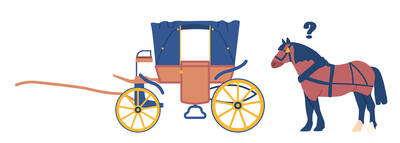
Put the Cart Before the Horse 本末倒置 Iris: I think I’m in love. Carl: What? Iris: We just have so much in common. We like all of the same things. Carl: Yes, but you’ve only chatted with him online. Iris: It doesn’t matter. I know we’ll end up getting married. Carl: I’m afraid you’re putting the cart before the horse. You should at least meet him first. Iris: OK, OK. I’ll do that. 艾瑞絲: 我想我戀愛了。 卡 爾: 什麼? 艾瑞絲: 我們就是有那麼多的共通點。我們喜歡的東西都一樣。 卡 爾: 是沒錯,不過妳和他只在網路上聊過天而已。 艾瑞絲: 那不重要。我知道我們最後一定會步入禮堂。 卡 爾: 妳恐怕是本末倒置了吧。妳至少應該先跟他見個面。 艾瑞絲: 好啦,好啦。我會的啦。 A tough cookie 強悍的人∕堅強的人 Tracy: I heard you went out with Iris last night. Justin: Yeah. We
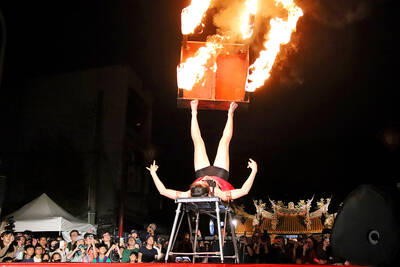
A: Over 130,000 college graduates are about to enter the workforce upon graduation. B: According to a survey, the top 10 most desired careers among Taiwanese are: independent content creator, civil servant, information engineer, financial professional, medical worker, content planner, flight attendant, news anchor, designer and fitness trainer. A: What are the “dream jobs” for young Gen Zers? B: The top three for men are YouTuber, pro gamer and engineer. For women, they are writer, social media editor and YouTuber. A: Every profession has its champion. Just look at Taiwanese fire dancer Yang Li-wei — who was on fire


 RSS
RSS