


“Laughter is timeless, imagination has no age and dreams are forever,” are famous words once said by Walt Disney. They are fitting, coming from someone who founded what would become one of the world’s largest and most influential entertainment companies.
In 1923, Walt Disney was working as a cartoonist in Kansas City, Missouri. He created a short film called Alice’s Wonderland, which featured a live-action girl interacting with animated characters. However, he faced financial difficulties and decided to move to Hollywood, California, to pursue new opportunities.
While in Hollywood, he sold Alice’s Wonderland and signed a contract to make six more such films, which were made into the series called Alice Comedies. In October of that same year, Walt Disney and his brother Roy formed the Disney Brothers Cartoon Studio, which was later renamed the Walt Disney Company, to produce the series. After making his Alice Comedies for four years, Walt Disney decided to move on and introduced a new character named Oswald the Lucky Rabbit, which quickly gained popularity.
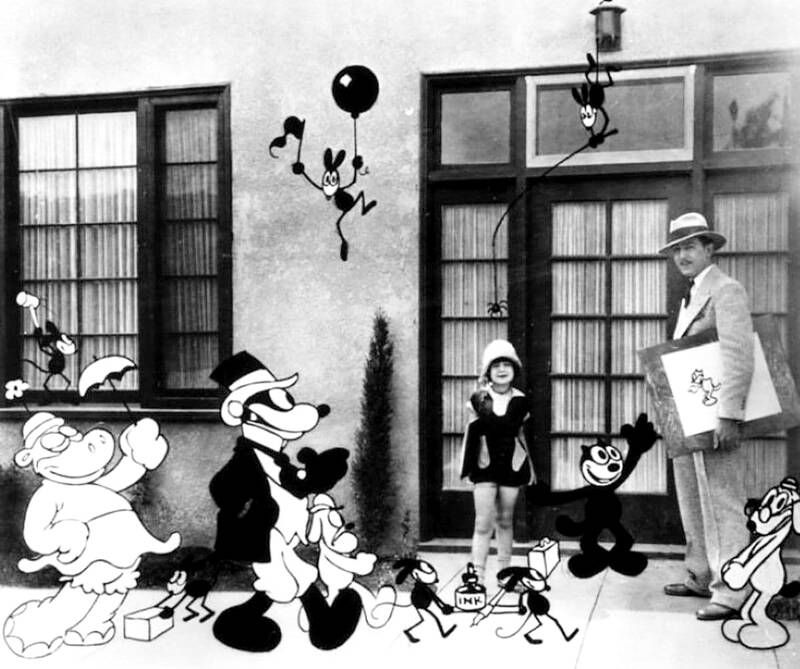
Photo courtesy of Shutterstock I 照片:Shutterstock 提供
However, in 1928, Walt Disney lost the rights to Oswald due to a contractual dispute. This setback prompted him to create a new character, Mickey Mouse, who made his debut in the short film Steamboat Willie in the same year.
The immense popularity of Mickey Mouse gave Disney the confidence to produce full-length feature films, leading to the release of Snow White and the Seven Dwarfs in 1937. Since then, the Walt Disney Company has consistently delivered numerous acclaimed movies, establishing itself as an entertainment powerhouse.
In its modern iteration, the company has expanded its influence by opening theme parks worldwide, which attract an average of 58 million visitors annually. Additionally, it owns and operates ESPN, Marvel Studios, Pixar and much more. This extensive portfolio showcases the enduring magic of the company’s movies and staying power in global culture.
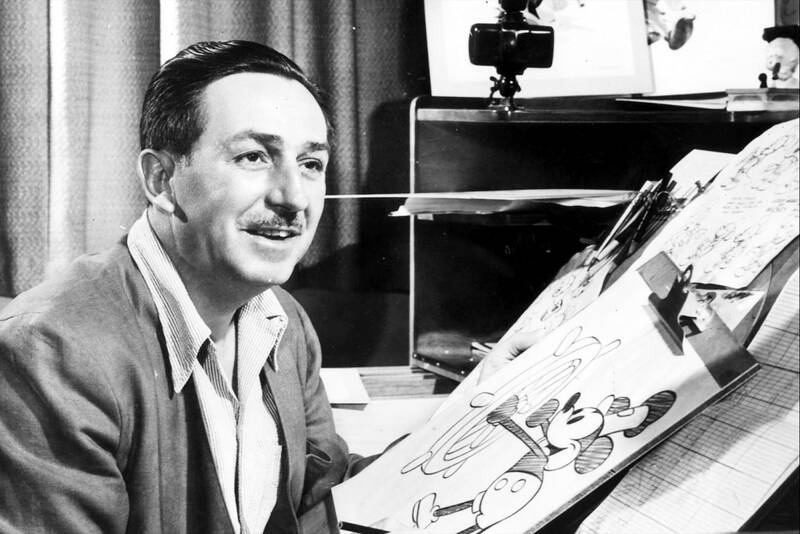
Photo courtesy of Shutterstock I 照片:Shutterstock 提供
「歡笑聲不會停,想像力不會老,夢想永不停歇」是華特‧迪士尼曾說過的名言。這些話很適切,因為是由一名創立了後來成為世界最大且最具影響力之娛樂公司的創辦人所說的。
1923年,華特‧迪士尼在密蘇里州坎薩斯城當卡通畫家。他創造了一部名為《愛麗絲夢遊仙境》的短片,其特色是由一名實景真人拍攝的女孩與動畫角色互動。然而,他面臨財務困難,決定要搬到加州好萊塢追求新的機會。
在好萊塢時,他賣出了《愛麗絲夢遊仙境》,並簽了合約要再製作六部這樣的影片,這些影片後來被製作成名為《愛麗絲喜劇》的系列。同年十月,為了製作這個系列,華特‧迪士尼和哥哥羅伊創立了迪士尼兄弟卡通製片廠,其後來被重新命名為華特迪士尼公司。在製作《愛麗絲喜劇》四年後,華特‧迪士尼決定要繼續向前,並推出了新的角色,名為幸運兔奧斯華,這個角色很快就人氣暴漲。

Photo courtesy of Shutterstock I 照片:Shutterstock 提供
然而,1928年時,由於合約上的糾紛,華特‧迪士尼失去了奧斯華的版權。這個挫折促使他創造出新的角色:米老鼠,他在同年推出的短片《汽船威利號》中首次亮相。
米老鼠廣大的人氣讓迪士尼有了製作標準長度的劇情長片的信心,這促成了1937年上映的《白雪公主》。自那時起,華特迪士尼公司不斷推出多部備受讚譽的電影,替自己奠定了娛樂強權的名聲。
現今的華特迪士尼公司透過在世界各地開設主題樂園來拓展其影響力,這些遊樂園平均每年吸引五千八百萬名遊客。此外,該公司也擁有並經營ESPN、漫威工作室及皮克斯動畫工作室等等。這樣豐富的履歷顯示了該公司電影恆久的魔力以及在全球文化中的持久力。
What Did You Learn?
1.Why did Walt Disney decide to establish a company with his brother?
2.When was Disney’s first feature film released?
參考答案
1. To produce the series Alice Comedies.
2. In 1937.
Words in Use
1.fitting [ `fItIG ] a. 合適的,相稱的
The romantic gondola ride was a fitting end to our trip to Venice.
搭乘浪漫的貢多拉船很適合作為我們威尼斯之旅的完美句點。
2. influential [ InflU`EnSJl ] a. 有影響力的
The media plays an influential role in society.
媒體在社會上扮演一種具有影響力的角色。
3. entertainment [ EntK`tenmJnt ] n. 娛樂
Natalie is a rising star in the entertainment world.
娜塔麗在演藝圈急速竄紅。
4. financial [ fZI`nAnSJl ] a. 財務的;金融的
The manager came up with a way to solve the company’s financial problems.
經理想出一個解決公司財務問題的辦法。
5. dispute [ dI`spyut ] n. 糾紛,爭執
I was in dispute with my roommate over money.
我跟室友因金錢起了衝突。
Practical Phrases
1. interact with... 與……互動
interact [ IntK`Akt ] vi. 互動,交流
The new student doesn’t interact with his classmates very much.
那名新來的學生與他的同學沒什麼互動。
2. gain (in) popularity 愈來愈受到歡迎
popularity [ papyJ`lArJtI ] n. 受歡迎;人氣
Products made from recycled materials have been gaining popularity.
用回收材料製成的商品已愈來愈受歡迎。
3. prompt sb to V 促使某人做……
A recent study prompted thousands of people to stop using the drug.
最近的一項研究促使數以千計的人停止使用該藥。
4. establish oneself as...
建立∕確立自己……的名聲∕地位等
Tony has established himself as one of the greatest photographers of our time.
東尼為自己樹立當今最優秀攝影師的地位。
5. an average of + 數字 平均……(數目)
Car accidents kill an average of 10,000 people each year in that country.
在那個國家,車禍每年平均奪去一萬人的性命。
聽文章朗讀及講解: https://ivy.pse.is/455bfu
本文出自常春藤解析英語雜誌: www.ivy.com.tw

An outbreak aboard a cruise ship of a rare rodent-borne illness called hantavirus has left three passengers dead and sickened others, but global health officials say the risk to the general public remains low because the germ does not easily spread between people. “This is not the next COVID, but it is a serious infectious disease,” said Maria Van Kerkhove, director of epidemic and pandemic preparedness at the World Health Organization (WHO). “Most people will never be exposed to this.” The virus usually spreads when people inhale contaminated residue of rodent droppings. Hantaviruses have been around for centuries and are thought to

Have you ever wondered how people navigate the world when they can’t see a map? For individuals with visual impairments, conventional maps are nearly impossible to use. This is where tactile maps come in — essential tools that allow people to “see” the world through touch. A tactile map is specially designed with raised lines, textures, and symbols to represent geographical features such as roads, rivers, and buildings. Users explore it with their fingertips. However, these maps are not exclusively for people with visual disabilities. They serve as valuable multisensory learning tools that enhance spatial understanding for everyone, making

1. 他病了三天。 ˇ He has been sick for three days. χ He has been sick since three days. 註︰這裡現在完成時態 have / has been 表示從過去某一時日到現在的一段時間存在的行為或狀態,與它連用的時間副詞應為 「for +若干時」,如 for a year, for three hours 等,意思是歷時多少。 2. 他自從星期三以來都很忙。 ˇ He has been busy since Wednesday. χ He has been busy from Wednesday. 註︰「自從……以來」,該用 since。說從某一天(某一時刻)到某一天(某一時刻)才用 from,如 from Monday till Friday。 3. 房間角落裡散放著一些零星物件。 ˇ There were some odds and ends lying in the corner of the room. χ There were some odds and ends lying at the corner of the room. 註︰「在房間角落裡」該用介詞 in。例如: He stood in the corner. There is a lamp in the corner of the room. at the corner 指房子外部的拐角。例如: A little boy

A: In early May, there were concerts by Icyball, Chyi Yu, Korea’s EXO and Japan’s Anisama, but I missed them all. What a shame. B: That’s OK. There are shows coming up by various artists, including Power Station, Accusefive, Japanese singer Mika Nakashima, Chinese-Icelandic jazzer Laufey, and even Singaporean diva Stefanie Sun. A: After a 12-year hiatus, Stefanie is finally returning to Taipei again. B: In late May, there will be more shows by Crowd Lu, WeiBird, Korea’s Donghae, 2AM, EXID, and Thailand’s BUS. A: The Thai boyband is so popular. It looks like “T-pop” is catching up with J-pop


 RSS
RSS