


Australia banned recreational vaping and tightened other aspects of e-cigarette laws on Tuesday last week in the biggest crackdown on the tobacco industry in more than a decade to try to stop an alarming rise in teenage vaping.
The government aims to ban all disposable vapes, which often come in fruity flavors, ban the import of non-prescription vapes and limit nicotine levels, aiming for the sale of vapes to be confined to helping smokers quit.
“Just like they did with smoking, Big Tobacco has taken another addictive product, wrapped it in shiny packaging and added flavors to create a new generation of nicotine addicts,” Health Minister Mark Butler said in a speech at the National Press Club.
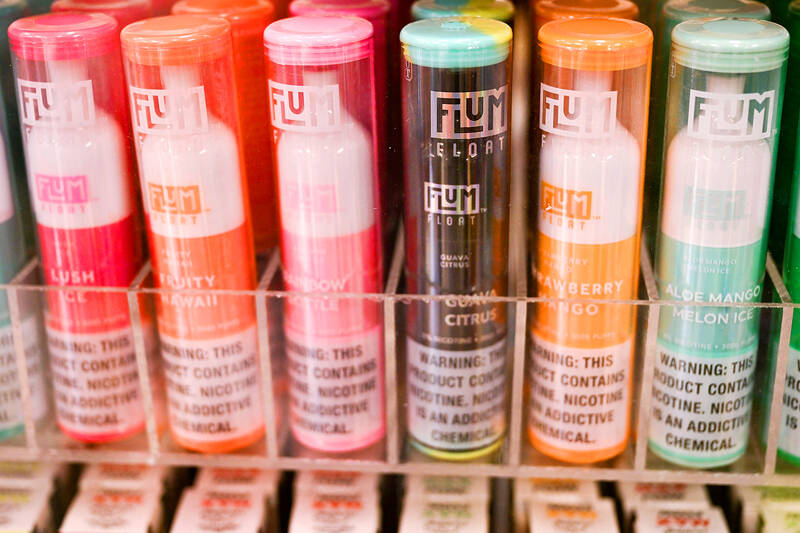
Photo: AFP 照片:法新社
Under the new rules, vapes will be sold only in pharmacies and require “pharmaceutical-type” packaging.
Vaping, widely seen as a safer alternative to smoking cigarettes and useful for helping smokers quit, involves heating a liquid that contains nicotine in what is called an e-cigarette and turning it into a vapor that users inhale.
But studies have shown the potential of long-term harm from the addictive e-cigarettes.
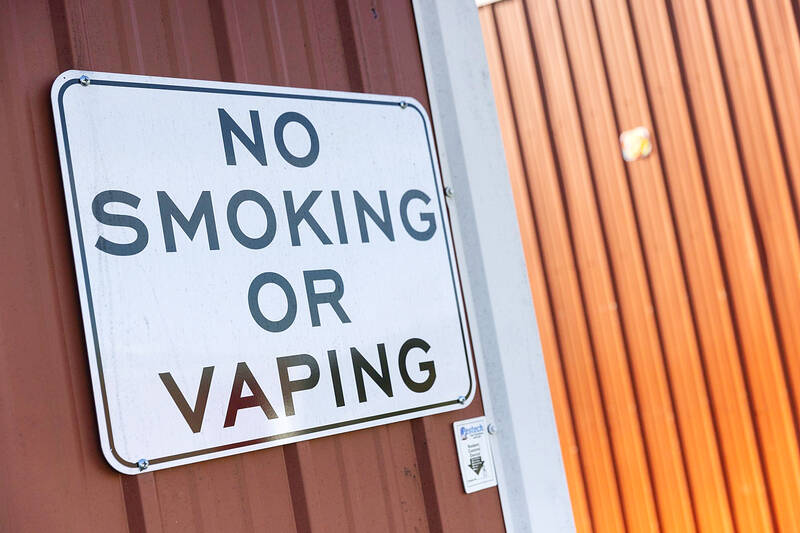
Photo: Bloomberg 照片:彭博社
Butler said vaping had become a recreational product in Australia, mostly sold to teenagers and young people, who are three times as likely to take up smoking.
“This is a product targeted at our kids, sold alongside lollies and chocolate bars,” Butler said. “Vaping has now become the number one behavioral issue in high schools. And it’s becoming widespread in primary schools as well.”
Doctors backed the vaping crackdown but urged the government to do more to limit the number of young people taking it up.
“Nicotine vaping products are being sold featuring colorful flavors and we have even seen products featuring the same type of imagery as children’s breakfast cereal including cartoon characters,” said Nicole Higgins, president of the Royal Australian College of General Practitioners.
About 22 percent of Australians aged 18-24 have used an e-cigarette or vaping device at least once, data last year showed.
Though a prescription is needed to buy nicotine vapes in Australia, a thriving illegal market means they are readily available.
(Reuters)
澳洲上週二對消遣用電子煙發出禁令,並緊縮電子煙其他相關法律,這是十多年來對煙草業的最大規模打擊,為的是抑止青少年吸食電子煙的驚人增長。
政府的目標是禁止所有拋棄式電子煙(這些電子煙通常帶有水果味)、禁止進口非處方電子煙,並限制尼古丁含量,目的是將電子煙的銷售限縮於幫助吸煙者戒菸。
澳洲衛生部長馬克‧巴特勒在國家新聞俱樂部所發表的演說中說道:「大煙草公司就像對吸菸所做的那樣,他們用另一種令人上癮的產品,外加閃亮的包裝並添加口味,以創造新一代的尼古丁成癮者」。
根據新規定,電子煙未來只能在藥局販售,並且需以「藥品類」包裝。
電子煙是用電子煙裝置將含有尼古丁的液體加熱,將其轉化為蒸汽讓使用者吸入。電子煙被廣泛認為是一種更安全的香菸替代品,可幫助吸菸者戒菸。
但研究顯示,令人上癮的電子煙可能會造成長期傷害。
巴特勒說,電子煙在澳洲已成為一種消遣用產品,主要賣給青少年和年輕人,他們養成吸菸習慣的可能性是其他人的三倍。
「這是一種針對我們孩子的產品,它們跟棒棒糖和巧克力棒一起銷售」,巴特勒說。「電子煙現在已經成為高中的頭號行為問題。而且它在小學也越來越普遍」。
醫師們支持打擊電子煙,但敦促政府採取更多措施來限制吸食電子煙的年輕人數量。
澳洲皇家全科醫師學會會長妮可‧希金斯說:「市面上的尼古丁電子煙產品,有豐富多彩的口味,我們甚至還能看到產品上有跟兒童早餐麥片同類的圖像,包括卡通人物」。
去年的數據顯示,在18至24歲的澳洲人中,大約有22%至少用過一次電子煙或電子煙裝置。
雖然在澳洲需要醫師處方才能購買尼古丁電子煙,但活躍的黑市意味它們很容易買到。
(台北時報林俐凱編譯)
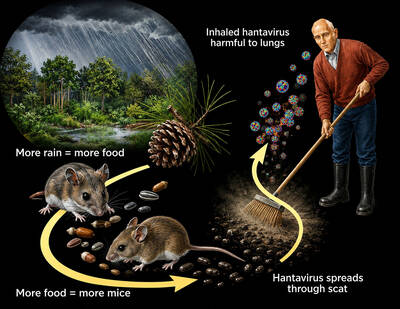
An outbreak aboard a cruise ship of a rare rodent-borne illness called hantavirus has left three passengers dead and sickened others, but global health officials say the risk to the general public remains low because the germ does not easily spread between people. “This is not the next COVID, but it is a serious infectious disease,” said Maria Van Kerkhove, director of epidemic and pandemic preparedness at the World Health Organization (WHO). “Most people will never be exposed to this.” The virus usually spreads when people inhale contaminated residue of rodent droppings. Hantaviruses have been around for centuries and are thought to

Have you ever wondered how people navigate the world when they can’t see a map? For individuals with visual impairments, conventional maps are nearly impossible to use. This is where tactile maps come in — essential tools that allow people to “see” the world through touch. A tactile map is specially designed with raised lines, textures, and symbols to represent geographical features such as roads, rivers, and buildings. Users explore it with their fingertips. However, these maps are not exclusively for people with visual disabilities. They serve as valuable multisensory learning tools that enhance spatial understanding for everyone, making

1. 他病了三天。 ˇ He has been sick for three days. χ He has been sick since three days. 註︰這裡現在完成時態 have / has been 表示從過去某一時日到現在的一段時間存在的行為或狀態,與它連用的時間副詞應為 「for +若干時」,如 for a year, for three hours 等,意思是歷時多少。 2. 他自從星期三以來都很忙。 ˇ He has been busy since Wednesday. χ He has been busy from Wednesday. 註︰「自從……以來」,該用 since。說從某一天(某一時刻)到某一天(某一時刻)才用 from,如 from Monday till Friday。 3. 房間角落裡散放著一些零星物件。 ˇ There were some odds and ends lying in the corner of the room. χ There were some odds and ends lying at the corner of the room. 註︰「在房間角落裡」該用介詞 in。例如: He stood in the corner. There is a lamp in the corner of the room. at the corner 指房子外部的拐角。例如: A little boy

A: In early May, there were concerts by Icyball, Chyi Yu, Korea’s EXO and Japan’s Anisama, but I missed them all. What a shame. B: That’s OK. There are shows coming up by various artists, including Power Station, Accusefive, Japanese singer Mika Nakashima, Chinese-Icelandic jazzer Laufey, and even Singaporean diva Stefanie Sun. A: After a 12-year hiatus, Stefanie is finally returning to Taipei again. B: In late May, there will be more shows by Crowd Lu, WeiBird, Korea’s Donghae, 2AM, EXID, and Thailand’s BUS. A: The Thai boyband is so popular. It looks like “T-pop” is catching up with J-pop


 RSS
RSS