


Have you heard of ChatGPT yet? It’s a thrilling, vexing, ontologically mesmerizing new technology created by the research group OpenAI. It can solve all your problems and answer all your questions. Or at least it will try to.
In essence, ChatGPT is a bot trained to generate human-like responses to user inputs. Through the wonders of machine learning, it’s acquired a remarkably expansive skillset. On request, it can produce basic software code, rudimentary financial analysis, amusing poems and songs, spot-on imitations, reflective essays on virtually any topic, natural-language summaries of technical papers or scientific concepts, chat-based customer service, informed predictions, personalized advice, and answers — for better or worse — to just about any question. Unusually for a chatbot, it can learn as it goes, and thus sustain engaging open-ended conversations.
It is, to borrow Arthur C. Clarke’s old formulation, “indistinguishable from magic.”
Photo: Pixabay 照片:Pixabay
Almost, anyway. One problem, which its creators concede, is that ChatGPT sometimes offers answers that are precise, authoritative and utterly wrong. A request for an obituary of Mussolini that prominently mentions skateboarding yields a disquisition on the dictator’s interest in the sport that happens to be entirely fictitious. Another soliciting advice for the Federal Reserve returns an essay that cites ostensibly legitimate sources, but that doctors the data to suit the bot’s purposes. Stack Overflow, a forum for coders, has temporarily banned responses from ChatGPT because its answers “have a high rate of being incorrect.” Students looking for a homework assistant should proceed with care.
The bot also seems easily confused. Try posing a classic riddle: “In total, a bat and a ball cost $1.10. If the bat costs $1.00 more than the ball, how much does the ball cost?” Haplessly for a robot, ChatGPT responds with the instinctive but wrong answer of $0.10. (The correct solution is $0.05.) The Internet’s hive mind has been joyfully cataloging other examples of the bot’s faults and frailties.
Such criticism feels misplaced. The fact is, ChatGPT is a remarkable achievement. Not long ago, a conversational bot of such sophistication seemed hopelessly out of reach. As the technology improves — and, crucially, grows more accurate — it seems likely to be a boon for coders, researchers, academics, policymakers, journalists and more, presuming that it doesn’t put them all out of work. Its effect on the knowledge economy could be profound. In previous eras, wars might’ve been fought for access to such a seemingly enchanted tool — and with good reason.
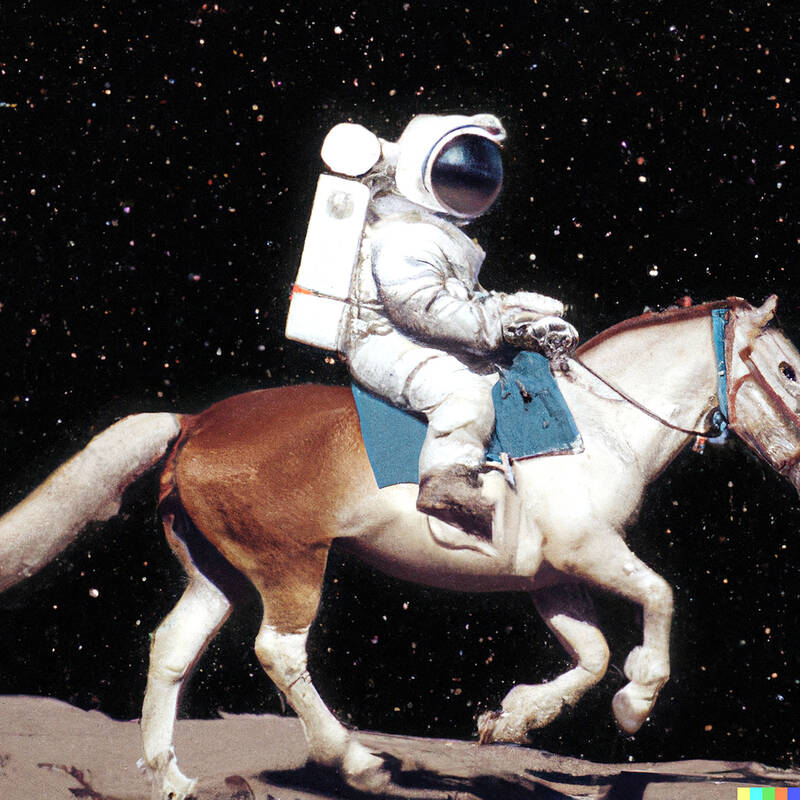
Photo: AFP 照片:法新社
Intriguingly, OpenAI plans to make the tool available as an application programming interface (or API), which will allow outside developers to integrate it into their Web sites or apps without needing to understand the underlying technology. That means companies could soon use ChatGPT to create virtual assistants, customer service bots or marketing tools. They could automate document review and other tedious tasks. Down the road, they might use it to generate new ideas and simplify decision-making. In all likelihood, no one has thought of the best uses for it yet.
In that respect and others, ChatGPT exemplifies a widening array of artificial-intelligence tools that may soon transform entire industries, from manufacturing to health care to finance. Investment has been surging in the field. Breakthroughs seem to proliferate by the day. Many industry experts express unbounded enthusiasm. By one analysis, AI will likely contribute a staggering $15.7 trillion to the global economy by 2030.
As yet, policymakers seem largely unaware of this revolution, let alone prepared for it. They should greet it in a spirit of optimism, while being attentive to its potential risks — to data security, privacy, employment and more. They might also ponder some rather more existential concerns. For better and worse, ChatGPT heralds a very different world in the making.(Bloomberg)

Photo: AFP 照片:法新社
你聽過ChatGPT嗎?這是OpenAI研究小組創建的令人興奮、令人煩惱、在本體論上令人著迷的新技術。它可以解決你所有的問題、回答你所有疑問。或者說,它至少會試試看。
本質上而言,ChatGPT是一種機器人,經訓練後,對用戶的輸入可產生像人類般的回應。透過機器學習的奇妙機制,它習得非常廣泛的技能。它可以應要求生成簡單的軟體程式、基本的財務分析、有趣的詩和歌曲、準確的模仿、幾乎任何主題的反思性文章、用自然語言對技術論文或科學概念做出摘要、以聊天進行的客戶服務、有見識的預測、個人化的建議,以及回答幾乎所有的問題(無論好壞)。跟一般的聊天機器人所不同的是,它可以邊做邊學,因而維持引人入勝的開放式對話。。
借用科幻小說家亞瑟.C.克拉克所說的話來說,它「跟魔法沒什麼兩樣」。
總之差不多是這樣。其創建者承認的一個問題是,ChatGPT有時會提供準確、權威且完全錯誤的答案。要求在一篇墨索里尼的訃告中顯著提到滑板運動,結果是關於這位獨裁者對此運動之興趣的討論剛好是完全是虛構的。另一篇為美國聯準會徵求建議的文章,其中引用的出處表面上合法,但其數據已按機器人的目的被篡改。程式設計師論壇Stack Overflow暫時禁止來自ChatGPT的回覆,因為它的答案「錯誤率很高」。想要以它來協助家庭作業的學生應該小心。
該機器人看來也很容易被搞糊塗。用一個經典的謎題試試:「一支球棒和一個球總共花費1.10美元。若球棒比球貴1.00美元,那麼球要多少錢」?對於機器人來說不幸的是,ChatGPT以0.10美元這直觀但錯誤的答案做出回應。(正確答案為 0.05美元。)網路的蜂群思維一直在愉快地記錄機器人錯誤及弱點的其他例子。
這樣的批評感覺是錯誤的。事實上,ChatGPT是一項了不起的成就。不久前,如此複雜的對話機器人似乎遙不可及。隨著技術的改進——且至關重要的是,它變得更加準確——它似乎有可能成為程式設計師、研究人員、學者、政策制定者、記者等的福音。(假設ChatGPT不會讓他們全都失業。)它對知識經濟的影響可能是深遠的。在過去的時代,戰爭可能是為了獲得這種看似迷人的工具而進行的——而且有充分的理由。
有趣的是,OpenAI計劃將該工具作為應用程式介面(API)提供,這將允許外部開發人員將其結合到他們的網站或應用程式中,而無需了解底層技術。這意味公司可以很快使用ChatGPT創建虛擬助理、客戶服務機器人或營銷工具。他們可以自動執行文檔審查和其他繁瑣的任務。未來,他們可能會用它來產生新概念並簡化決策。很可能還沒有人想到它的最佳用途。
在此方面及其他層面,ChatGPT代表了範圍廣泛的人工智慧工具,這些工具可能很快就會改變整個行業,從製造業到醫療保健再到金融業。該領域的投資一直在激增,似乎每天都有更多的突破,許多行業專家表達了無限的熱情。根據一項分析,到二○三○年,人工智慧可能會為全球經濟貢獻驚人的15.7兆美元。
到目前為止,政策制定者似乎基本上沒有意識到這場革命,更不用說為它做好準備了。他們應該以樂觀的精神迎接它,同時注意它的潛在風險——資料安全、隱私、就業等。他們也可能會思考一些更關乎生存的問題。無論好壞,ChatGPT都預示著一個截然不同的世界正在形成。
(台北時報林俐凱編譯)
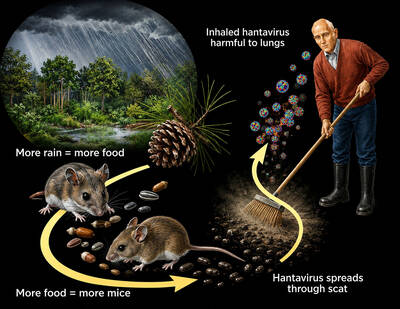
An outbreak aboard a cruise ship of a rare rodent-borne illness called hantavirus has left three passengers dead and sickened others, but global health officials say the risk to the general public remains low because the germ does not easily spread between people. “This is not the next COVID, but it is a serious infectious disease,” said Maria Van Kerkhove, director of epidemic and pandemic preparedness at the World Health Organization (WHO). “Most people will never be exposed to this.” The virus usually spreads when people inhale contaminated residue of rodent droppings. Hantaviruses have been around for centuries and are thought to

Have you ever wondered how people navigate the world when they can’t see a map? For individuals with visual impairments, conventional maps are nearly impossible to use. This is where tactile maps come in — essential tools that allow people to “see” the world through touch. A tactile map is specially designed with raised lines, textures, and symbols to represent geographical features such as roads, rivers, and buildings. Users explore it with their fingertips. However, these maps are not exclusively for people with visual disabilities. They serve as valuable multisensory learning tools that enhance spatial understanding for everyone, making

1. 他病了三天。 ˇ He has been sick for three days. χ He has been sick since three days. 註︰這裡現在完成時態 have / has been 表示從過去某一時日到現在的一段時間存在的行為或狀態,與它連用的時間副詞應為 「for +若干時」,如 for a year, for three hours 等,意思是歷時多少。 2. 他自從星期三以來都很忙。 ˇ He has been busy since Wednesday. χ He has been busy from Wednesday. 註︰「自從……以來」,該用 since。說從某一天(某一時刻)到某一天(某一時刻)才用 from,如 from Monday till Friday。 3. 房間角落裡散放著一些零星物件。 ˇ There were some odds and ends lying in the corner of the room. χ There were some odds and ends lying at the corner of the room. 註︰「在房間角落裡」該用介詞 in。例如: He stood in the corner. There is a lamp in the corner of the room. at the corner 指房子外部的拐角。例如: A little boy

A: In early May, there were concerts by Icyball, Chyi Yu, Korea’s EXO and Japan’s Anisama, but I missed them all. What a shame. B: That’s OK. There are shows coming up by various artists, including Power Station, Accusefive, Japanese singer Mika Nakashima, Chinese-Icelandic jazzer Laufey, and even Singaporean diva Stefanie Sun. A: After a 12-year hiatus, Stefanie is finally returning to Taipei again. B: In late May, there will be more shows by Crowd Lu, WeiBird, Korea’s Donghae, 2AM, EXID, and Thailand’s BUS. A: The Thai boyband is so popular. It looks like “T-pop” is catching up with J-pop


 RSS
RSS