


By itself, being able to read smartphone home screens in Cherokee won’t be enough to safeguard the Indigenous language, endangered after a long history of erasure. But it might be a step toward immersing younger tribal citizens in the language spoken by a dwindling number of their elders.
That’s the hope of Principal Chief Richard Sneed of the Eastern Band of Cherokee Indians, who’s counting on more inclusive consumer technology — and the involvement of a major tech company — to help out.
Sneed and other Cherokee leaders have spent several months consulting with Lenovo-owned Motorola, which last week introduced a Cherokee language interface on its newest line of phones. Now phone users will be able to find apps and toggle settings using the syllable-based written form of the language first created by the Cherokee Nation’s Sequoyah in the early 1800s.
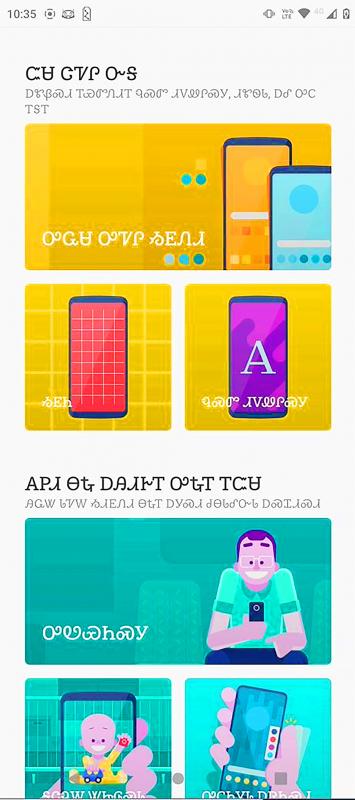
Photo: AP 照片:美聯社
Several big tech companies have expressed interest in recent years in making their technology work better for endangered Indigenous languages, more to show their good will or advance speech recognition research than to fulfill a business imperative. Microsoft’s text translation service recently added Inuinnaqtun and Inuktitut, spoken in the Canadian Arctic, and grassroots artificial intelligence researchers are doing similar projects throughout the Americas and beyond. But there’s a long way to go before digital voice assistants understand these languages as well as they do English — and for some languages the time is running out.
Sneed and Benjamin Frey, a member of the Eastern Band of Cherokee Indians and professor at the University of North Carolina at Chapel Hill, said they recognize that some Cherokee will have concerns about tech companies making a product feature of their work to preserve their language — whether it’s a text-based interface like Motorola’s or potential future projects that could record speech to build a voice assistant or real-time translator.
Frey didn’t grow up speaking Cherokee, largely due to his grandmother’s experiences of being punished for speaking the language when she was sent to boarding school. For over 150 years, Indigenous children in the US and Canada were taken from their communities and forced into boarding schools that focused on assimilation.
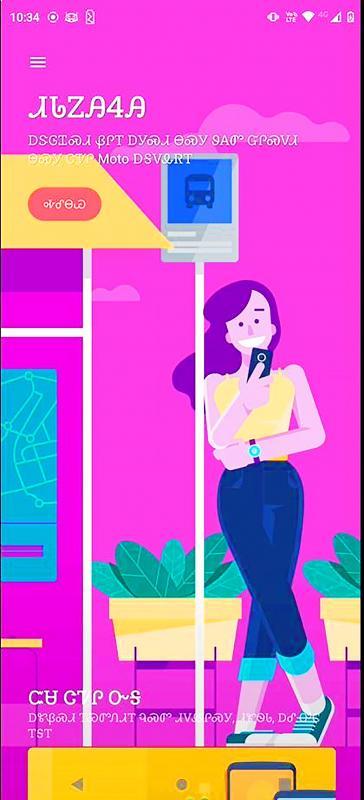
Photo: AP 照片:美聯社
She and others of her generation were beaten for speaking the language, had her mouth washed out with soap and was told that “English was the only way to get ahead in the world,” Frey said.
Frey hopes the new tool will be a conversation-starter between older Cherokee language speakers and their tech-savvy grandkids.
(AP)
能夠在智慧型手機主螢幕上閱讀切羅基語,這件事本身並不足以保護這長期被消音而瀕臨滅絕的原住民語言,但這可讓部落年輕人向沉浸在切羅基語的目標邁進一步;隨著部落長者凋零,說這語言的人越來越少了。
東部切羅基印第安酋長理查‧斯尼德便是如此冀望,他仰賴更具包容性的消費科技──以及一家大型科技公司的參與──來提供幫助。
斯尼德與其他切羅基族領導人花了數個月的時間諮詢聯想旗下的摩托羅拉公司,摩托羅拉上週所發表的最新手機產品引進了切羅基語言界面。現在,手機用戶將可用一八○○年代初期由切羅基國的塞闊雅所創建的音節文字,來查找應用程式及切換設定。
數家大型科技公司近年來曾表示有興趣將其技術更好地運用於瀕臨滅絕的原住民語言,這多是為了表達其善意或促進語音辨識研究,而非為了滿足商業需求。微軟的文字翻譯服務最近增加了加拿大北極地區所使用的因紐納克頓語及因紐特語,民間的人工智慧研究人員也正在整個美洲及其他地區開展類似的工作。但是,若要數位語音助理像理解英語一樣理解這些語言,還有很長的路要走,而對某些語言來說,時間已經不多了。
斯尼德與東部切羅基印第安人、北卡羅來納大學教堂山分校教授班哲明‧弗雷表示,他們承認,有些切羅基人對科技公司利用其工作成果製作產品來保存其語言有所疑慮──無論是像摩托羅拉這樣的文字界面,還是錄製語音以建構語音助理的未來可能計畫,或是即時翻譯。
弗雷在其成長過程中並未說切羅基語,主要是由於他祖母的經驗──她被送去寄宿學校後,因為說切羅基語而受懲罰。一百五十多年來,美國與加拿大的原住民兒童被帶離其族群,被迫進入重點在將之同化的寄宿學校。
她與她的同代人因為說這語言而遭毆打、用肥皂漱口,並被告知「英語是在世界上取得成功的唯一途徑」,弗雷表示。
弗雷希望這個新工具能夠在說切羅基語的長者,及其熟稔科技的孫輩之間開啟對話。
(台北時報林俐凱編譯)
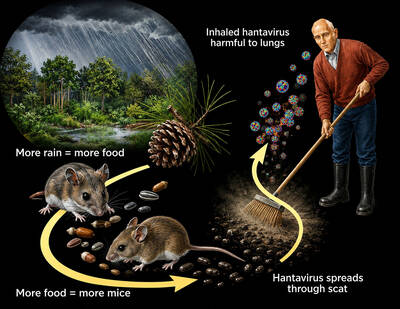
An outbreak aboard a cruise ship of a rare rodent-borne illness called hantavirus has left three passengers dead and sickened others, but global health officials say the risk to the general public remains low because the germ does not easily spread between people. “This is not the next COVID, but it is a serious infectious disease,” said Maria Van Kerkhove, director of epidemic and pandemic preparedness at the World Health Organization (WHO). “Most people will never be exposed to this.” The virus usually spreads when people inhale contaminated residue of rodent droppings. Hantaviruses have been around for centuries and are thought to

Have you ever wondered how people navigate the world when they can’t see a map? For individuals with visual impairments, conventional maps are nearly impossible to use. This is where tactile maps come in — essential tools that allow people to “see” the world through touch. A tactile map is specially designed with raised lines, textures, and symbols to represent geographical features such as roads, rivers, and buildings. Users explore it with their fingertips. However, these maps are not exclusively for people with visual disabilities. They serve as valuable multisensory learning tools that enhance spatial understanding for everyone, making

1. 他病了三天。 ˇ He has been sick for three days. χ He has been sick since three days. 註︰這裡現在完成時態 have / has been 表示從過去某一時日到現在的一段時間存在的行為或狀態,與它連用的時間副詞應為 「for +若干時」,如 for a year, for three hours 等,意思是歷時多少。 2. 他自從星期三以來都很忙。 ˇ He has been busy since Wednesday. χ He has been busy from Wednesday. 註︰「自從……以來」,該用 since。說從某一天(某一時刻)到某一天(某一時刻)才用 from,如 from Monday till Friday。 3. 房間角落裡散放著一些零星物件。 ˇ There were some odds and ends lying in the corner of the room. χ There were some odds and ends lying at the corner of the room. 註︰「在房間角落裡」該用介詞 in。例如: He stood in the corner. There is a lamp in the corner of the room. at the corner 指房子外部的拐角。例如: A little boy

A: In early May, there were concerts by Icyball, Chyi Yu, Korea’s EXO and Japan’s Anisama, but I missed them all. What a shame. B: That’s OK. There are shows coming up by various artists, including Power Station, Accusefive, Japanese singer Mika Nakashima, Chinese-Icelandic jazzer Laufey, and even Singaporean diva Stefanie Sun. A: After a 12-year hiatus, Stefanie is finally returning to Taipei again. B: In late May, there will be more shows by Crowd Lu, WeiBird, Korea’s Donghae, 2AM, EXID, and Thailand’s BUS. A: The Thai boyband is so popular. It looks like “T-pop” is catching up with J-pop


 RSS
RSS