


The world’s largest plant that sucks carbon dioxide directly from the air and deposits it underground started operating on Wednesday last week, the company behind the nascent green technology said.
Swiss start-up Climeworks AG, which specializes in capturing carbon dioxide directly from the air, has partnered with Icelandic carbon storage firm Carbfix to develop a plant that sucks out up to 4,000 tonnes of CO2 per year. That’s the equivalent of the annual emissions from about 790 cars. Last year, global CO2 emissions totaled 31.5 billion tonnes, according to the International Energy Agency.
Direct air capture is one of the few technologies extracting carbon dioxide from the atmosphere and it is viewed by scientists as vital to limit global warming, blamed for causing more heatwaves, wildfires, floods and rising sea levels.
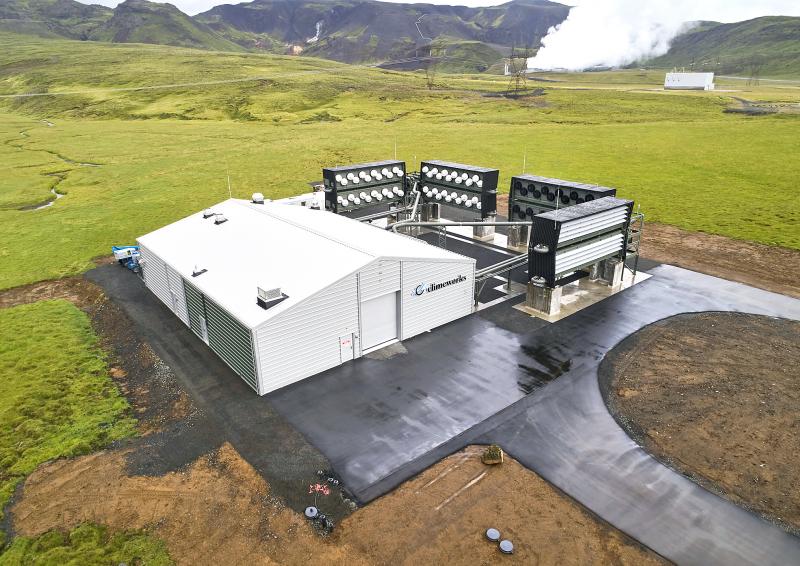
Photo: Bloomberg 照片:彭博社
The Orca plant, a reference to the Icelandic word for energy, consists of eight large containers similar in looks to those used in the shipping industry, which employ high-tech filters and fans to extract carbon dioxide. The isolated carbon is then mixed with water and pumped deep underground, where it slowly turns into rock. Both technologies are powered by renewable energy sourced from a nearby geothermal power plant.
Direct air capture is still a fledgling and costly technology, but developers hope to drive down prices by scaling up as more companies and consumers look to reduce their carbon footprint.
There are currently 15 direct air capture plants operating worldwide, capturing more than 9,000 tonnes of CO2 per year, according to the IEA. US oil firm Occidental is currently developing the largest direct-air-capture facility, to pull 1 million tonnes per year of carbon dioxide from the open air near some of its Texas oilfields.
(Reuters)
世界上最大,可直接吸取空氣中之二氧化碳,並將其儲存於地底的工廠,已於上週三開始運作,提供該新興綠色科技之公司表示。
瑞士新創公司Climeworks AG專門從空氣中直接捕集二氧化碳,它與冰島碳儲存公司Carbfix合作開發了一座工廠,每年可吸收多達四千噸二氧化碳,這相當於大約七百九十輛汽車一年的排放量。根據國際能源署的統計,去年全球二氧化碳排放量總計為三百一十五億噸。
直接從空氣捕集是少數能夠從大氣中提取二氧化碳的技術之一,科學家認為它對限制全球暖化極為重要。全球暖化被認為是造成熱浪、野火、洪水更頻繁,以及海平面上升的罪魁禍首。
此工廠名為Orca,源於冰島語「能源」一詞,是由八個看似航運貨櫃的大容器組成,採用高科技過濾器與風扇來提取二氧化碳;所分離出的碳加入水混合後,再打入地底深處,讓它在地底慢慢變成岩石。這兩種技術所使用的動力,均來自附近地熱發電廠的可再生能源。
直接從空氣捕集碳仍屬新興且成本高昂的技術,但有越來越多的公司與消費者希望減少碳足跡,開發商盼通過擴大規模來降低價格。
據國際能源署統計,目前全球有十五座空氣捕集廠在營運,每年捕集的二氧化碳超過九千噸。美國西方石油公司目前正開發最大的直接空氣捕集設施,每年將在德州一些油田附近的空氣中提取一百萬噸二氧化碳。
(台北時報林俐凱編譯)
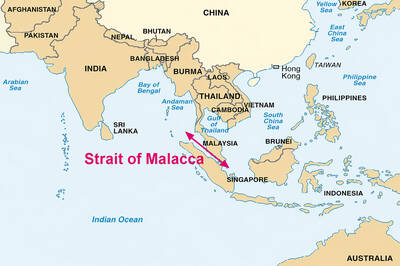
The closure of the Strait of Hormuz has forced policymakers in Asia to face questions over the security of other maritime chokepoints, including the Strait of Malacca, which is the world’s busiest waterway for international trade. WHAT IS THE MALACCA STRAIT? The 900km long Malacca Strait, bounded by Indonesia, Thailand, Malaysia and Singapore, provides the shortest sea route from East Asia to the Middle East and Europe. It carries nearly 22 percent of the world’s maritime trade, according to the Center for Strategic and International Studies (CSIS). This includes oil and gas shipments from the Middle East to the energy-hungry economies of China,

Cameras are everywhere — in our pockets, on our walls and even in space. They capture emotions, preserve history and reflect culture. Through these devices, photography is now essential to modern life, influencing how we perceive ourselves and the world. To understand the root of their power, let’s explore the camera’s remarkable journey. The story begins with the camera obscura, a dark room with a tiny hole. Light passing through the opening projected an inverted image on the opposite wall. Renaissance artists used this principle to paint accurate scenes. However, these images couldn’t be preserved as photographs. That changed

A: This year’s two most anticipated films have finally hit theaters in Taiwan. “Michael” premiered last Wednesday, while “The Devil Wears Prada 2” premiered this Wednesday ahead of its global release. B: Isn’t “Michael” the biopic about the late King of Pop Michael Jackson? A: Yup, it tells the story of Michael’s legendary life, from child star to global icon. And the role is in fact played by his nephew, Jaafar Jackson. B: Michael caused a sensation when touring Taiwan twice in 1993 and 1996. His classic hits, dance moves and music videos reshaped global pop culture at that time. A: I’m gonna

對話 Dialogue 華華:欸,你最近有沒有發現,路上很多人背的包包上還有一個透明的小包包? Huáhua: Èi, nǐ zuìjìn yǒu méiyǒu fāxiàn, lùshàng hěn duō rén bēi de bāobāo shàng hái yǒu yí ge tòumíng de xiǎo bāobāo? 清清:我上次去逛街,也注意到了。我看到好多人把吊飾、照片或娃娃什麼的放進小包裡,掛在包包上。那叫什麼啊? Qīngqīng: Wǒ shàngcì qù guàngjiē, yě zhùyì dào le. Wǒ kàndào hǎo duō rén bǎ diàoshì, zhàopiàn huò wáwa shénme de fàng jìn xiǎo bāo lǐ, guà zài bāobāo shàng. Nà jiào shénme a? 華華:聽說有兩種,一種叫「痛包」,一種叫「娃包」或「曬娃包」。 Huáhua: Tīngshuō yǒu liǎng zhǒng, yì zhǒng jiào “tòngbāo”, yì zhǒng jiào “wábāo” huò “shàiwábāo”. 清清:「痛包」這個說法我聽過,就是在包包上大量展示自己喜歡的東西。但「曬娃包」還是第一次聽到。為什麼叫「曬娃包」? Qīngqīng: “Tòngbāo” zhège shuōfǎ wǒ tīng guò, jiù shì zài bāobāo shàng dàliàng zhǎnshì zìjǐ xǐhuān de dōngxi. Dàn “shàiwábāo” háishì dì yí cì tīng dào. Wèishéme jiào “shàiwábāo”? 華華:因為很多人會把自己喜歡的娃娃放進透明包裡,帶出去拍照,曬給大家看。 Huáhua: Yīnwèi hěn


 RSS
RSS