


Do you know your Taiwanese pineapple varieties?
Whether eaten as fruit, used in cooking or made into a dessert, everyone has been eating their fill of pineapple recently. However, do you know which variety of the prickly fruit you have been eating or which variety tops the charts as Taiwan’s most prized export variety? Taipei Agricultural Products Marketing Co has put together a Facebook post to give the public a quick rundown of the most common varieties of pineapple found on these islands.
‧ Golden Diamond Pineapple (Tainung No. 17)
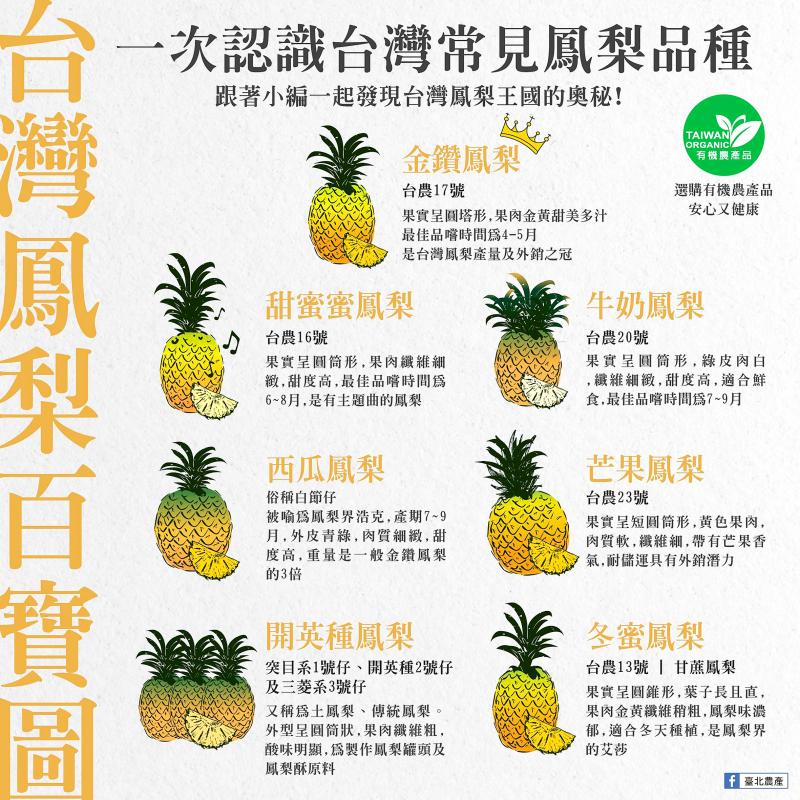
Photo: screengrab from the Internet 照片:取自網路
The fruit has a conical appearance and its flesh is golden yellow, sweet and juicy. The optimum time to taste this fruit is between April and May. The Golden Diamond Pineapple is the most widely produced of Taiwan’s pineapple varieties and wears the crown as the nation’s number one export variety.
‧ Sweet Honey Pineapple (Tainung No. 16)
This pineapple is cylindrical in shape. Its flesh has delicate fibers and the taste is extremely sweet. The best time of year to eat this archetypal variety of Taiwanese pineapple is between June and August.
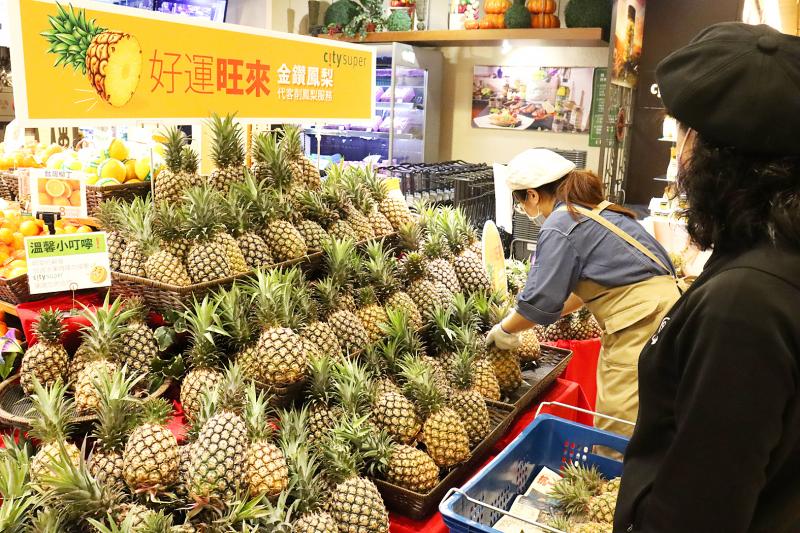
Photo: Lai Hsiao-tung, Liberty Times 照片:自由時報賴筱桐
‧ Milky Pineapple (Tainung No. 20)
Cylindrical in shape, the Milky Pineapple has a thin rind and its flesh is white in color, fine-fibered and extremely sweet. The best time to sample this variety is between July and September.
‧ Watermelon Pineapple
Commonly referred to as “baijiezai,” it is also known as the “Hulk” of the pineapple world. The harvest season for this variety is between July and September. Its external appearance is fat and cylindrical with a dark green rind and the flesh is delicate and sweet. The Watermelon Pineapple is extremely hefty: three times the weight of a Golden Diamond Pineapple.
‧ Mango Pineapple (Tainung No. 23)
Short and cylindrical in shape, this variety has soft, yellow-colored flesh made of delicate fibers and a unique mango fragrance. The Mango Pineapple holds up well in storage, giving this variety plenty of export potential.
‧ Cayenne Pineapple
Also known as a “native pineapple” or “traditional pineapple,” the Cayenne Pineapple has a cylindrical appearance, coarsely fibered flesh and a pronounced acidity to its flavor profile. It is chiefly used to for canned pineapples and to make pineapple cakes.
‧ Winter Honey Pineapple
(Tainung No. 13 / Sugar Cane Pineapple)
Shaped like a cone, the Winter Honey Pineapple has long, strait leaves. Its flesh is golden yellow with slightly course fibers and the flavor is intense. This variety is suited to planting during the winter and is known as the “Elsa” of the pineapple world after the character in the Disney movie Frozen.
(Translated by Edward Jones)
台灣鳳梨百寶圖 一分鐘認識台灣常見鳳梨品種
不論是當水果、入菜還是做成點心,最近大啖了這麼多的鳳梨,你知道你吃的是哪一種嗎?哪一種是外銷之冠呢?台北農產運銷公司在臉書粉專分享台灣鳳梨百寶圖,帶大家一分鐘認識台灣常見鳳梨品種。
‧ 金鑽鳳梨(台農十七號)
果實呈圓塔形,果肉金黃甜美多汁,最佳品嚐時間為四到五月份,是台灣鳳梨產量及外銷之冠。
‧ 甜蜜蜜鳳梨(台農十六號)
果實呈圓筒形,果肉纖維細緻,甜度高,最佳品嚐時間為六到八月份,是有主題曲《甜蜜蜜》的鳳梨。
‧ 牛奶鳳梨(台農二十號)
果實呈圓筒形,綠皮肉白,纖維細緻,甜度高,適合鮮食,最佳品嚐時間為七到九月份。
‧ 西瓜鳳梨
俗稱白節仔,被稱為鳳梨界浩克,產期七到九月份月,外形飽滿呈圓筒狀,外皮青綠,肉質細緻,甜度高,重量是一般金鑽鳳梨的三倍。
‧ 芒果鳳梨(台農二十三號)
果實呈短圓筒形,黃色果肉,肉質軟,纖維細,帶有芒果香氣,耐儲運具有外銷潛力。
‧ 開英種鳳梨
又稱為土鳳梨、傳統鳳梨。外形呈圓筒狀,果肉纖維粗,酸味明顯,為製作鳳梨罐頭及鳳梨酥原料。
‧ 冬蜜鳳梨(台農十三號、甘蔗鳳梨)
果實呈圓錐形,葉子長且直,果肉金黃纖維稍粗,鳳梨味濃郁,適合冬天種植,是鳳梨界的艾莎。
(自由時報)
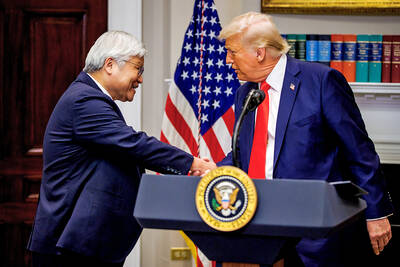
A: Time magazine recently released its list of “The 100 Most Influential People of 2026.” It’s categorized into six groups: Artists, Pioneers, Titans, Icons, Leaders and Innovators. B: TSMC chairman C.C. Wei made the list this year. Which category is he in? A: Wei is actually among the Pioneers, with figures including Disney CEO Josh D’Amaro and MrBeast — the first YouTuber ever to surpass 400 million subscribers. B: Led by Wei, Taiwan’s “silicon shield” TSMC is the sixth-largest company in the world. A: As Nvidia founder Jensen Huang wrote in his introduction, “C.C. Wei is truly one of the

A: In the 2026 Time 100 list, besides TSMC chairman C.C. Wei in the Pioneers category, Blackpink’s Jennie also stands out in the Artists group. B: What about the Titans and Icons? A: The Titans include legendary fashion designer Ralph Lauren, Google CEO Sundar Pichai, and Intel CEO Tan Lip-bu. The Icons include actor Wagner Moura, Olympic gold figure skater Alysa Liu and singer Victoria Beckham. B: What about the Leaders and Innovators? I bet US President Donald Trump and Chinese President Xi Jinping are on the list. A: You got it. Other Leaders include Japanese PM Sanae
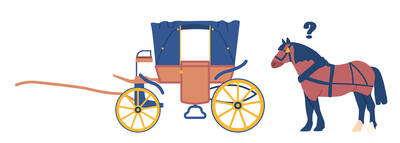
Put the Cart Before the Horse 本末倒置 Iris: I think I’m in love. Carl: What? Iris: We just have so much in common. We like all of the same things. Carl: Yes, but you’ve only chatted with him online. Iris: It doesn’t matter. I know we’ll end up getting married. Carl: I’m afraid you’re putting the cart before the horse. You should at least meet him first. Iris: OK, OK. I’ll do that. 艾瑞絲: 我想我戀愛了。 卡 爾: 什麼? 艾瑞絲: 我們就是有那麼多的共通點。我們喜歡的東西都一樣。 卡 爾: 是沒錯,不過妳和他只在網路上聊過天而已。 艾瑞絲: 那不重要。我知道我們最後一定會步入禮堂。 卡 爾: 妳恐怕是本末倒置了吧。妳至少應該先跟他見個面。 艾瑞絲: 好啦,好啦。我會的啦。 A tough cookie 強悍的人∕堅強的人 Tracy: I heard you went out with Iris last night. Justin: Yeah. We

1. 他非常討厭偽君子。 ˇ He has a deep hatred for hypocrites. χ He has a deep hatred to hypocrites. 註︰表示「對某人懷著愛、恨」等, 常用 have a love for/of, have a hatred for/of。 例如: We have a love for/of science. The working people have a hatred for/of all forms of exploitation. 2. 問題的答案其實不難找。 ˇ The answer to this question is not difficult to find. χ The answer of this question is not difficult to find. 註︰中文中的「的」在英語中不一定都用 of 來表示,有時須用 to。其他的例子如下: 我把房間的鑰匙弄丟了。 I lost the key to the room. 中間矗立著烈士紀念碑。 In the center stands the monument to the martyrs. 這部電影的續集你看過沒有? Have you seen the sequel to the movie? 3. 比起那家餐廳,他更喜歡這家。 ˇ He prefers this restaurant to that one. ˇ He likes


 RSS
RSS