


When a 59-year-old deaf-mute man surnamed Hsu had an online encounter with a foreigner who claimed to be a diplomat, he nearly ended up as the victim of a fraud syndicate.
A police investigation revealed that Hsu had got to know a foreign Internet user calling himself “Alvin,” who said that he was a diplomat from a certain country but was not in a position to reveal his identity because he was on a secret mission abroad. He said he had a parcel that he urgently needed to send back to Taiwan, and he hoped Hsu could take delivery of it. Next, someone claiming to represent a courier company sent Hsu a message saying that he would need to pay tax and customs fees to collect the parcel, and asking Hsu to go to a bank to transfer the money.
Without thinking, on Jan. 11 Hsu did as he had been asked by going to Chang Hwa Bank’s Shuangyuan branch in Taipei, where he applied to transfer the sum of NT$30,000. However, the bank staff noticed that something was out of order and reported it to Wanhua Police Precinct’s Yingguang Police Station. Police officers Hsu Li-yuan and Tung Yu-hsuan hurried to the scene, where they determined that Hsu had encountered a fraud syndicate. Using written notes, the police officers told Hsu about some related cases, and only then did he give up the idea of transferring the money.
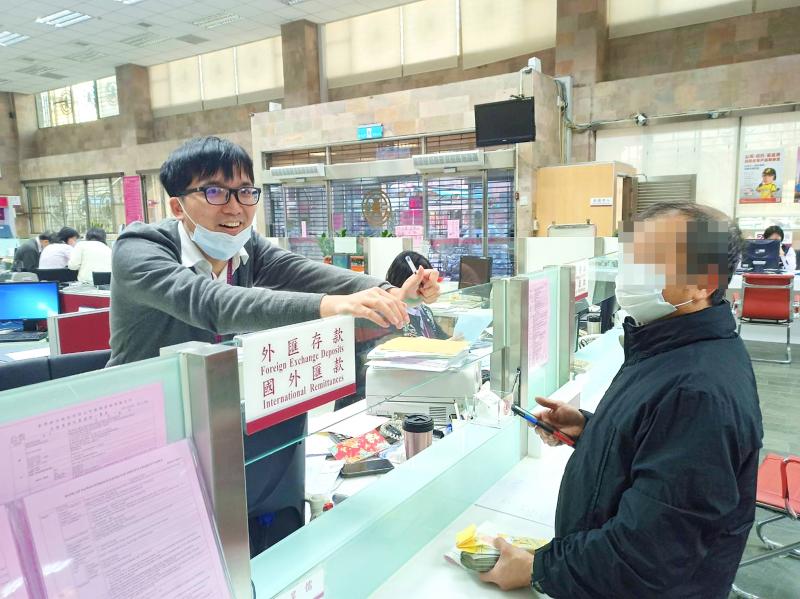
Photo copied by Wang Kuan-jen, Liberty Times 照片:自由時報王冠仁翻攝
However, the fraud syndicate was not ready to give up, and they used clever talk to persuade Hsu into making another trip to a bank on Jan. 19, this time to the Bank of Taiwan’s Longshan branch, where he applied to make a transfer of NT$84,000. Luckily, the bank staff again noticed that something was amiss and reported it to the police. On receiving the report, Deputy Chief Chen Chin-tien of Kangding Police Station went to the scene, where he used a pen and paper to explain that he was a police officer. He then read through the recorded conversations between Hsu and the other parties, from which he discovered that the fraud syndicate was once again using the same method to trick Hsu.
Wanhua Police Precinct urges the public to remember that if they receive phone calls from an unknown caller they should make detailed enquiries and immediately dial the 165 or 110 hotlines to check, so that they do not fall foul of scammers. The police said that everyone should keep in mind the triple formula of “Don’t rush; don’t be anxious; think carefully” and do a detailed check, because that is the only effective way to avoid becoming a target for scammers’ greed.
(Translated by Julian Clegg, Taipei Times)
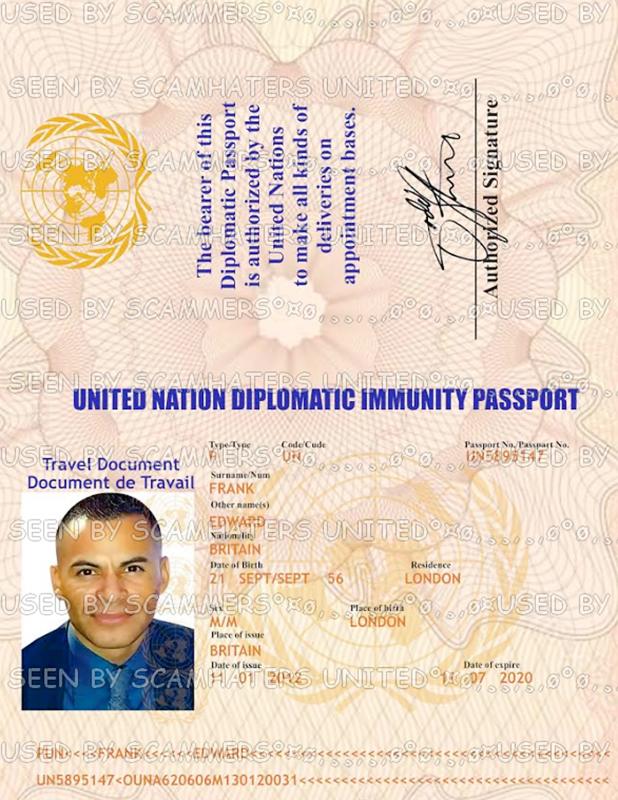
Photo: Scamhaters United 照片:Scamhaters United
五十九歲徐姓瘖啞人士,透過網路認識一名聲稱是外交官的外籍網友,結果差一點成為詐騙集團的被害人。
警方調查,徐男透過網路認識一名自稱「阿爾文」的外籍網友,對方說他是某國外交官,因為在海外執行秘密任務、身分不便曝光。「阿爾文」又說他有一份包裹要緊急寄回台灣,希望徐能夠幫忙簽收。隨後又有自稱快遞公司人員傳訊息給徐,聲稱要領包裹必須支付稅金、海關費等,要徐前去銀行匯款。
徐一時不察,一月十一日依對方所說,前往台北市彰化銀行雙園分行要臨櫃匯款三萬元,但行員發現異狀,通報轄區萬華分局莒光所;警員許?元、董羽軒趕到現場,發現徐遇上詐騙集團,隨即用筆談方式告訴他相關案例,他才放棄匯款。
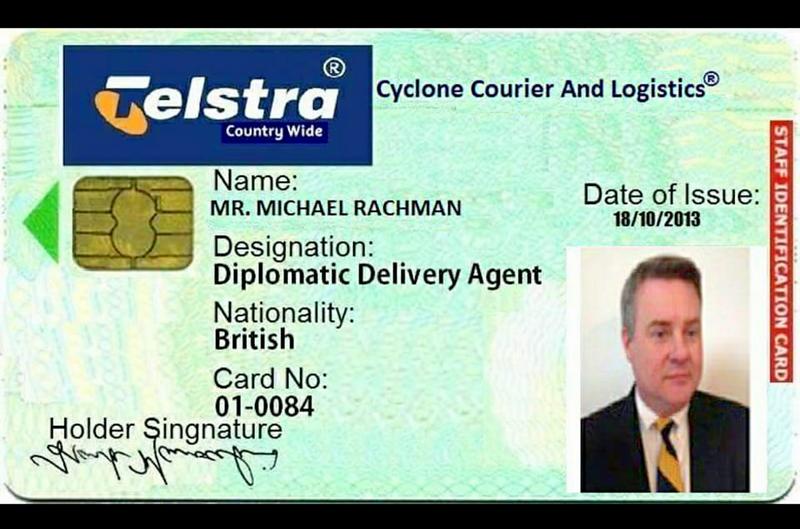
Photo: Military Romance Scams Facebook page 照片:Military Romance Scams臉書
不過,詐騙集團不死心,又用話術對徐「洗腦」,徐又於一月十九日台灣銀行龍山分行要臨櫃匯款八萬四千元;幸虧行員再次發現異狀,通報警方。康定路派出所副所長陳進添獲報前往,以紙筆書寫表示警察身分,且經查看徐與對方的對話紀錄,發現詐騙集團又用相同手法騙徐。
萬華分局呼籲,民眾如接獲不明電話應詳細查詢,請立即撥打165或110專線查證,以免落入詐騙陷阱,並切記三要訣「勿急、勿躁、多思考」!詳加查證,才能有效避免成為歹徒覬覦目標。
(自由時報)

Many consumers are guilty of filling drawers or closets with old laptops, cellphones, fitness trackers and other electronic devices once they are no longer needed. It’s hard to know where to recycle such items, or it seems costly and inconvenient to do so. The world generates millions of tons of electronic waste — also called e-waste — each year. According to the UN’s most recent estimate, people worldwide produced 62 million metric tons of e-waste in 2022, and only about 22 percent of it was properly recycled. The US’ Environmental Protection Agency estimates that less than a quarter of e-waste is

You’re sitting in class when a classmate asks to borrow a pencil. It seems like a small favor, so you agree without hesitation. The following week, the same classmate asks to share your notes. Later, they request help with a group project. You agree each time — after all, you helped out the first time — but before you know it, it has become automatic. This scenario demonstrates the “foot-in-the-door technique,” a psychological concept that shows how agreeing to small, acceptable demands makes it easier to accept larger ones later on. The name for this strategy comes from door-to-door

A: The four-day Tomb Sweeping Day long weekend begins Friday and will run until Monday. Are you going to sweep your ancestors’ tombs? B: I did in advance last weekend, so I can go to Kaohsiung to see the musical “The Phantom of the Opera.” A: Wow, is “Phantom” touring Taiwan again? It debuted in 1986, so this year marks the 40th anniversary of the show. B: And it’s not just touring Kaohsiung starting March 31, but also Taipei starting April 21 and Taichung starting May 26. A: “Phantom” is one of the world’s Four Major Musicals. I’ve seen all of them, except “Les

Continued from yesterday(延續自昨日) https://www.taipeitimes.com/News/lang Gig Tripping “Gig tripping” combines concerts with travel. People fly to see their favorite artists perform — usually abroad—and spend a few days sightseeing before or after the show. While die-hard fans have done this since the 1960s, the post-pandemic travel boom changed the game. Even people who aren’t superfans are now booking international concert trips because they want to make the most of travel opportunities. This trend exploded in the US, as the math makes sense. Domestic concert tickets are so costly that flying abroad for the show plus tourism expenses often matches or even beats the price


 RSS
RSS