


Many countries, especially in the democratic West, champion freedom of expression and allow publications that lampoon Islam’s prophet. So why is France singled out for protests and calls for boycotts across the Muslim world, and so often the target of deadly violence from the extremist margins? Its brutal colonial past, staunch secular policies and tough-talking president, who is seen as insensitive toward the Muslim faith, all play a role.
While French officials often say their country is targeted because of its reputation as the cradle of human rights and a rampart of global democracy, what distinguishes France most is its unusual attachment to secularism (or laicite).
The often-misunderstood concept of French secularism is inscribed in the country’s constitution. It was born in a 1905 law after anti-clerical struggles with the Catholic Church. Separating church and state, the law was meant to allow the peaceful coexistence of all religions under a neutral state, instead of a government answering to powerful Roman Catholic clerics. Crucifixes were at one point torn from classroom walls in France amid painful public debate.

Photo: Spiridon Ion Cepleanu/Wikimedia Commons 照片:Spiridon Ion Cepleanu∕維基共享資源
A century later, polls suggest France is among the least religious countries in the world, with a minority attending services regularly. Secularism is broadly supported by those on both left and right.
State secularism is central to France’s national identity and demands the separation of religion and public life.
Schools have historically instilled the Republic’s values in its citizens — a task some teachers say becomes ever harder as a minority of French Muslims and adherents of other faiths seek to express their religious identity.
As the number of Muslims in France grew, the state imposed secular rules on their practices. A 2004 ban on Muslim headscarves and other ostentatious religious symbols in schools remains divisive, if not shocking to many outside France. A 2011 law banning face veils made Muslims feel stigmatized anew.
In recent decades, the desire among some French Muslims to express their religious identity has dominated the debate around balancing religious and secular needs.
(AP and Reuters)
許多國家──尤其是民主的西方國家──擁護言論自由,並允許嘲弄伊斯蘭教先知的出版品。那麼,為什麼法國會特別被針對,讓整個穆斯林世界抗議和呼籲抵制,且往往成為極端主義死亡攻擊的目標呢?它殘酷的殖民史、堅定的世俗﹝去宗教化﹞政策,以及言詞強硬的總統(他被認為對穆斯林信仰不敏感)都是原因。
雖然法國官員常說,法國之所以成為攻擊的目標,是因為法國是人權的搖籃及全球民主的堡壘;但法國與他國不同的最獨特處,在其牢牢固守著世俗主義。
世俗主義明訂於法國憲法中,其概念常被人誤解。一九○五年,經過與天主教會的反神職人員鬥爭後,世俗主義成為法律。該法律將教會和國家分開,旨在使所有宗教在中立的國家之下和平共處,而不是政府向手握強權的羅馬天主教神職人員稟報。公眾經歷艱難的辯論,教室牆上的耶穌受難像一度被拆除。
一個世紀後,民意調查顯示法國是世界上最不宗教化的國家之一,固定參加宗教儀式的人只有少數。世俗主義得到左右兩派的廣泛支持。
國家世俗主義是法國民族認同的核心,它要求宗教與公共生活必須區分開來。
學校歷來向公民灌輸共和國的價值觀──一些教師表示,少數法國穆斯林及其他信仰的信徒試圖表達自己的宗教認同,使得這項教學任務變得愈發困難。
隨著法國穆斯林人數的增加,法國政府在施政也強加上世俗化、非宗教的規範。法國在二○○四年禁止在學校穿戴穆斯林頭巾及其他炫示的宗教符號──若法國以外的許多人不感到震驚的話,對此禁令的看法也仍然分歧。二○一一年所頒布的禁蒙面法,又再讓穆斯林覺得被污名化。
一些法國穆斯林希望能夠表達自己的宗教認同,對於如何平衡宗教與世俗非宗教之需求,此議題已占據近數十年來相關辯論的主要部分。
(台北時報林俐凱編譯)
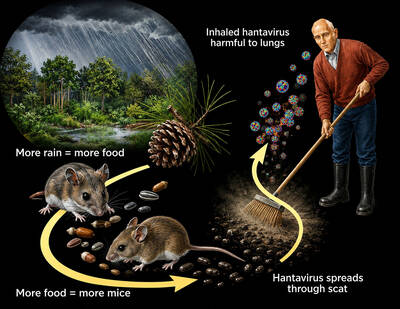
An outbreak aboard a cruise ship of a rare rodent-borne illness called hantavirus has left three passengers dead and sickened others, but global health officials say the risk to the general public remains low because the germ does not easily spread between people. “This is not the next COVID, but it is a serious infectious disease,” said Maria Van Kerkhove, director of epidemic and pandemic preparedness at the World Health Organization (WHO). “Most people will never be exposed to this.” The virus usually spreads when people inhale contaminated residue of rodent droppings. Hantaviruses have been around for centuries and are thought to
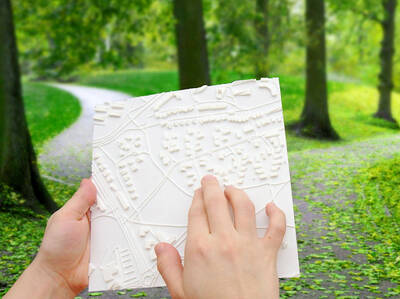
Have you ever wondered how people navigate the world when they can’t see a map? For individuals with visual impairments, conventional maps are nearly impossible to use. This is where tactile maps come in — essential tools that allow people to “see” the world through touch. A tactile map is specially designed with raised lines, textures, and symbols to represent geographical features such as roads, rivers, and buildings. Users explore it with their fingertips. However, these maps are not exclusively for people with visual disabilities. They serve as valuable multisensory learning tools that enhance spatial understanding for everyone, making

1. 他病了三天。 ˇ He has been sick for three days. χ He has been sick since three days. 註︰這裡現在完成時態 have / has been 表示從過去某一時日到現在的一段時間存在的行為或狀態,與它連用的時間副詞應為 「for +若干時」,如 for a year, for three hours 等,意思是歷時多少。 2. 他自從星期三以來都很忙。 ˇ He has been busy since Wednesday. χ He has been busy from Wednesday. 註︰「自從……以來」,該用 since。說從某一天(某一時刻)到某一天(某一時刻)才用 from,如 from Monday till Friday。 3. 房間角落裡散放著一些零星物件。 ˇ There were some odds and ends lying in the corner of the room. χ There were some odds and ends lying at the corner of the room. 註︰「在房間角落裡」該用介詞 in。例如: He stood in the corner. There is a lamp in the corner of the room. at the corner 指房子外部的拐角。例如: A little boy
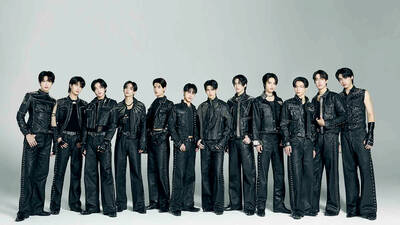
A: In early May, there were concerts by Icyball, Chyi Yu, Korea’s EXO and Japan’s Anisama, but I missed them all. What a shame. B: That’s OK. There are shows coming up by various artists, including Power Station, Accusefive, Japanese singer Mika Nakashima, Chinese-Icelandic jazzer Laufey, and even Singaporean diva Stefanie Sun. A: After a 12-year hiatus, Stefanie is finally returning to Taipei again. B: In late May, there will be more shows by Crowd Lu, WeiBird, Korea’s Donghae, 2AM, EXID, and Thailand’s BUS. A: The Thai boyband is so popular. It looks like “T-pop” is catching up with J-pop


 RSS
RSS