


To keep its promise to fans, Taiwanese rock band Mayday held an online concert on Sunday, the last day of May. The surprise show, titled “Live in the Sky,” which took place at the Taipei Municipal Stadium, was broadcast globally on YouTube, Facebook and Line, with singers Jam Hsiao, Li Ronghao and Mao Buyi serving as surprise guests.
Established in 1999, Mayday is celebrating the 21st anniversary of its debut this year. Originally, the band promised at a 2006 concert to stage a show every May, and has kept its promise since then, except in 2015 due to the lack of a venue. “Who says there won’t be May Dating in 2020?” frontman Ashin wrote online last week, stressing that the gig would be available “in every city, every time zone.”
Earlier this year, in January, Mayday was lauded for donating 5 million Chinese yuan (about US$0.7 million) to the Wuhan Charity Federation for coronavirus relief efforts. The band will resume touring in August, starting in Singapore.
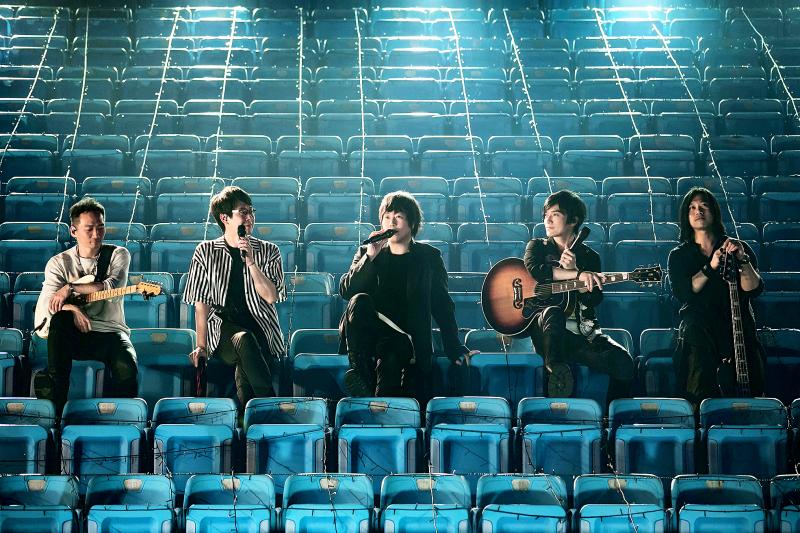
Photo courtesy of B’in Music / 照片︰相信音樂提供
(Eddy Chang, Taipei Times)
為遵守對歌迷的承諾,台灣搖滾天團五月天於上週日,也就是五月最後一天舉辦線上演唱會。這場名為「Live in the Sky」驚喜演唱會,是在台北田徑場開唱,透過YouTube、Facebook、Line全球轉播。神秘嘉賓為歌手蕭敬騰、李榮浩、毛不易。
五月天於一九九九年正式成軍,今年將歡慶出道二十一週年慶。該團最初在二○○六年一場演唱會上,答應在每年五月開唱,除了二○一五年因缺乏場地外,一直遵守承諾。主唱阿信於上週在網路上寫道︰「誰說2020沒有五月之約?」並強調「每個城市、每個時區」要同步赴約。
五月天稍早在一月時,因捐贈五百萬人民幣(約七十萬美元)給武漢市慈善總會,以救助疫情大受好評,該團預計自八月起從新加坡重啟巡演。
(台北時報張聖恩)

The debate surrounding Taipower’s recent corporate identity reboot has gone well beyond the design community. The controversy began after Taipower replaced the familiar “Taiwan Power Company” wording — widely regarded as the calligraphy of Yu You-ren (1879-1964), former Control Yuan president and master calligrapher — with a modern logotype by designer Aaron Nieh’s team, Aaron Nieh Workshop. Taipower said the change was not a wholesale replacement of old signage, but an “optimization of its identity system,” aimed at meeting the needs of digital media, electronic bills, apps, social media graphics and various small-format applications. Existing physical markings, such as building

Since 2005, the third Monday in January has come to be known as “Blue Monday.” In other words, that day is believed to be the most depressing day of the year. This concept seems logical at first. After all, Monday marks the start of the school or workweek after two days of rest and fun. Also, blue is a color that is often associated with sadness. Furthermore, in many parts of the world, January is a time when the weather is cold, rainy, and gloomy. But is there any scientific proof that this January day is truly sadder than any of

Continued from yesterday(延續自昨日) https://www.taipeitimes.com/News/lang For the most part, the idea of “Blue Monday” has been rejected as a myth. Some mental health experts also say there is a danger in labeling a certain day as the most depressing time of the entire year. Some argue that if people expect to feel sadder on the third Monday in January, this belief alone may increase their anxiety. One group that is worried about the negative effect of believing in Blue Monday is Samaritans. A mental health charity based in the UK, Samaritans is working to turn Blue Monday into “Brew Monday.” In this
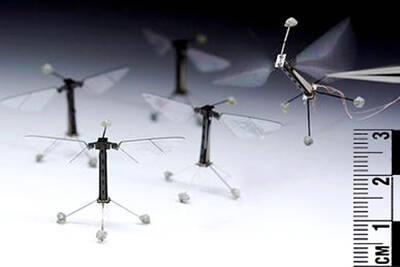
As bee populations around the world continue to decline at an alarming rate, scientists are developing an innovative solution: robotic bees. Recent advances at research institutions like Massachusetts Institute of Technology (MIT) in the US have produced tiny flying robots capable of performing pollination tasks similar to those of real bees. These tiny machines represent an impressive technological achievement. MIT’s latest models can hover in the air for over 1,000 seconds and perform complex movements, demonstrating the agility needed for successful pollination. The robots are designed to mimic the flight patterns of natural bees, offering potential support to agriculture


 RSS
RSS