


Today is the 20th anniversary of the 921 Earthquake. At 1:47am in the small hours of Sept. 21, 1999, a major earthquake, measuring 7.3 on the Richter magnitude scale, hit central Taiwan, causing massive damage and many injuries and fatalities.
In order to remember the 921 earthquake, the government has set aside Sept. 21 as an annual National Disaster Preparedness Day, to enhance the public’s disaster response capabilities.
Since 2004, the Taipei City Government Department of Education has been organizing many disaster response events every year, and has designated certain preschools for disaster response education, together with drafting a set of disaster response guidelines for use in drills for a range of different disaster scenarios. These drills allow teachers and students to learn how to act in disasters and to keep themselves safe, giving them a basic understanding of disaster response principles.
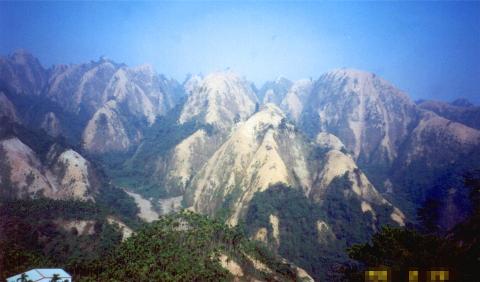
Photo courtesty of the Nantou Forest District Office
照片:南投林管處提供
(Translated by Paul Cooper, Taipei Times)
今天是九二一大地震二十週年。一九九九年九月二十一日深夜一時四十七分,台灣中部發生芮氏七點三的強震,造成極大傷亡。
為記取九二一大地震的教訓,政府將每年九月二十一日定為「國家防災日」,以提升各界對地震等災害的應變能力。
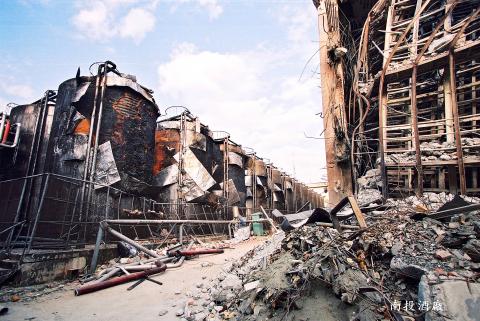
Photo courtesy of Chien Ching-nan
照片:簡慶南提供
台北市教育局從二○○四年起,每年辦理多場防災知能研習,並甄選防災教育種子園、擬定災害防救計畫,設計不同災害情境腳本進行演練,讓師生學習如何防災避難與自救,具備基礎防災素養。
(自由時報記者蔡亞樺)
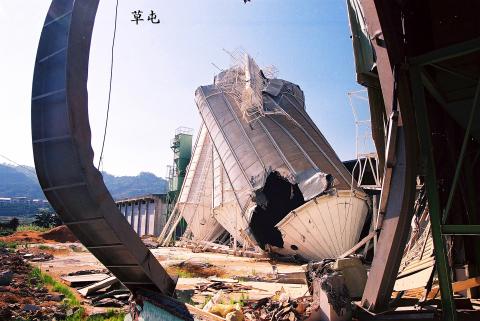
Photo courtesy of Chien Ching-nan
照片:簡慶南提供
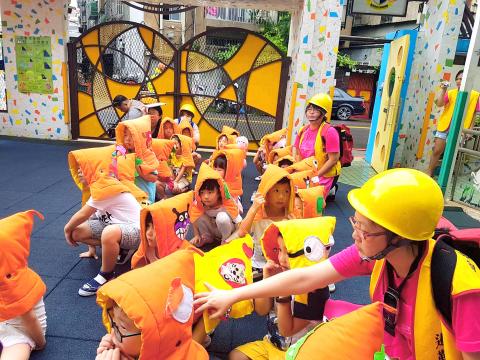
Photo courtesy of the Taipei City Government Department of Education
照片:台北市教育局提供
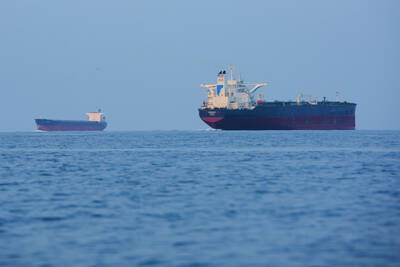
The US-Israeli war with Iran, which began on Feb. 28, has killed thousands of people, destabilized the Middle East and rocked global energy markets by effectively closing the strait. WHAT IS THE STRAIT OF HORMUZ? Lying between Oman and Iran and linking the Gulf north of it with the Gulf of Oman to the south and the Arabian Sea beyond, the strait is 33km wide at its narrowest point, with a shipping lane just 3km wide in either direction. Perhaps the world’s most important energy shipping channel, the waterway is about 167km long. Following through on an old threat, Tehran effectively closed the strait
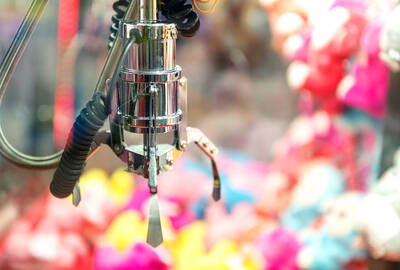
Have you ever found yourself desperately feeding coins into a claw machine just because you’ve already spent so much trying to win that stuffed animal? Or maybe you’ve continued watching a boring movie simply because you already paid for the ticket? If so, you’ve experienced the “sunk cost fallacy.” A sunk cost refers to time, money or effort that has already been spent and cannot be recovered. This psychological trap is surprisingly common. You might keep playing a video game you no longer enjoy because you’ve invested countless hours in building your character, or maintain a toxic friendship because you’ve known

A: Which TV drama series have been global hits so far this year? B: The US drama “Stranger Things 5,” South Korean drama “Can This Love Be Translated?” and Chinese megahit “Pursuit of Jade” are all popular lately. A: Isn’t “Pursuit of Jade” the costume idol drama about the romance between a charming marquis and a pig-slaughterer? Actor Zhang Linghe and actress Tian Xiwei are both so attractive. B: Plus, Netflix’s Korean-Japanese gay romance drama “Soul Mate” — starring Korea’s Ok Taec-yeon and Japan’s Hayato Isomura — is set to premiere in May. A: These hit international dramas

When you twist open a bottle of carbonated water, bubbles rush out with a hissing sound. This drink is simply water infused with carbon dioxide (CO2) under pressure, giving it that fizz on your tongue. But this basic description barely scratches the surface of the carbonated water family. Although all carbonated waters are bubbly, slight differences set them apart. Seltzer is just plain water with artificial CO2—no minerals, no extras. Club soda includes added minerals such as sodium bicarbonate, which creates a slightly salty flavor. This makes club soda suitable for mixing with fruit juices. Sparkling water, on the


 RSS
RSS