


On the evening of April 15, thick smoke began billowing from Notre-Dame de Paris. The cathedral quickly became engulfed in flames as an uncontrollable fire took hold of the building. The whole world watched on in horror as Notre-Dame’s more than 90m-tall spire was devoured by flames, broke in two and was reduced to a pile of smoldering ashes.
The Crown of Thorns, the site of the coronation of Napoleon, The Hunchback of Notre-Dame — nearly everyone feels a connection in some way to Notre-Dame, or Notre-Dame de Paris in French. At the moment when it seemed as if everything would be lost, many people for the first time gained a sense of the significance cultural heritage has within our lives.
Notre-Dame, which means “our lady” in French, is a reference to the Virgin Mary. Construction of the cathedral began in 1163 and took 128 years to complete. It is one of the most representative examples of Medieval Gothic architecture and it is designated a UNESCO World Heritage Site.
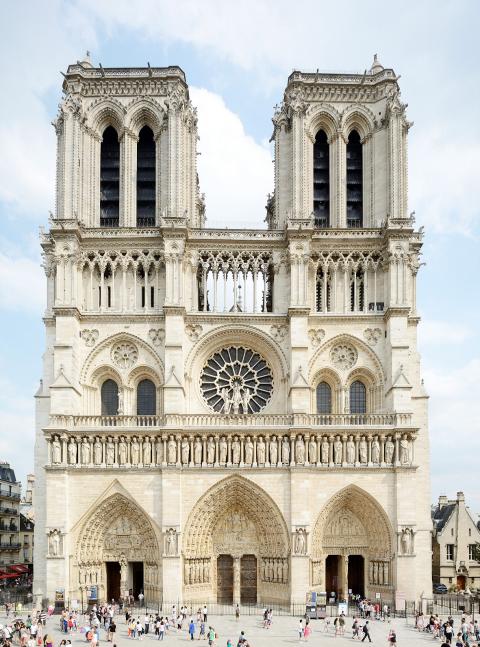
Photo: Wikimedia Commons
照片:維基共享資源
Gothic architecture originated in 12th century France. Its distinguishing characteristics are the pointed arch (see the three pointed arches which form the main entrance of Notre Dame [photo 1]), the ribbed vault and the flying buttress [photo 2].
Ribbed vaults are able to efficiently distribute the weight of the roof through the columns and walls, while exterior flying buttresses [photo 3] provide a horizontal balancing support for the external walls. These architectural elements allowed buildings to be constructed higher, lighter and more robustly than before and made possible the soaring high interior spaces typical of gothic architecture [photo 4].
Highly intricate decoration is another distinguishing feature of Gothic ecclesiastical architecture. In addition to pointed arches, carved statues of apostles adorn walls and gargoyles carved from stone nestle within the eaves and protrude from the tops of walls. Gargoyles have a practical function: to get rid of rainwater and prevent run-off from flowing down the walls [photo 5]. Gargoyles are emblematic of Gothic architecture’s pursuit of detail and grotesque style, as well as its fanaticism and decadence.
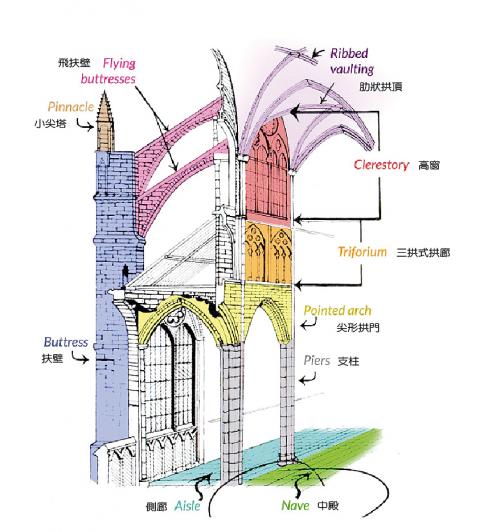
Photo: Screen grab from Internet
照片:取自網路
Notre-Dame’s soaring interior spaces, and its 128m depth, give worshippers a sense of their smallness and insignificance before God. The cathedral’s vast perpendicular lines contrast with the human scale to produce a sensation of vertigo when observed from the ground, creating a contradictory and conflicting emotional response. Light shines through stained glass windows into the cathedral’s dim interior to produce a feeling of mysterious beauty and ecstasy.
Notre-Dame’s spire was used by Parisians to gauge distance and find their bearings within the city. Before the loss of its spire, the cathedral was like a sculpture that had risen up from the surface of the earth and thrust its stone steeple through the city’s skyline. The cathedral’s capacious interior is also a repository of artifacts, people and events — a veritable treasure trove of historical memories.
(Translated by Edward Jones)
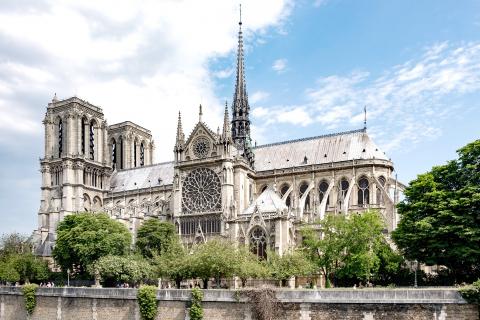
Photo: Wikimedia Commons
照片:維基共享資源
四月十五日傍晚,巴黎聖母院冒出濃煙,然後變成熊熊惡火,一發不可收拾,全世界眼睜睜看著九十多公尺高的尖塔被火舌吞噬、折斷、燒毀,這一幕震驚了全世界。
基督的荊冠、拿破崙加冕的場景、鐘樓怪人……幾乎每個人都跟巴黎聖母院有著某種聯繫,此刻面對這一切的可能失去,讓許多人第一次感到「文化遺產」在我們生命中的重量。
巴黎聖母院的法文名稱「Notre Dame」,意為「我們的女士」,指的是聖母瑪利亞 。巴黎聖母院於一一六三年動工,耗時一百二十八年才完成,是中世紀最有代表性的哥德式建築之一,被聯合國教科文組織列入世界文化遺產。
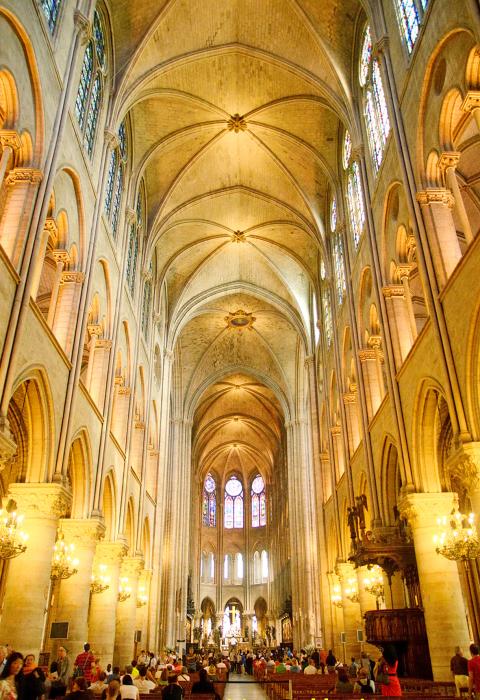
Photo: Wikimedia Commons
照片:維基共享資源
哥德式建築發源於十二世紀的法國,主要特徵為尖形拱門(例如巴黎聖母院正門的三座拱門【圖一】)、肋狀拱頂,以及飛扶壁。【圖二】
肋狀拱頂的運用,使屋頂的重量得以快速分散到柱與牆;而室外的飛扶壁【圖三】則提供牆面橫向的支撐平衡,使建築能夠建得更高、更輕、更堅固,因此得以實現哥德式建築高聳的內部空間。【圖四】
繁複的裝飾亦為哥德式大教堂的特點。拱門、牆面的聖徒雕像,乃至牆頂的滴水獸(突出牆面的怪誕造型塑像,其功能為排水,避免水沿著牆面流下)【圖五】,那種對細節的追求、造型之奇詭,狂熱而頹廢。
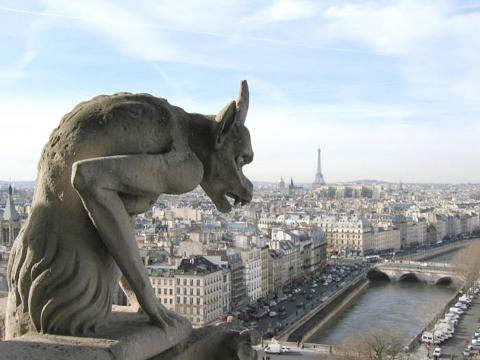
Photo: Wikimedia Commons
照片:維基共享資源
巴黎聖母院高聳的內部空間、一百二十八公尺長的縱深,讓人處於其中特別地渺小。巨大的垂直縱深與人體尺度的對照,使觀者產生不平衡感,引發矛盾衝突的衝動與激情。光線透過彩繪玻璃投入陰暗的內部,神祕美麗而狂喜。
巴黎人以聖母院的尖塔,來目測自己在城市中的遠近方位──建築就像一件突出於地表的雕塑,構成天際線。建築更製造了容納的空間──容納物品、容納人及其活動,承載著歷史記憶。
(台北時報林俐凱)
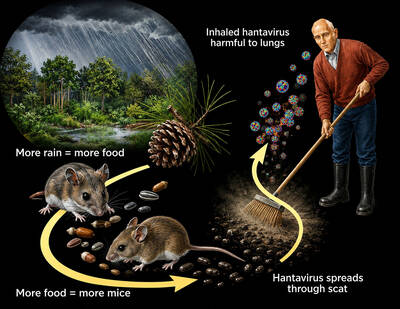
An outbreak aboard a cruise ship of a rare rodent-borne illness called hantavirus has left three passengers dead and sickened others, but global health officials say the risk to the general public remains low because the germ does not easily spread between people. “This is not the next COVID, but it is a serious infectious disease,” said Maria Van Kerkhove, director of epidemic and pandemic preparedness at the World Health Organization (WHO). “Most people will never be exposed to this.” The virus usually spreads when people inhale contaminated residue of rodent droppings. Hantaviruses have been around for centuries and are thought to
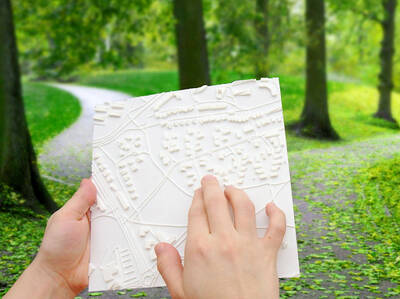
Have you ever wondered how people navigate the world when they can’t see a map? For individuals with visual impairments, conventional maps are nearly impossible to use. This is where tactile maps come in — essential tools that allow people to “see” the world through touch. A tactile map is specially designed with raised lines, textures, and symbols to represent geographical features such as roads, rivers, and buildings. Users explore it with their fingertips. However, these maps are not exclusively for people with visual disabilities. They serve as valuable multisensory learning tools that enhance spatial understanding for everyone, making

A: In early May, there were concerts by Icyball, Chyi Yu, Korea’s EXO and Japan’s Anisama, but I missed them all. What a shame. B: That’s OK. There are shows coming up by various artists, including Power Station, Accusefive, Japanese singer Mika Nakashima, Chinese-Icelandic jazzer Laufey, and even Singaporean diva Stefanie Sun. A: After a 12-year hiatus, Stefanie is finally returning to Taipei again. B: In late May, there will be more shows by Crowd Lu, WeiBird, Korea’s Donghae, 2AM, EXID, and Thailand’s BUS. A: The Thai boyband is so popular. It looks like “T-pop” is catching up with J-pop

Since 2005, the third Monday in January has come to be known as “Blue Monday.” In other words, that day is believed to be the most depressing day of the year. This concept seems logical at first. After all, Monday marks the start of the school or workweek after two days of rest and fun. Also, blue is a color that is often associated with sadness. Furthermore, in many parts of the world, January is a time when the weather is cold, rainy, and gloomy. But is there any scientific proof that this January day is truly sadder than any of


 RSS
RSS