


When the Japanese became colonial rulers of Taiwan in 1895, they inherited a population of Chinese immigrants and Aboriginal peoples. The first years of Japanese colonial rule included suppression of uprisings. In 1919 the Japanese governor implemented the Doka movement of assimilation; with the outbreak of Second Sino-Japanese War in 1937 came a new policy: the Kominka movement. Kominka was regarded as necessary for the Japanese war effort, to make the Taiwanese colonial subjects identify more strongly with Japan, and not China.
One element of the Kominka movement was to have Taiwanese convert to Shinto, Japan’s indigenous religion of worshipping spirits manifest in natural forms such as trees, rivers and people. Shinto shrines were set up around the country, including some of the high altitude areas such as Jade Mountain and Snow Mountain.
If you visit Jade Mountain West Peak today you will see a Japanese shrine there. This is not the original structure: After Japan ceded control of Taiwan at the end of World War II, many of the shinto shrines around the island were destroyed. The West Peak shrine is a reconstruction commissioned by the Jade Mountain National Park, made entirely of wood and reflecting the Japanese style of the original, repurposed as a shrine to the local spirits.
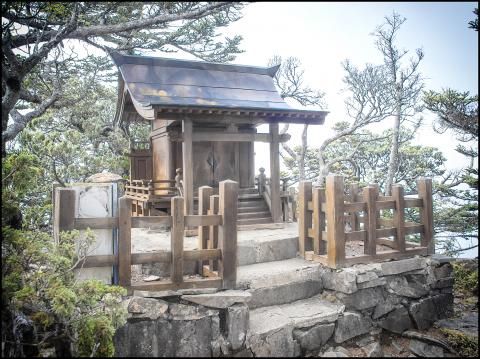
Photo: Paul Cooper, Taipei Times
照片:台北時報記者古德謙攝
On the day I was there, Taiwanese hikers made a point of praying at the shrine. They thanked the spirits for the good weather, and wished for safe passage down the mountain.
The shrine has a simplistic elegance. Unfortunately, its exposure to the elements has taken its toll. The wood itself is in remarkable condition; the stone base less so. Cracked and broken through temperature alternations, it has become misshapen, warping the wooden railings. The rear right corner post had fallen to the forest floor.
(Paul Cooper, Taipei Times)
.jpg)
Photos: Paul Cooper, Taipei Times
照片:台北時報記者古德謙攝
日本人在一八九五年成為台灣的殖民統治者,當時他們所接管的台灣人民主要由中國移民和原住民組成。在殖民統治的最初幾年,日本政府著重於鎮壓抗日運動;及至一九一九年,日本總督改實施同化政策;隨著一九三七年第二次中日戰爭爆發,日本政府遂推行一項新政策──「皇民化運動」,目的是讓殖民統治下的台灣臣民更加強烈認同日本,而非中國。對於日本的戰事而言,皇民化運動可說是勢在必行。
皇民化運動的元素之一,是要求台灣人改信神道教,也就是日本原生的泛靈宗教,崇拜在自然界形態中──包括樹木、河川,以及人類──顯現其靈的世間萬物。神道教的神社遂開始設立於台灣各地,就連玉山和雪山等高海拔地區也不例外。
今天,在拜訪玉山西峰的路上,你還能看見一座日式神社,只是該建物現狀已非最初的結構:日本在第二次世界大戰尾聲放棄台灣主權後,台灣本島各地許多神道教神社都被拆毀。今日玉山西峰的這座神社其實是玉山國家公園委託重建,建築整體全以木造完成,反映原建物的日式風格,並且重新改作為山神祠。
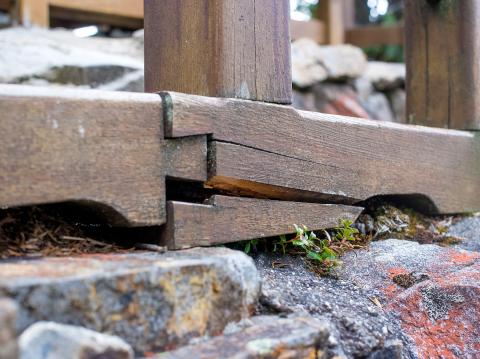
Photos: Paul Cooper, Taipei Times
照片:台北時報記者古德謙攝
在我造訪西山神祠當天,台灣的登山客們特地向神祠合掌膜拜。他們感謝山神帶來好天氣,也祈求下山的路途平安順利。
這間山神祠有著簡約古樸的高雅氣息。可惜的是,建築因暴露於自然環境中而付出了代價。木造結構的保存狀況極佳,但石造地基的狀況就沒有這麼好了。山上的氣溫劇烈變化,導致石頭龜裂破損,造成基座變形,連帶影響木造圍欄歪斜。右後方角落的欄杆亦傾倒在林間的地面上。
(台北時報章厚明譯)
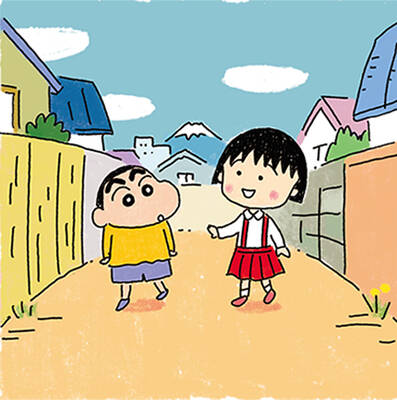
A: Popular humorous Japanese manga series “Chibi Maruko-chan” and “Crayon Shin-chan” will collaborate for their respective 40th and 35th anniversaries, publishing three crossover stories in April. B: Both were made into TV animation series, becoming huge hits in Asia. What are the crossover stories about? A: The first story features Shin-chan and his family visiting Maruko-chan’s hometown, Shizuoka City, where they run into each other. B: Wow, that sounds interesting. And then? A: The follow-ups feature Maruko-chan and her family visiting Shin-chan’s hometown, Kasukabe City. I bet the interactions between the two families will be funny. A: 熱門日本漫畫《櫻桃小丸子》、《蠟筆小新》4月將合作,為紀念小丸子40週年與小新35週年,推出三篇跨界聯動漫畫! B:
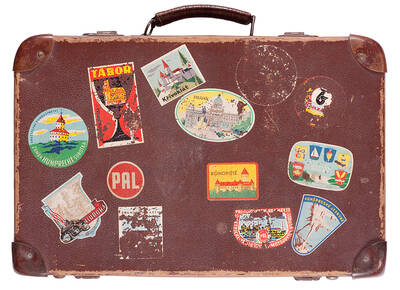
Travel fever is back, and it’s contagious. After years of being kept home during the COVID-19 pandemic, people are once again eager to explore the world. Rather than just book any trip, travelers are getting smarter about how they scratch that travel itch. Microcation Defined as four days or fewer and over 160km away from home, the microcation perfectly matches the post-pandemic mindset. After long periods of remaining indoors, people are making up for lost time by taking short, frequent getaways throughout the year. These brief trips avoid the work-life imbalance that comes with long absences. With only a few days away, one’s
Many consumers are guilty of filling drawers or closets with old laptops, cellphones, fitness trackers and other electronic devices once they are no longer needed. It’s hard to know where to recycle such items, or it seems costly and inconvenient to do so. The world generates millions of tons of electronic waste — also called e-waste — each year. According to the UN’s most recent estimate, people worldwide produced 62 million metric tons of e-waste in 2022, and only about 22 percent of it was properly recycled. The US’ Environmental Protection Agency estimates that less than a quarter of e-waste is

Dos & Don’ts — 想想看,這句話英語該怎麼說? 1. 我們很早到達電影院。 ˇ We arrived at the theater very early. χ We arrived the theater very early. 註︰arrive 為不及物動詞,後面如果有受詞要用 at 或 in。例如:They arrived in Taipei yesterday.。一般大地方,如國家、省、大城市等前面用 in,凡小地方城鎮、學校等則用 at。 2. 開車半小時以後,我們到達了海灘。 ˇ After half an hour’s drive, we got to the beach. χ After half an hour’s drive, we got the beach. 註︰come, go, get(來、去、到達)某地時,在表示地點的名詞前面應該用 to,如 go to school, go to Taipei, come to Shanghai 等。如果這些動詞後面所跟的是 here, there, home 等副詞,則不用 to。 3. 明天我會回辦公室。 ˇ I will be back in the office tomorrow. χ I will be back to office tomorrow. 註︰to be back 一語裡的 back 是副詞,不是介詞,所以後面要用 at (the market) 或 in (the office)。 假如假期結束,要回學校上課了則可說: ? Kids will be back


 RSS
RSS