


On Sept. 15 1918, a 12-year-old boy named Karl Karlsson who lived just outside Ostersund, Sweden, wrote a short diary entry: “Two who died of Spanish flu buried today. A few snowflakes in the air.”
It is 100 years since a particularly virulent strain of avian flu, known as the Spanish flu despite probably originating in America, ravaged the globe, killing somewhere between 50 million and 100 million people. The epidemic struck particularly hard in Ostersund, earning the city the nickname “capital of the Spanish flu.”
There were three main reasons why the flu hit this remote city so hard: Ostersund had speedy railway connections, several army regiments stationed in close quarters and a malnourished population living in cramped accommodation.
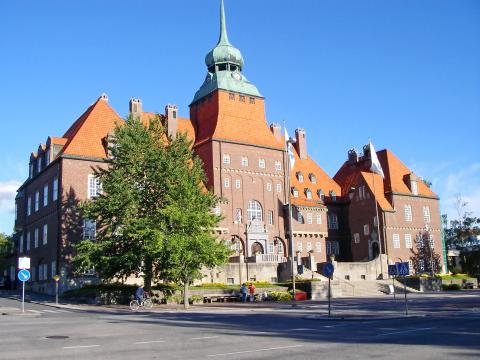
Photo: Wikimedia
照片:維基共享資源
By 1917, when navvies poured in and construction started on an inland railway to the north, widespread food shortages had led to violent workers’ demonstrations and a near mutiny among the army units. The city became a hotbed of political activism. While working-class families crowded into insalubrious accommodation, wealthy tourists came for the fresh mountain air and restorative waters — as well as the excellent fishing and elk hunting.
It wasn’t just the urban proletariat demanding better accommodation. The indigenous Sami peoples demanded an end to discriminatory policies that forced them to live in tents. Social inequality in the city meant the Spanish flu hit all the harder.
As the epidemic raged in late August, around 20 people were dying daily. The city’s bank director Carl Lignell withdrew funds from Stockholm without authorization and requisitioned a school for use as a hospital (the city didn’t have one). For a brief period, Lignell worked like a benevolent dictator, quarantining suspected cases in their homes — and revealing the squalor in which they lived. The hastily convened medical team found whole families crowded into wooden shacks, just a few streets away from the proud, stone-built civic structures. In some homes, sick children lay on the floor for want of beds.
The local newspaper Ostersunds-Posten asked rhetorically: “Who would have thought that in our fine city there could be such awful destitution?”
People of all political convictions and stations in life started cooperating in a city otherwise riven by the class divisions of early industrial society. Ostersunds-Posten itself moved from simply reporting on the epidemic to helping to organize relief, publishing calls for money, food and clothing. The state had proven itself inadequate.
After the epidemic, the state made tentative steps toward a cooperative approach to social reform. Issues such as poor nutrition and housing were on the political agenda. Anyone trying to date the inception of Sweden’s welfare state cannot overlook the events of autumn 1918.
One hundred years on, there are few better places than Ostersund to see the effects of Sweden’s much-vaunted social model. The left of center Social Democrats in power has made housing a priority — new developments are spacious, well-ordered and equipped with schools and playgrounds.
“School starts tomorrow — for the last time,” confides Karl Karlsson to his journal on Sept. 4 1918. “I leave in spring and it feels melancholy.” Ten days later, he notes that his family’s food stores are running low. One hundred years later, a city — and a society — once unable to educate or even feed its youth is now one of the world’s wealthiest and fairest.
(The Guardian)
一九一八年九月十五日,住在瑞典厄斯特松德郊區的一名十二歲男孩卡爾‧卡爾遜,在日記上寫下短短幾句話:「兩名因西班牙流感過世的人今天下葬,天空飄著幾片雪花。」
距今一百年前,一種特別致命的禽流感病毒株蹂躪全球。雖然病毒可能源自美洲,該傳染病卻被稱作「西班牙流感」,奪走五千萬到一億人的生命,並在厄斯特松德造成特別嚴重的疫情,使得該城市獲得「西班牙流感首都」的暱稱。
流感在這個偏遠的城市爆發,主要有三個原因:厄斯特松德有便捷的鐵路連結、數個陸軍兵團駐紮在互相緊鄰的軍營中,以及城市人口普遍營養不良,住在狹窄的居住環境中。
一九一七年,當挖土工人大批移入此地,開始建造向北延伸的內陸鐵路時,普遍的糧食匱乏引起激烈的工人示威,甚至差點在部隊中造成叛變。該城市遂成為政治激進主義的溫床。另一方面,正當勞動階級全家擠在極不衛生的房舍同時,富裕的觀光客前來此地享受新鮮的山林空氣、有助恢復健康的泉水──以及極佳的釣魚體驗和獵捕麋鹿。
不只是城市裡的無產階級要求更好的居住環境,原住民薩米人也要政府停止歧視性政策,不要強迫他們住在帳篷中。城市中的社會不平等,讓西班牙流感侵襲更加變本加厲。
這場流行病在八月底展開肆虐,每天約有二十人死亡。該城市的銀行主管卡爾‧林奈未經授權就從斯德哥爾摩提出大筆資金,並徵用一間學校改為醫院使用(該城市當年一間醫院都沒有)。在這段短暫的期間,林奈就像是一位仁慈的獨裁者,對疑似感染的個案進行住家隔離──這才揭露出市民居住的骯髒環境。倉促召集成立的醫療隊更多次發現整個家庭擠在破敗的木棚中,距離那些輝煌的石造市政建築僅有數條街之隔。在一些家庭裡,病弱的幼童因為缺乏床鋪而只能躺在地板上。
當地的報社厄斯特松德日報反問大眾:「誰會想到,我們這美好的城市裡會有如此悲慘的凋敝景象?」
在其他層面被階級分化撕裂的這個早期工業社會中,懷抱不同政治信念、來自各行各業的市民們開始動員合作。厄斯特松德日報從單純報導疫情轉為協助組織救災行動,並發布募集資金、食物,以及衣服的訊息。瑞典政府本身無法勝任救災行動的問題不證自明。
在疫情結束後,瑞典政府開始試驗性地改以合作方式進行社會改革。營養缺乏和居住環境等議題開始出現在政策中。如果有人想要追溯瑞典成為社會福利國家的開端,一九一八年秋天的這些事件絕對不容忽視。
一百年後,幾乎沒有幾個地方比厄斯特松德更能見證瑞典獲得盛讚的社會模式。當地執政的社會民主黨在政治光譜上中間偏左,他們將住宅議題列為施政優先──新的開發案空間寬敞、井然有序,並附有學校和遊樂場。
「明天學校開學,是最後一次了」,男孩卡爾在一九一八年九月四日的日記中這樣寫著。「我會在春天離開,這讓人感到憂傷」。十天後,他提到家裡的存糧要見底了。一百年後,當年無法讓兒童受教育,甚至不能餵飽他們的城市──以及社會──已搖身一變成為世界上最富裕而且最接近社會公平的理想家園。
(台北時報章厚明編譯)

Have you ever found yourself desperately feeding coins into a claw machine just because you’ve already spent so much trying to win that stuffed animal? Or maybe you’ve continued watching a boring movie simply because you already paid for the ticket? If so, you’ve experienced the “sunk cost fallacy.” A sunk cost refers to time, money or effort that has already been spent and cannot be recovered. This psychological trap is surprisingly common. You might keep playing a video game you no longer enjoy because you’ve invested countless hours in building your character, or maintain a toxic friendship because you’ve known

A: Which TV drama series have been global hits so far this year? B: The US drama “Stranger Things 5,” South Korean drama “Can This Love Be Translated?” and Chinese megahit “Pursuit of Jade” are all popular lately. A: Isn’t “Pursuit of Jade” the costume idol drama about the romance between a charming marquis and a pig-slaughterer? Actor Zhang Linghe and actress Tian Xiwei are both so attractive. B: Plus, Netflix’s Korean-Japanese gay romance drama “Soul Mate” — starring Korea’s Ok Taec-yeon and Japan’s Hayato Isomura — is set to premiere in May. A: These hit international dramas
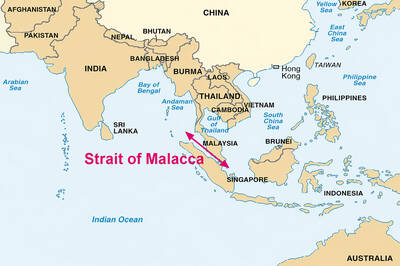
The closure of the Strait of Hormuz has forced policymakers in Asia to face questions over the security of other maritime chokepoints, including the Strait of Malacca, which is the world’s busiest waterway for international trade. WHAT IS THE MALACCA STRAIT? The 900km long Malacca Strait, bounded by Indonesia, Thailand, Malaysia and Singapore, provides the shortest sea route from East Asia to the Middle East and Europe. It carries nearly 22 percent of the world’s maritime trade, according to the Center for Strategic and International Studies (CSIS). This includes oil and gas shipments from the Middle East to the energy-hungry economies of China,

It seems like every year, new foods or drinks start trending and suddenly show up everywhere. A decade ago, avocado __1__ restaurant menus, while oat milk became the must-have addition to your coffee in cafes around five years back. The latest trend to hit this list is the pistachio. This flavorful green nut now features in everything from chocolate bars to Indian curries. While pistachios have long played a central role in certain regional cuisines, their recent global __2__ can be traced to Dubai. There, a specialty chocolate shop went __3__ on TikTok for one of its chocolate bars


 RSS
RSS