


Music fans around the world are paying tribute to the “Queen of Soul” Aretha Franklin, who died at home in Detroit last week at the age of 76 following a long battle with pancreatic cancer. Franklin started out singing gospel in her father’s church, and the legendary singer won 18 Grammy awards in an extraordinary career spanning over six decades.
In 1987, Franklin became the first woman ever to be inducted into the “Rock and Roll Hall of Fame,” opening the door for other women in the music business. In 2010, Rolling Stone magazine even named her the greatest singer of all time. She inspired generations with her countless hits ranging from gospel and soul to R&B and pop, such as “Chain of Fools,” “A Natural Woman” and “I Knew You Were Waiting.”
Among the hits, Franklin’s classic “Respect” became an anthem for both the Civil Rights Movement and feminism. Unfortunately, since a turbulent plane ride in 1984, she stopped touring overseas altogether, due to a fear of flying.

Photo: AFP
照片:法新社
(Eddy Chang, Taipei Times)
全球樂迷近日紛紛向「靈魂歌后」艾瑞莎富蘭克林致敬,她在長期與胰臟癌搏鬥後,上週病逝於底特律家中,享壽七十六歲。艾瑞莎從小在父親的教堂獻唱福音歌曲而發跡,這位傳奇天后縱橫歌壇超過一甲子,在其非凡的演唱生涯中曾榮獲十八座葛萊美獎。
艾瑞莎在一九八七年,成為首位獲選進入「搖滾名人堂」的女性,為其他女性音樂人敲開了大門。在二○一○年,更被《滾石雜誌》評選為有史以來最偉大的歌手。從福音和靈魂樂到節奏藍調和流行樂,她以無數名曲啟發了好幾個世代,包括《Chain of Fools》、《A Natural Woman》、《I Knew You Were Waiting》。
而其中,艾瑞莎的經典《Respect》更被視為民權運動和女性主義的國歌。可惜的是自從在一九八四年搭機遭遇亂流後,她就因為飛行恐懼而從不到海外巡演。
(台北時報張聖恩)

Cameras are everywhere — in our pockets, on our walls and even in space. They capture emotions, preserve history and reflect culture. Through these devices, photography is now essential to modern life, influencing how we perceive ourselves and the world. To understand the root of their power, let’s explore the camera’s remarkable journey. The story begins with the camera obscura, a dark room with a tiny hole. Light passing through the opening projected an inverted image on the opposite wall. Renaissance artists used this principle to paint accurate scenes. However, these images couldn’t be preserved as photographs. That changed

A: This year’s two most anticipated films have finally hit theaters in Taiwan. “Michael” premiered last Wednesday, while “The Devil Wears Prada 2” premiered this Wednesday ahead of its global release. B: Isn’t “Michael” the biopic about the late King of Pop Michael Jackson? A: Yup, it tells the story of Michael’s legendary life, from child star to global icon. And the role is in fact played by his nephew, Jaafar Jackson. B: Michael caused a sensation when touring Taiwan twice in 1993 and 1996. His classic hits, dance moves and music videos reshaped global pop culture at that time. A: I’m gonna

A: In addition to the biopic “Michael,” comedy “The Devil Wears Prada 2” is finally in theaters. I can’t believe it’s been 20 years since the 2006 debut of the original film. B: Does the sequel still revolve around the fashion industry? A: This time, “Miranda,” the fashion magazine editor-in-chief played by Meryl Streep, will team up with her former assistant “Andy,” played by Anne Hathaway, to fight against Emily, her other ex-assistant played by Emily Blunt. B: Isn’t the role of “Miranda” based on then US “Vogue” editor-in-chief Anna Wintour? A: Yup, it established Anna’s fashion status, influenced pop culture
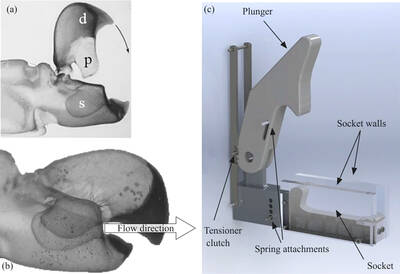
Few sea creatures of their size have as much destructive power as pistol shrimp. These small animals, usually measuring around four centimeters long, produce shock waves that can stun or even kill their prey. The attack begins when the shrimp opens its specialized claw, allowing water to fill a chamber inside. Then the claw closes rapidly. A bump on the claw strikes the chamber, forcing the trapped water out through a narrow opening at a high speed of about 25 meters per second. The rapid movement forms a bubble in the water that collapses almost instantly under the pressure of the


 RSS
RSS