


Chinese Practice
進退維谷;左右為難
(jin4 tui4 wei2 gu3; zuo3 you4 wei2 nan2)
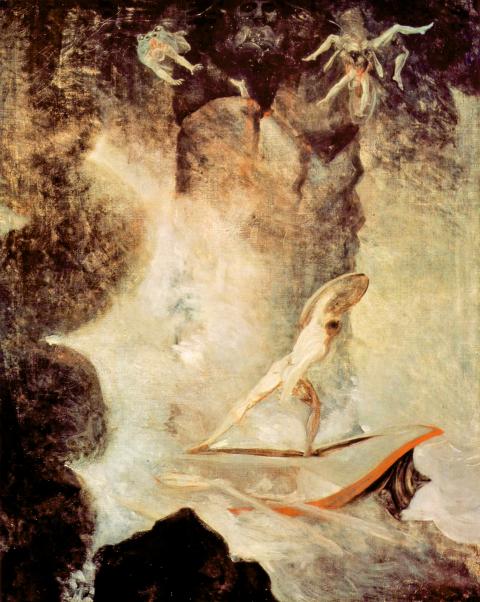
Photo: Wikimedia Commons
照片:維基共享資源
no room to advance or to retreat; to be in a quandary
中國古代經典《詩經》,成書年代約為西元前十一至前七世紀,亦即西周至春秋時代中期(春秋時代屬東周前期),收錄了當時的詩歌。《詩經》並非一人一時一地之作,它收錄的三○五件作品,分為〈國風〉(各諸侯國民歌)、〈小雅〉(用於宮廷宴會等較私人場合)、〈大雅〉(用於王室較正式嚴肅之場合),以及〈頌〉(祭祀用詩歌)。〈大雅〉中的「桑柔」一詩相傳是周厲王的大臣芮良夫所作。周厲王欲重用榮夷公,芮良夫極力勸阻,因恐榮夷公會施行暴政,禍國殃民。周厲王不聽勸阻,後來事情果然不出芮良夫所料。芮良夫寫下宮廷中爾虞我詐的處境,以及他如何不信任周圍的人:
瞻彼中林,甡甡其鹿
朋友已譖,不胥以穀
人亦有言,進退維谷
(看那樹林裡的鹿群,是多麼的友善而快樂;我卻不然,朋友之間,不僅無法相勉為害,還互相猜忌;人們不是常說「前後都無路可走」,我現在就是這樣的處境啊。)
此詩中的「進退維谷」一詞,後來透過在文學中的使用而進入了語言。例如,在明末清初的小說《醒世姻緣傳》第十五回中,筆名西周生的作者寫道:「近日來信息不通,弟等進退維谷。或住或行,速乞仁兄方略」(在過去幾天一直沒有您的消息,我們進退維谷,不知道該怎麼辦,到底應該要住下來,還是要離開?請您趕快指示我們。)
成語「進退維谷」現今用來表示某人陷入困境,對此沒有理想的解決方案。或也同另一成語「左右為難」,字面意思是「左右兩個都難以處置」。
這種夾在兩個選項之間,而兩個選項都很糟糕的情況,也可以用英文「between the Devil and the deep blue sea」(在魔鬼和又深又藍的大海之間)來表達。此語確切出處不詳,但有一說認為是來自希臘神話的影響──荷馬史詩中的英雄奧德修斯,不得不在斯庫拉(有六個頭的妖怪)和卡律布狄斯(一個漩渦)之間做出抉擇。最後,奧德修斯選擇靠近斯庫拉航行,並冒著失去幾名水手的風險,而不是靠漩渦太近,因為他擔心漩渦可能會把整艘船都吞沒。
如同要在海怪和漩渦之間做出選擇一樣,魔鬼和又深又藍的大海也代表了兩個可怕的選項。此語第一次在書中出現是在一六三七年出版的《Monro, His expedition with the worthy Scots regiment (called Mac-Keyes-regiment) levied in August 1626》(蒙羅,及其一六二六年八月徵集的可敬的蘇格蘭軍團(稱做麥凱斯軍團)的征戰),其中有一句「I, with my partie, did lie on our poste, as betwixt the devill and the deep sea」(我跟我的同團夥伴一起,躺在我們的崗位上,彷彿在魔鬼和深海之間)。後來「blue」(藍色)一字被加進來,成為凱伯‧凱洛威一九三一年的歌名〈Between the Devil and the Deep Blue Sea〉(魔鬼與深藍大海之間)。
(台北時報林俐凱譯)
中美兩大國貿易戰開打,小國往往夾在兩大國之間左右為難。
(With the trade war between China and the US, smaller countries are getting caught in the middle, with no easy way through.)
他們登上了山,沒想到天氣驟變,下起了暴風雪,一行人被困在山上,進退維谷。
(After they reached the top, the weather suddently deteriorated, and there was a terrible snowstorm. They were caught in a dilemma: Should they go on or descend?
英文練習
between the devil and the deep blue sea;
Scylla and Charybdis
The ancient Chinese classic the shijing (Book of Poetry), which dates to the 11th to 7th centuries BC, is a collection of poems and songs from the Western Zhou Dynasty to the mid-Spring and Autumn period of the early Eastern Zhou Dynasty. The work of different authors at different times and from different areas, it consists of 305 works, divided into guofeng “airs of the states” (folk songs); xiaoya (for banquests or private events) and daya (used in more formal situations in the court) hymns; and song (poems or songs for use in rituals). The daya hymn sangrou has been attributed to one Rui Liangfu, a count of the state of Rui during the reign of King Li of the Western Zhou. The count objected to the king elevating Duke Yi of Rong to a senior government position, fearing the duke’s extravagances would ultimately lead to the decline of the kingdom and bring misfortune to the people. As it transpired, Rui’s concerns were well-founded. In sangrou he writes of the insidious nature of the court environment and his mistrust of those around him:
There, in the forest, herds of deer roam together;
Here, insincere friends do not help one another in what is good.
As is said, “there is little room to advance or retreat.”
The phrase 進退維谷 (there is little room to advance or retreat) entered the language through its use in Chinese literature. In chapter 15 of the late Ming/early Qing Dynasty novel xingshi yinyuan zhuan (The Story of a Marital Fate to Awaken the World), for example, the author — pen name Xizhou Sheng (“Scholar of the Western Zhou”) — writes 近日來信息不通,弟等進退維谷。或住或行,速乞仁兄方略 (I have heard nothing from you these past few days; I was unsure of what to do: whether I should stay or leave. Please advise).
The idiom 進退維谷 is now used to mean that one is caught in a dilemma for which there is no ideal solution. An alternative idiom is 左右為難, literally “left and right are both difficult.”
A good English equivalent for being in a situation with two equally noxious options is “between the Devil and the deep blue sea.” It is unknown exactly where this phrase came from, although it might have been inspired by Greek mythology, and the choice that Homer’s Odysseus had to make between Scylla (a six-headed monster) and Charybdis (a whirlpool). In the end, Odysseus chose to sail close to Scylla, and risk losing a number of his sailors, rather than get too close to Charybdis, which he feared might swallow his entire ship whole.
As with the choice between the sea monster and the whirlpool, the Devil and the deep blue sea represent two fearsome choices. The first appearance of the phrase in print was in the 1637 book Monro, His expedition with the worthy Scots regiment (called Mac-Keyes-regiment) levied in August 1626, which has the line “I, with my partie, did lie on our poste, as betwixt the devill and the deep sea” (I, with my party, lay on our post, as if between the Devil and the deep sea).
The “blue” was added later, and found itself in the title of Cab Calloway’s 1931 recording “Between the Devil and the Deep Blue Sea.”(Paul Cooper, Taipei Times)
I dislike both candidates. Should I vote for the Devil, or should I vote for the deep blue sea?
(這兩個候選人我都不喜歡,真是左右為難,我應該要投給左 ,還是投給右呢?)
I either stay in a job I hate, or follow my dreams and risk failure and financial uncertainty. I feel like I’m caught between the Devil and the deep blue sea.
(我要麼留在這討厭的工作,要麼就去冒失敗和財務不確定的風險去追自己的夢。我覺得進退維谷。)


In 2023, an 80-year-old woman in Taipei suffocated her paralyzed son after over five decades of caring for him. Turning herself in immediately, she confessed that worsening health and anxiety about who would care for him after her death had driven her to act. The court, acknowledging her difficult situation, sentenced her to two-and-a-half years in prison while recommending a presidential pardon. This rare judicial recommendation drew a complicated social response. Supporters argue that the mother’s half-century of caregiving renders her deserving of compassion instead of incarceration, believing that allowing her to live her final years in dignity and
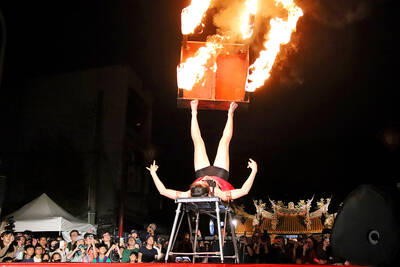
A: Over 130,000 college graduates are about to enter the workforce upon graduation. B: According to a survey, the top 10 most desired careers among Taiwanese are: independent content creator, civil servant, information engineer, financial professional, medical worker, content planner, flight attendant, news anchor, designer and fitness trainer. A: What are the “dream jobs” for young Gen Zers? B: The top three for men are YouTuber, pro gamer and engineer. For women, they are writer, social media editor and YouTuber. A: Every profession has its champion. Just look at Taiwanese fire dancer Yang Li-wei — who was on fire

★ Bilingual Story is a fictionalized account. 雙語故事部分內容純屬虛構。 The mango looked perfect. It sat on the fruit stand like a small sunset, red on one side and gold on the other. “I’ll take this one,” said Daniel. The fruit seller shook her head. “Not that one.” Daniel was surprised. “Why not? It looks beautiful.” “Yes,” she said, “but beautiful is not always ready.” She picked up another mango and held it near his nose. “First, smell here.” Daniel smelled the top of the mango. It was sweet and warm. “Good mangoes have a smell,” she said. “Next, feel the weight.”

A: While AI is reshaping the world, “Money Talks News” revealed seven career fields that are “AI-proof.” First is the healthcare field, like nursing jobs, personal care aides, and social work specialists. B: This type of job is indeed in high demand. So what’s next? A: Up next are skill-based positions, like electricians, mechanics, and construction workers. Then there’s the field of education, like teachers, tutors, and education specialists. Fourth is the mental health field, like jobs in counseling, therapy, and social work. B: I didn’t expect teaching to be safe from AI. What else is


 RSS
RSS