


Archaeologists in Sudan have reopened an ancient pyramid and extracted bones and artifacts, in order to carry out further examinations including DNA tests.
The items were found in one of three burial chambers in pyramid No. 9 in Begraweya on the Island of Meroe. Located on the east bank of the Nile, the Island of Meroe used to be the capital of the ancient Kingdom of Kush in the Nubia region. It is now listed by UNESCO as a World Heritage site, where Kush kings and queens from the Meroitic Period are believed to be buried.
Named after the nearest village “Begraweya,” the site is home to a group of pyramids famous for the unique construction style of narrow bases and steep angles on the sides, ranging from six meters to 30m tall.
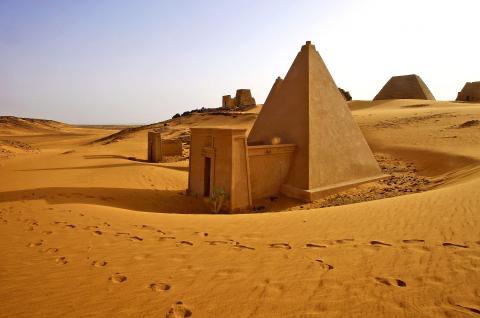
Photo: AFP
照片:法新社
“Pyramid No. 9 belongs to King Khalmani (Adikhalamani) who reigned between 207 BC and 186 BC,” Mahmoud Suleiman, the head of a team of archaeologists, told journalists in Begraweya, about 250km north of Khartoum, the capital and largest city of Sudan, last Tuesday.
The bones so far discovered are believed to have belonged to more than one person and have been shown to journalists by the team of archaeologists in Begraweya. DNA tests should shed light on the relation between the bones, while further items are expected to be recovered from another of the pyramid’s chambers, the team said.
“In the coming days we will open [another of the three burial chambers],” said Murtada Bushara, another archaeologist from the team. This chamber “contains a coffin,” Bushara added. The dig is raising hopes that the remains of King Adikhalamani himself may be uncovered.
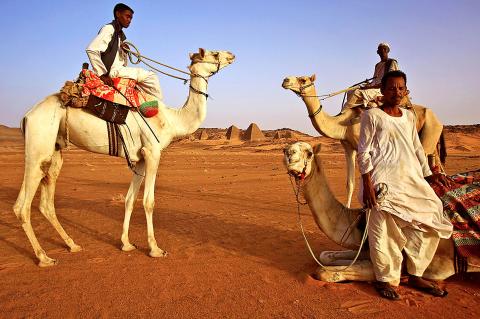
Photo: AFP
照片:法新社
This is not the first time the pyramid has been the site of significant activity. American archaeologist George Reisner presided over a dig in 1923 and took artifacts back to Boston.
Sudan’s remote pyramids are not as grand as their better-known cousins in Egypt. The first archaeological digs in Sudan took place only about 100 years ago, much later than in Egypt or Greece.
(AFP)
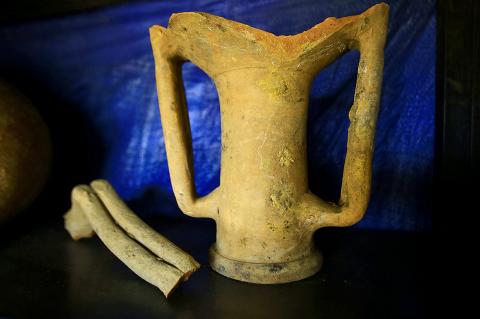
Photo: AFP
照片:法新社
蘇丹的考古學家日前重新打開一座古老的金字塔,從中採掘出人骨與工藝品,以進行包括DNA鑑定在內的進一步檢驗。
這些文物被發現於美羅埃島的貝格拉維亞第九號金字塔內三個墓室的其中一間。美羅埃島座落於尼羅河東岸,曾經是努比亞地區古老的庫施王國首都。今日美羅埃島被聯合國教科文組織列為世界文化遺產,咸認是美羅埃時期多位庫施國王與皇后的埋骨之處。
此遺址以距離最近的村落「貝格拉維亞」為名,是一個金字塔群的所在地,它們以底座狹窄、側面角度陡峭的獨特建築式樣聞名,高度各為六公尺到三十公尺不等。
考古團隊的主持人馬穆德‧蘇雷曼上週二在貝格拉維亞告訴記者:「第九號金字塔屬於國王喀拉馬尼(阿迪喀拉馬尼),在位時間為西元前二○七年到西元前一八六年之間。」貝格拉維亞位於蘇丹首都暨最大城喀土木市北方約兩百五十公里處。
貝格拉維亞的這組考古團隊相信,目前發現的骨頭並非屬於同一人,還將骨頭展示給記者群看。團隊表示,DNA鑑定應可讓不同骨頭之間的關係明朗化,他們也預期會在同一座金字塔的另一個墓室中挖掘出更多的物件。
團隊的另一名考古學家穆爾塔達‧布夏拉表示:「在接下來的幾天,我們會打開(三個墓室中的另外一間)。」布夏拉補充說:這間墓室「內含一具棺槨。」這個挖掘行動增加了可能發現國王阿迪喀拉馬尼本人遺體的希望。
這並不是該金字塔第一次成為重大考古活動的地點。美國考古學家喬治‧萊斯納曾在一九二三年主持一次挖掘行動,並將當時挖得的工藝品帶回波士頓。
蘇丹偏遠的金字塔不如埃及那些較為人熟知的同類型建築來得雄偉。首次在蘇丹進行的考古挖掘僅僅是大約一百年前的事,晚於埃及或希臘的考古行動許多。
(台北時報章厚明編譯)
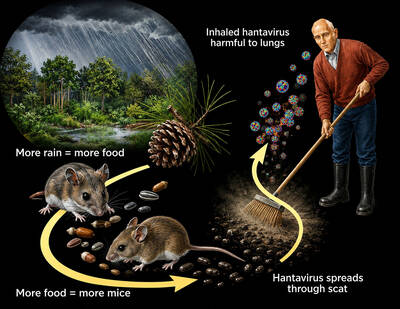
An outbreak aboard a cruise ship of a rare rodent-borne illness called hantavirus has left three passengers dead and sickened others, but global health officials say the risk to the general public remains low because the germ does not easily spread between people. “This is not the next COVID, but it is a serious infectious disease,” said Maria Van Kerkhove, director of epidemic and pandemic preparedness at the World Health Organization (WHO). “Most people will never be exposed to this.” The virus usually spreads when people inhale contaminated residue of rodent droppings. Hantaviruses have been around for centuries and are thought to
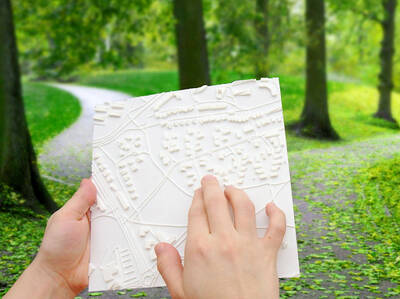
Have you ever wondered how people navigate the world when they can’t see a map? For individuals with visual impairments, conventional maps are nearly impossible to use. This is where tactile maps come in — essential tools that allow people to “see” the world through touch. A tactile map is specially designed with raised lines, textures, and symbols to represent geographical features such as roads, rivers, and buildings. Users explore it with their fingertips. However, these maps are not exclusively for people with visual disabilities. They serve as valuable multisensory learning tools that enhance spatial understanding for everyone, making
1. 他病了三天。 ˇ He has been sick for three days. χ He has been sick since three days. 註︰這裡現在完成時態 have / has been 表示從過去某一時日到現在的一段時間存在的行為或狀態,與它連用的時間副詞應為 「for +若干時」,如 for a year, for three hours 等,意思是歷時多少。 2. 他自從星期三以來都很忙。 ˇ He has been busy since Wednesday. χ He has been busy from Wednesday. 註︰「自從……以來」,該用 since。說從某一天(某一時刻)到某一天(某一時刻)才用 from,如 from Monday till Friday。 3. 房間角落裡散放著一些零星物件。 ˇ There were some odds and ends lying in the corner of the room. χ There were some odds and ends lying at the corner of the room. 註︰「在房間角落裡」該用介詞 in。例如: He stood in the corner. There is a lamp in the corner of the room. at the corner 指房子外部的拐角。例如: A little boy
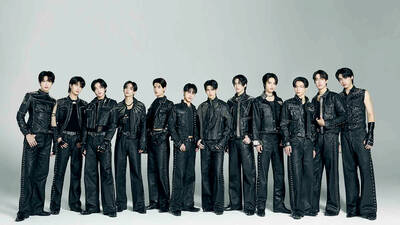
A: In early May, there were concerts by Icyball, Chyi Yu, Korea’s EXO and Japan’s Anisama, but I missed them all. What a shame. B: That’s OK. There are shows coming up by various artists, including Power Station, Accusefive, Japanese singer Mika Nakashima, Chinese-Icelandic jazzer Laufey, and even Singaporean diva Stefanie Sun. A: After a 12-year hiatus, Stefanie is finally returning to Taipei again. B: In late May, there will be more shows by Crowd Lu, WeiBird, Korea’s Donghae, 2AM, EXID, and Thailand’s BUS. A: The Thai boyband is so popular. It looks like “T-pop” is catching up with J-pop


 RSS
RSS