


Chen I-han, a student at the master’s program of Dayeh University’s College of Design and Arts, has designed slippers with replaceable soles made from recycled paper using a 3D printer. This has won her a gold in the sustainable development strategy, as well as an honorable mention, at the IDA Design Awards in the US.
According to Chen, the slippers, which are both environmentally friendly and durable, are made from recycled pulp. She has also designed replaceable soles that will allow users to attach new ones to the slippers after the original soles wear out, prolonging the product’s life cycle. Having replaceable soles also allows users to wear the same slippers indoors and outdoors by switching between two sets. Being able to wear the same shoes indoors and outdoors means more storage space in the shoe rack for other shoes.
Chen says her paper slippers are ideal for hotels, which can provide slippers with local characteristics, for guests to take home after their stay as souvenirs. Deguang digital design company has already obtained a patent for the replaceable sole design. The company is now preparing to produce samples of the final product. If things go well, the paper slippers will hit the market before the end of this year.
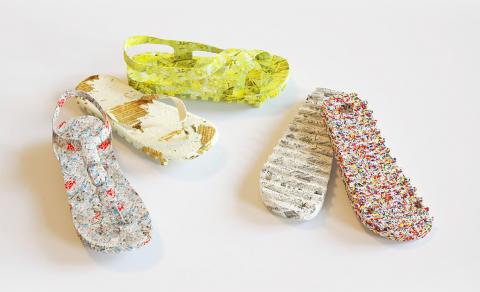
Photo courtesy of Chen I-han
照片:陳沂含提供
(Liberty Times, translated by Tu Yu-an)
大葉大學設藝學院碩士生陳沂含利用3D繪圖開發設計出可換鞋底的「再生紙拖鞋」,獲得美國IDA國際設計大獎永續發展設計金獎及榮譽獎。
陳沂含指出,為打造環保耐用的拖鞋,她以回收紙紙漿做成「再生紙拖鞋」,並設計可替換的鞋底,鞋底磨損後僅須換上新鞋底即可繼續使用,讓拖鞋更耐用;此外使用者也可以把鞋底分成室內用跟外出用,一鞋兩用,減少鞋子太多占用鞋櫃空間的問題。
陳沂含說,「再生紙拖鞋」適合在觀光飯店提供,可把地方元素加入設計中,讓紙拖鞋成為旅客想帶回家的紀念品。目前她服務的德廣數位設計已取得鞋底分離專利,「再生紙拖鞋」也即將進入打樣階段。順利的話,今年產品就能上市。
(自由時報記者顏宏駿)
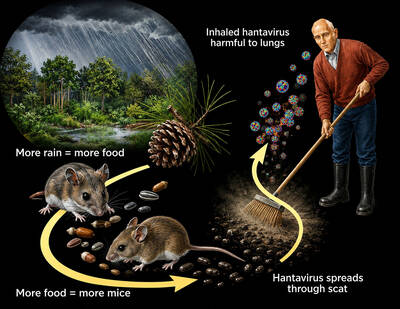
An outbreak aboard a cruise ship of a rare rodent-borne illness called hantavirus has left three passengers dead and sickened others, but global health officials say the risk to the general public remains low because the germ does not easily spread between people. “This is not the next COVID, but it is a serious infectious disease,” said Maria Van Kerkhove, director of epidemic and pandemic preparedness at the World Health Organization (WHO). “Most people will never be exposed to this.” The virus usually spreads when people inhale contaminated residue of rodent droppings. Hantaviruses have been around for centuries and are thought to

Have you ever wondered how people navigate the world when they can’t see a map? For individuals with visual impairments, conventional maps are nearly impossible to use. This is where tactile maps come in — essential tools that allow people to “see” the world through touch. A tactile map is specially designed with raised lines, textures, and symbols to represent geographical features such as roads, rivers, and buildings. Users explore it with their fingertips. However, these maps are not exclusively for people with visual disabilities. They serve as valuable multisensory learning tools that enhance spatial understanding for everyone, making

1. 他病了三天。 ˇ He has been sick for three days. χ He has been sick since three days. 註︰這裡現在完成時態 have / has been 表示從過去某一時日到現在的一段時間存在的行為或狀態,與它連用的時間副詞應為 「for +若干時」,如 for a year, for three hours 等,意思是歷時多少。 2. 他自從星期三以來都很忙。 ˇ He has been busy since Wednesday. χ He has been busy from Wednesday. 註︰「自從……以來」,該用 since。說從某一天(某一時刻)到某一天(某一時刻)才用 from,如 from Monday till Friday。 3. 房間角落裡散放著一些零星物件。 ˇ There were some odds and ends lying in the corner of the room. χ There were some odds and ends lying at the corner of the room. 註︰「在房間角落裡」該用介詞 in。例如: He stood in the corner. There is a lamp in the corner of the room. at the corner 指房子外部的拐角。例如: A little boy

A: In early May, there were concerts by Icyball, Chyi Yu, Korea’s EXO and Japan’s Anisama, but I missed them all. What a shame. B: That’s OK. There are shows coming up by various artists, including Power Station, Accusefive, Japanese singer Mika Nakashima, Chinese-Icelandic jazzer Laufey, and even Singaporean diva Stefanie Sun. A: After a 12-year hiatus, Stefanie is finally returning to Taipei again. B: In late May, there will be more shows by Crowd Lu, WeiBird, Korea’s Donghae, 2AM, EXID, and Thailand’s BUS. A: The Thai boyband is so popular. It looks like “T-pop” is catching up with J-pop


 RSS
RSS