


Salt fields used to be a regular feature of Tainan’s coastal fishing towns. However, with the closure of the salt industry, these days it is rare to see the sight of drying salt stacks; a common feature of the landscape in days gone by.
To preserve the last vestiges of Tainan’s lost salt industry, in 2003 an old salt field was restored at Jingzaijiao in Tainan’s Beimen District. Although this salt pan-style salt field is no longer used to produce salt, it recreates the landscape of how fishing villages would have looked in the past. There are foot operated watermills as well as equipment for drying, piling and grading the salt, which makes for an interactive teaching resource for visitors to experience and understand salt farming.
The many acres of restored salt fields have become a favorite location to watch the sun as it melts into the night sky and is reflected on the water’s edge. As the setting sun shines onto the salt fields, the mirror-like landscape takes on a dreamy quality.
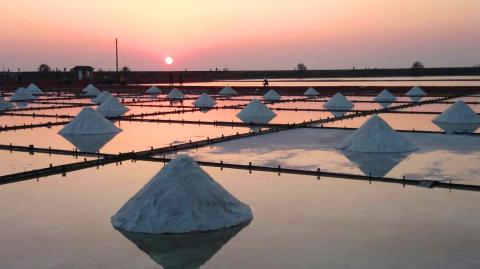
Photo: Huang Wen-huang, Liberty Times
照片:自由時報記者黃文鍠
Nightfall is also the best time to watch black-bellied terns in Beimen District. Stretching along the edge of the salt fields up to the sea walls, black-bellied terns, out foraging for food during the daytime, return to perch on the oyster racks, flying overhead in large flocks; an activity that is repeated daily until they migrate north at the beginning of spring.
(Liberty Times, translated by Edward Jones)
鹽田,曾經是南台灣沿海的漁鄉風情,但隨著鹽業停工後,現今已難再見到過往的曬鹽景象。
為了留下鹽業軌跡,台南北門的井仔腳於民國九十二年修復老鹽田,這塊瓦盤式的鹽田雖不產鹽,卻重現了過往漁村的鹽田景觀,包括腳踏式水車和曬鹽、堆鹽、挑鹽所使用的器具,都成了讓遊客體驗及認識鹽鄉最生動的活教材。
這一畝畝復育的鹽田伴隨著落日倒影,更成了觀夕陽的最佳景點,特別是夕陽餘暉照映鹽田上,彷彿水鏡般景色如夢似幻。
黃昏時分也是在北門賞黑腹燕鷗的好時機,沿著鹽田來到海堤上,此時外出覓食的燕鷗陸續返回棲息的蚵架上,一群群從天空飛越而過,日復一日直到春天來了再北返。
(自由時報記者許麗娟)
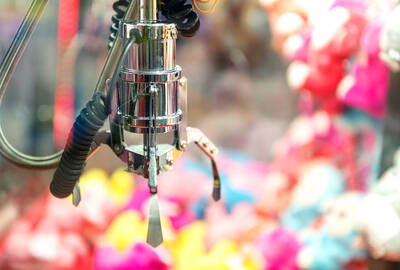
Have you ever found yourself desperately feeding coins into a claw machine just because you’ve already spent so much trying to win that stuffed animal? Or maybe you’ve continued watching a boring movie simply because you already paid for the ticket? If so, you’ve experienced the “sunk cost fallacy.” A sunk cost refers to time, money or effort that has already been spent and cannot be recovered. This psychological trap is surprisingly common. You might keep playing a video game you no longer enjoy because you’ve invested countless hours in building your character, or maintain a toxic friendship because you’ve known

A: Which TV drama series have been global hits so far this year? B: The US drama “Stranger Things 5,” South Korean drama “Can This Love Be Translated?” and Chinese megahit “Pursuit of Jade” are all popular lately. A: Isn’t “Pursuit of Jade” the costume idol drama about the romance between a charming marquis and a pig-slaughterer? Actor Zhang Linghe and actress Tian Xiwei are both so attractive. B: Plus, Netflix’s Korean-Japanese gay romance drama “Soul Mate” — starring Korea’s Ok Taec-yeon and Japan’s Hayato Isomura — is set to premiere in May. A: These hit international dramas
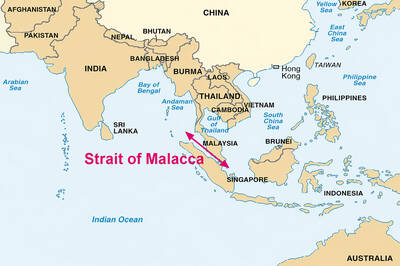
The closure of the Strait of Hormuz has forced policymakers in Asia to face questions over the security of other maritime chokepoints, including the Strait of Malacca, which is the world’s busiest waterway for international trade. WHAT IS THE MALACCA STRAIT? The 900km long Malacca Strait, bounded by Indonesia, Thailand, Malaysia and Singapore, provides the shortest sea route from East Asia to the Middle East and Europe. It carries nearly 22 percent of the world’s maritime trade, according to the Center for Strategic and International Studies (CSIS). This includes oil and gas shipments from the Middle East to the energy-hungry economies of China,
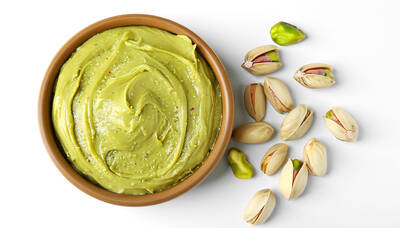
It seems like every year, new foods or drinks start trending and suddenly show up everywhere. A decade ago, avocado __1__ restaurant menus, while oat milk became the must-have addition to your coffee in cafes around five years back. The latest trend to hit this list is the pistachio. This flavorful green nut now features in everything from chocolate bars to Indian curries. While pistachios have long played a central role in certain regional cuisines, their recent global __2__ can be traced to Dubai. There, a specialty chocolate shop went __3__ on TikTok for one of its chocolate bars


 RSS
RSS