


There are more than 20,000 pigs in New Taipei City’s Linkou District, accounting for close to one third of all pigs raised in the entire city. In order to reduce environmental pollution caused by pig farming, the New Taipei City government this year began working on helping Linkou’s pig farmers upgrade their farms. The government plans to set up a shared wastewater treatment center and develop biogas power generation by the end of the year at the earliest. The biogas plant is expected to be the first of its kind in the city and will produce 2.8 million kWh of power per year.
Yu Fu-ling, head of the agriculture and animal husbandry management section in New Taipei City’s Agriculture Department, says there are 29 legally registered pig farms in the Linkou and Rueishukeng river basins. According to Yu, the National Animal Industry Foundation assessed the situation and concluded that biogas power generation using the animals’ urine and feces would be very effective, adding that while the treated filtrate could be used to irrigate crops, the remaining solids could be used for fertilizer.
President of the New Taipei City Swine Association, Lee Tang-chi, says that although most pig farmers agree the industry needs to transform itself and adopt more environmentally friendly measures, the project will be very expensive as installing the facilities would cost over NT$100 million and the central government is only willing to subsidize half of this, expecting the industry to come up with the remainder.
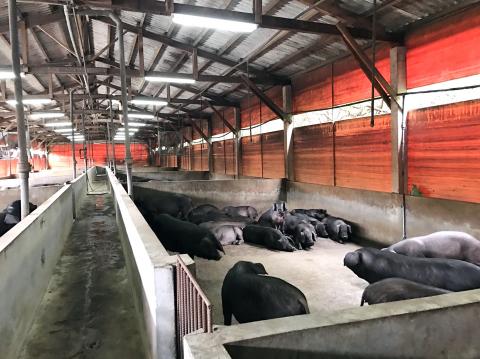
Photos courtesy of New Taipei City’s Agriculture Department
照片:農業局提供
(Liberty Times, Translated by Tu Yu-an)
新北市林口區飼養兩萬餘頭豬隻,占全市總量近三分之一。為改善養豬業帶來的環境污染問題,市府今年輔導林口養豬業者轉型,設置畜牧廢水共同處理中心,並發展沼氣發電,最快今年底建置完成,預估年發電二百八十萬度,將為全市第一處畜牧業設置沼氣發電案例。
農業局農牧經營管理科股長游富鈴說,林口溪及瑞樹坑溪流域列管合法養豬場有二十九個,經中央畜產會評估,以糞尿集中處理發展沼氣發電較具效益,處理後水體可做為澆灌使用,剩餘固體當作肥料。
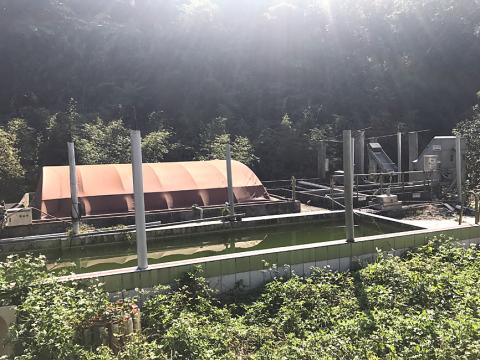
Photos courtesy of New Taipei City’s Agriculture Department
照片:農業局提供
新北市養豬協會理事長李當期說,多數業者認同傳統畜牧業轉型,朝環保綠能發展,但設備建置完成須耗資一億多元,中央僅補助一半,剩餘經費有賴業者籌措。
(自由時報記者賴筱桐)

Taiwan Travelogue, the novel by Taiwanese author Yang Shuang-zi and translated into English by Lin King, won the prestigious International Booker Prize in London on May 19. It marks the first time a Taiwanese literary work has received the International Booker Prize, setting a historic milestone both for Taiwanese literature and for the award itself. Prior to this achievement, Taiwan had only once appeared on the Booker radar, when Taiwanese author Wu Ming-yi was longlisted for the Booker Prize in 2018 with The Stolen Bicycle. The International Booker Prize honors works of fiction translated into English and published in the UK or Ireland.

A: While Taiwan is celebrating the 7th anniversary of legalizing same-sex marriage, a poll shows that the support rate for same-sex marriage rose sharply from 37.4 percent seven years ago to 69.9 percent last year. B: Actually, I’m a bit curious about the size of Taiwan’s LGBT population. A: I’m not sure. But if we take a Gallup poll in the US as an example, 9.3 percent of American adults identified as LGBT in 2024. B: Wow, is it because the Americans are relatively open? In many other countries, the figures hover around 5 percent. A: Based on this,
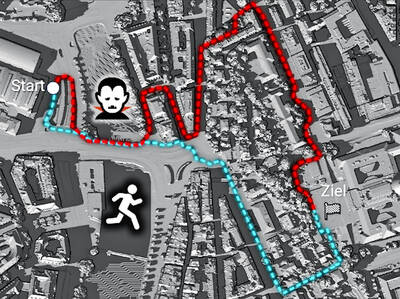
As climate change and urbanization push city temperatures higher, walking outdoors is becoming increasingly uncomfortable in many parts of the world, especially when prolonged time spent in sunlight is involved. As a result, outdoor lovers are now seeking cooler, shaded walking routes. However, most mainstream map apps still do not __1__ shaded footpaths. Enter routing.osm.ch — a Swiss web-based route planner that introduces a novel solution to this problem. Its “Vampire mode,” named after the legendary creatures’ fear of being __2__ natural light, was developed by a Swiss research team led by Professor Stefan Keller. The platform combines open data from
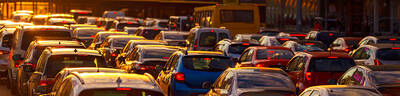
Cities around the world are testing “robotaxis,” hoping that autonomous vehicles will ease traffic and reduce emissions. However, recent analyses suggest these expectations may be overly optimistic. According to consulting firm Kearney, robotaxis could actually make congestion worse rather than better. Because self-driving rides are expected to be cheaper and more convenient than traditional taxis, more people may choose them over walking, biking, or using public transportation. This shift would put more cars on already crowded roads. Another concern is “deadheading,” which refers to robotaxis traveling without passengers between rides. Since autonomous fleets need to reposition themselves throughout the day, these


 RSS
RSS