


In addition to its classic flavor, the Tainan no. 18 peanut — a new peanut variety developed in Taiwan — also has the advantages of big nuts and a good yield. Yielding 10 percent more than other varieties, it could be called a dark horse in the world of Taiwan-grown peanuts.
Cheng Jung-jui, Deputy Director General of the Tainan District Agricultural Research and Extension Station, says that the Tainan no. 18 peanut combines the advantages of two other varieties — Tainan no. 14 and Tainan selected no. 9. The former, being big sized, is the most widely cultivated variety, while the latter carries an indigenous aroma. It is a nostalgic peanut that many people have been eating since childhood and it has stood firm in the market for nearly 50 years. As to the new variety, the nuts are not just big but more aromatic too.
Chen Kuo-hsien of the research station’s Division of Crop Improvement, says that Taiwan produces about 68,000 tonnes of peanuts per year. It is hard for small farmers to compete with countries like India and Vietnam, so only by developing varieties that have local flavors and store well is it possible to cope with the impact of ever-more-open international free trade.
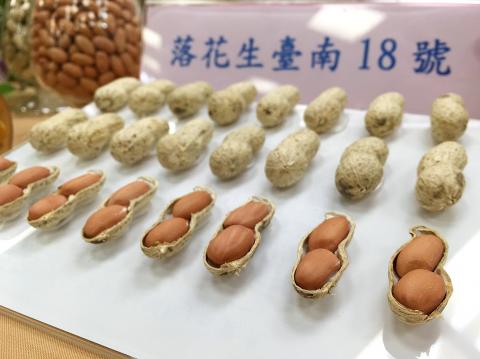
Photo: Lin Yen-tung, Liberty Times
照片:自由時報記者林彥彤
Yang Ai-hua, director of the research station’s Division of Crop Improvement, says that the Tainan no. 18 peanut has achieved the aim of indigenous flavor and was made available to the public through a technology transfer at the end of last year for promotion and planting. Yang says that in future, the research station will continue with its research and development of peanut varieties high in oleic acid to extend their storage life.
(Liberty Times, translated by Julian Clegg)
本土落花生新品種台南十八號不僅帶經典香味,也有大粒、豐產的優點,產量也多出一成,堪稱是國產花生界的黑馬。
台南區農業改良場副場長鄭榮瑞表示,落花生台南十八號是結合台南十四號與台南選九號兩品種的優點。前者因其外型較大,是種植面積最多的品種;後者則帶有本土香醇味,是很多人從小吃到大的懷舊花生,近五十年市場仍屹立不搖。而新品種台南十八不僅大粒,口感也更為香醇。
台南農業改良場作物改良課陳國憲表示,國產花生年產量約有六萬八千公噸,小農生產難與諸如印度、越南等國家競爭,因此發展具本土味且耐儲存的品種才可因應日漸開放的國際自由貿易衝擊。
台南農業改良場作物改良課課長楊藹華說,落花生台南十八號已達到本土味的目標,現已在去年底技轉給民間推廣種植,未來農改場也會繼續研發高油酸品種的花生以增加儲存的期限。
(自由時報記者林彥彤)

Many consumers are guilty of filling drawers or closets with old laptops, cellphones, fitness trackers and other electronic devices once they are no longer needed. It’s hard to know where to recycle such items, or it seems costly and inconvenient to do so. The world generates millions of tons of electronic waste — also called e-waste — each year. According to the UN’s most recent estimate, people worldwide produced 62 million metric tons of e-waste in 2022, and only about 22 percent of it was properly recycled. The US’ Environmental Protection Agency estimates that less than a quarter of e-waste is

Travel fever is back, and it’s contagious. After years of being kept home during the COVID-19 pandemic, people are once again eager to explore the world. Rather than just book any trip, travelers are getting smarter about how they scratch that travel itch. Microcation Defined as four days or fewer and over 160km away from home, the microcation perfectly matches the post-pandemic mindset. After long periods of remaining indoors, people are making up for lost time by taking short, frequent getaways throughout the year. These brief trips avoid the work-life imbalance that comes with long absences. With only a few days away, one’s

You’re sitting in class when a classmate asks to borrow a pencil. It seems like a small favor, so you agree without hesitation. The following week, the same classmate asks to share your notes. Later, they request help with a group project. You agree each time — after all, you helped out the first time — but before you know it, it has become automatic. This scenario demonstrates the “foot-in-the-door technique,” a psychological concept that shows how agreeing to small, acceptable demands makes it easier to accept larger ones later on. The name for this strategy comes from door-to-door

Continued from yesterday(延續自昨日) https://www.taipeitimes.com/News/lang Gig Tripping “Gig tripping” combines concerts with travel. People fly to see their favorite artists perform — usually abroad—and spend a few days sightseeing before or after the show. While die-hard fans have done this since the 1960s, the post-pandemic travel boom changed the game. Even people who aren’t superfans are now booking international concert trips because they want to make the most of travel opportunities. This trend exploded in the US, as the math makes sense. Domestic concert tickets are so costly that flying abroad for the show plus tourism expenses often matches or even beats the price


 RSS
RSS