


Some high-ranking military and police officers recently expressed strong support for their subordinates being allowed to wear their uniforms when they go out to eat. The idea received a chorus of support from the public, with people saying that military personnel and police officers do tough jobs and they have as much right as anybody else to go for a meal. The Post Office, however, had earlier issued an official notice telling mail carriers not to wear their uniforms when off duty or handling their personal affairs. This announcement provoked a backlash from mail carriers, who said that if there is an emergency or they need emergency medical treatment, surely they would not have to go home first for a change of clothes.
According to a report in the Apple Daily, the Post Office notice stipulated that letter carriers can only wear their uniforms when carrying out their official duties, and that when they are off duty or handling their personal affairs they must change out of uniform. It also required mail carriers to sign their names to show that they had read the notice.
Some mail carriers complained indignantly, saying that if their children had a problem at school or if mail carriers got a stomachache or diarrhea while delivering the mail and went to see a doctor, those would be personal affairs, but surely they would not have to go home first to change clothes. Another unnamed Post Office employee also voiced support for the mail carriers, stating bluntly that the uniform rules were too strict and asking how they could have time to change clothes in case of an emergency.

Photo: Wang Shan-yen, Liberty Times
照片:自由時報記者王善嬿
In response, Chunghwa Post has sought to clarify the issue. It says that when mail carriers are wearing uniform they represent Chunghwa Post, and that is why the company issued the notice asking mail carriers to abide by the uniform rules so as to avoid people mistakenly thinking that mail carriers are going about their personal business when they are supposed to be delivering the mail, and to avoid the possibility of uniformed mail carriers wandering in and out of unsavory establishments.
Chunghwa Post says that the notice is advisory in nature. It says that it is perfectly normal for mail carriers to buy meals or snacks after work, so no penalties would be imposed for that. It also notes that mail carriers can bring plain clothes with them to change into when they finish work. However, if mail carriers wander in and out of gambling dens or other dubious places while in uniform, they will be penalized in accordance with the regulations.(Liberty Times, translated by Julian Clegg)
日前軍警高層都力挺下屬可以穿制服外出用餐,民眾也齊聲叫好,認為辛苦的軍警人員也有用餐的權利。不過郵局先前卻發出公文要求郵差非公務期間或處理私人事務,不能穿著制服,引起郵差反彈,直呼如果有突發事件或掛急診就醫,難道要先回家換衣服。
據《蘋果日報》報導,郵局這份公文規定,郵差只有在執行公務時才能穿制服,下班或做私人事情時就要換掉,還要郵差們一一簽名確保他們有看過。
有郵差就痛斥這種做法,直說假如小孩在學校出事了;或者送信過程肚子痛腹瀉去看醫生,都算是私人事務,難道「也要先回家換便服?」其他不具名的郵局員工也聲援郵差,坦言制服的規定太嚴格,如果遇上突發狀況怎麼有時間更衣。
對此中華郵政澄清,郵差穿著制服就代表中華郵政,為了避免民眾誤以為郵差在送信時處理私事,並且防止郵差著制服進出不良場所,所以才以公文希望郵差遵守制服規定。
中華郵政指出,這個公文只是勸導性質,如果郵差在下班時買餐點是人之常情,不會對此懲處,而且郵差也可攜帶便服在下班時換裝。但如果郵差穿著制服出入賭博等不良場所,會依規定處罰。
(自由時報)
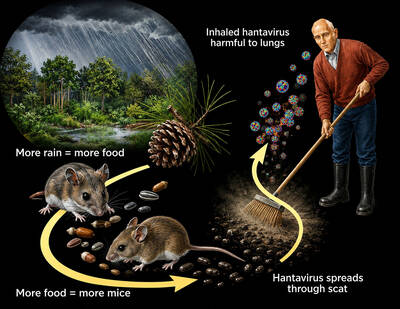
An outbreak aboard a cruise ship of a rare rodent-borne illness called hantavirus has left three passengers dead and sickened others, but global health officials say the risk to the general public remains low because the germ does not easily spread between people. “This is not the next COVID, but it is a serious infectious disease,” said Maria Van Kerkhove, director of epidemic and pandemic preparedness at the World Health Organization (WHO). “Most people will never be exposed to this.” The virus usually spreads when people inhale contaminated residue of rodent droppings. Hantaviruses have been around for centuries and are thought to
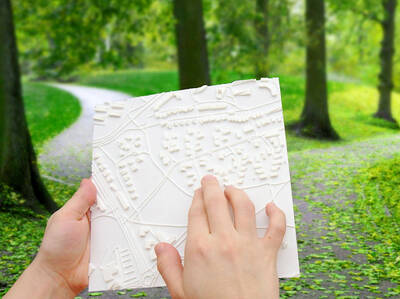
Have you ever wondered how people navigate the world when they can’t see a map? For individuals with visual impairments, conventional maps are nearly impossible to use. This is where tactile maps come in — essential tools that allow people to “see” the world through touch. A tactile map is specially designed with raised lines, textures, and symbols to represent geographical features such as roads, rivers, and buildings. Users explore it with their fingertips. However, these maps are not exclusively for people with visual disabilities. They serve as valuable multisensory learning tools that enhance spatial understanding for everyone, making

1. 他病了三天。 ˇ He has been sick for three days. χ He has been sick since three days. 註︰這裡現在完成時態 have / has been 表示從過去某一時日到現在的一段時間存在的行為或狀態,與它連用的時間副詞應為 「for +若干時」,如 for a year, for three hours 等,意思是歷時多少。 2. 他自從星期三以來都很忙。 ˇ He has been busy since Wednesday. χ He has been busy from Wednesday. 註︰「自從……以來」,該用 since。說從某一天(某一時刻)到某一天(某一時刻)才用 from,如 from Monday till Friday。 3. 房間角落裡散放著一些零星物件。 ˇ There were some odds and ends lying in the corner of the room. χ There were some odds and ends lying at the corner of the room. 註︰「在房間角落裡」該用介詞 in。例如: He stood in the corner. There is a lamp in the corner of the room. at the corner 指房子外部的拐角。例如: A little boy
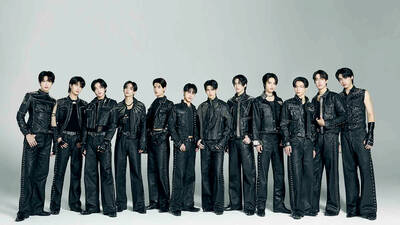
A: In early May, there were concerts by Icyball, Chyi Yu, Korea’s EXO and Japan’s Anisama, but I missed them all. What a shame. B: That’s OK. There are shows coming up by various artists, including Power Station, Accusefive, Japanese singer Mika Nakashima, Chinese-Icelandic jazzer Laufey, and even Singaporean diva Stefanie Sun. A: After a 12-year hiatus, Stefanie is finally returning to Taipei again. B: In late May, there will be more shows by Crowd Lu, WeiBird, Korea’s Donghae, 2AM, EXID, and Thailand’s BUS. A: The Thai boyband is so popular. It looks like “T-pop” is catching up with J-pop


 RSS
RSS