


On April 28, Chiayi County’s Singang Fengtian Temple, which worships “the first Matsu idol” in Taiwan, held a grand celebration ceremony to mark the goddess’ 1,057th birthday and her 395th year in Taiwan. The ceremony, which revived the worshiping rites from the Qing dynasty, featured more than 200 dancers, marshals, instrumental performers and singers. Notably, some of the dancers, who were all female students from National Singang Senior High School of Arts, were godchildren of Matsu. In front of the goddess, the students performed the six-fold formation dance representing the beautiful nurturing spirit of Matsu.
Fengtian Temple Chairman He Ta-huang says that the temple has consulted a Qing Dynasty encyclopedia on ceremonial rites, and completely reproduced the worshiping rites and six-fold formation dance from the days of the Qing dynasty Emperor Kangxi for Matsu’s anniversary celebration. The six-fold formation dance is performed with 36 dancers forming six rows and six columns. In the past, the dance was performed to pay respect to feudal vassals and ministers.
In the evening of April 29, Fengtian Temple held a music festival to celebrate Matsu’s birthday, and invited famous singers to perform before the goddess. The event, which took place in front of the temple’s visitor’s building, also featured lottery games, with a sedan car as its main prize.(Liberty Times, translated by Yu-an Tu)
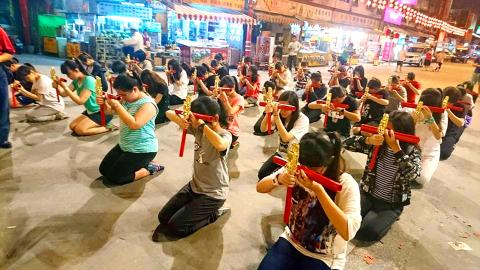
Photo: Yu Hsueh-lan, Liberty Times
照片:自由時報記者余雪蘭
嘉義縣新港奉天宮慶祝「開台媽祖」駐台三百九十五年暨一千零五十七年誕辰,四月二十八日舉行祝壽大典,復刻清代祀典科儀,由二百多名佾生、禮生、樂生及唱生演繹,其中佾生由新港藝術高中女學生擔任,部分佾生還是媽祖的契子,她們獻跳六佾舞,展現媽祖母性柔美的精神。
奉天宮董事長何達煌表示,廟方考據大清禮儀彙典,完整重現清康熙年間欽賜祀典禮儀與六佾舞為媽祖祝壽。六佾舞為六行六列,共三十六人,是古時用來祭拜諸侯及宰相的儀式。
奉天宮四月二十九日晚上則在香客大樓前,舉行媽祖慶生歌星演唱會,邀請知名歌星獻唱,並進行摸彩活動,最大獎為轎車。(自由時報記者余雪蘭、王善嬿)
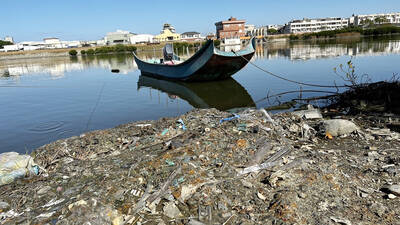
Many consumers are guilty of filling drawers or closets with old laptops, cellphones, fitness trackers and other electronic devices once they are no longer needed. It’s hard to know where to recycle such items, or it seems costly and inconvenient to do so. The world generates millions of tons of electronic waste — also called e-waste — each year. According to the UN’s most recent estimate, people worldwide produced 62 million metric tons of e-waste in 2022, and only about 22 percent of it was properly recycled. The US’ Environmental Protection Agency estimates that less than a quarter of e-waste is

You’re sitting in class when a classmate asks to borrow a pencil. It seems like a small favor, so you agree without hesitation. The following week, the same classmate asks to share your notes. Later, they request help with a group project. You agree each time — after all, you helped out the first time — but before you know it, it has become automatic. This scenario demonstrates the “foot-in-the-door technique,” a psychological concept that shows how agreeing to small, acceptable demands makes it easier to accept larger ones later on. The name for this strategy comes from door-to-door
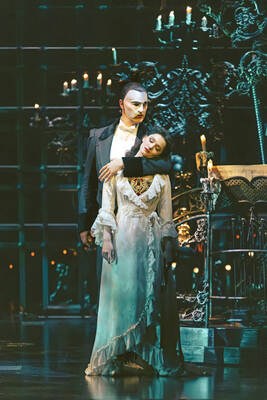
A: The four-day Tomb Sweeping Day long weekend begins Friday and will run until Monday. Are you going to sweep your ancestors’ tombs? B: I did in advance last weekend, so I can go to Kaohsiung to see the musical “The Phantom of the Opera.” A: Wow, is “Phantom” touring Taiwan again? It debuted in 1986, so this year marks the 40th anniversary of the show. B: And it’s not just touring Kaohsiung starting March 31, but also Taipei starting April 21 and Taichung starting May 26. A: “Phantom” is one of the world’s Four Major Musicals. I’ve seen all of them, except “Les

對話 Dialogue 清清:這禮拜又有連假了,這次一共放四天。 Qīngqing: Zhè lǐbài yòu yǒu liánjià le, zhè cì yígòng fàng sì tiān. 華華:你是要過兒童節還是清明節? Huáhua: Nǐ shì yào guò Értóng jié háishì Qīngmíng jié? 清清:都要過啊!不管幾歲,都要有童心,才能永遠都年輕,知道嗎? Qīngqing: Dōu yào guò a! Bùguǎn jǐ suì, dōu yào yǒu tóngxīn, cái néng yǒngyuǎn dōu niánqīng, zhīdào ma? 華華:好啦!能當個長不大的孩子也好,就不會有那麼多煩惱了。 Huáhua: Hǎo la! Néng dāng ge zhǎngbúdà de háizi yě hǎo, jiù bú huì yǒu nàme duō fánnǎo le. 清清:還好春天有這兩個節假日,常常可以變成連假休息一下。 Qīngqing: Háihǎo chūntiān yǒu zhè liǎng ge jiéjiàrì, chángcháng kěyǐ biànchéng liánjià xiūxi yíxià. 華華:對啊!上禮拜我已經先跟家人去掃墓了,就怕清明節當天人太多。 Huáhua: Duì a! Shàng lǐbài wǒ yǐjīng xiān gēn jiārén qù sǎomù le, jiù pà Qīngmíng jié dāngtiān rén tài duō. 清清:親人雖然過世了,但有清明節掃墓的習俗,讓我們在不同的世界還是能「聚」一下、說說話,真的很有意義。 Qīngqing: Qīnrén suīrán guòshì le, dàn yǒu Qīngmíng jié


 RSS
RSS