


Have you ever been to Taipei’s Elephant Mountain? 你有去過台北的象山嗎?
Do you know how to get there? 你知道怎麼去嗎?
Is it best to go at night or during the day? 象山最適合晚上還是白天去呢?
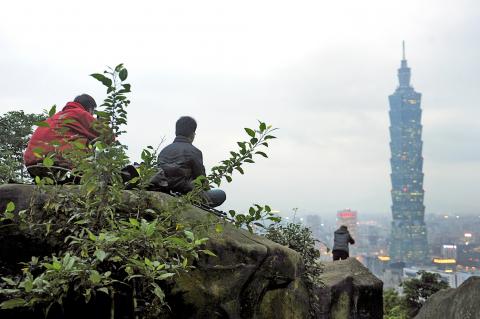
Photo: Chao Shih-hsun, Taipei Times
照片:自由時報記者趙世勳攝
Elephant Mountain is the highest point on the Sishou (four beast) Mountain trail. Not only does the mountain provide a superb panoramic view, at a single glance it is possible to take in the full vista of Xinyi District — and from close up appreciate the soaring grandeur of Taipei 101. It is one of Taipei’s most popular outdoor destinations at night. However, if you want to see the beautiful scene for yourself, it is by no means an easy task: You must first climb an approximately 1.5km-long mountain path. It is an ideal activity for all the family after finishing the Lunar New Year evening meal. While enjoying the wonderful sight of Taipei city at dusk, climbing that little bit further will certainly feel all the more worthwhile.
Getting there: to reach Elephant Mountain, take up the trail head from Alley 22, Lane 150, Xinyi Road Section 5, Xinyi District, Taipei City.
(Liberty Times, translated by Edward Jones)
象山位於四獸山步道的最高點,不只景致極佳,可以一覽整個信義區的遠景,還能近距離感受台北101的高聳雄偉,是台北市區最熱門的夜遊景點之一。不過想看到這幅美景可不容易,首先得爬上約1.5公里長的登山步道才行。非常適合全家人吃完年菜後一起來運動。當欣賞到台北市華燈初上的絢麗美景時,想必爬得再累也是非常值得啦!
(自由時報綜合報導)
交通資訊:從台北市信義區信義路五段150巷22弄登山口進入步道即可抵達。

Many consumers are guilty of filling drawers or closets with old laptops, cellphones, fitness trackers and other electronic devices once they are no longer needed. It’s hard to know where to recycle such items, or it seems costly and inconvenient to do so. The world generates millions of tons of electronic waste — also called e-waste — each year. According to the UN’s most recent estimate, people worldwide produced 62 million metric tons of e-waste in 2022, and only about 22 percent of it was properly recycled. The US’ Environmental Protection Agency estimates that less than a quarter of e-waste is

You’re sitting in class when a classmate asks to borrow a pencil. It seems like a small favor, so you agree without hesitation. The following week, the same classmate asks to share your notes. Later, they request help with a group project. You agree each time — after all, you helped out the first time — but before you know it, it has become automatic. This scenario demonstrates the “foot-in-the-door technique,” a psychological concept that shows how agreeing to small, acceptable demands makes it easier to accept larger ones later on. The name for this strategy comes from door-to-door

A: The four-day Tomb Sweeping Day long weekend begins Friday and will run until Monday. Are you going to sweep your ancestors’ tombs? B: I did in advance last weekend, so I can go to Kaohsiung to see the musical “The Phantom of the Opera.” A: Wow, is “Phantom” touring Taiwan again? It debuted in 1986, so this year marks the 40th anniversary of the show. B: And it’s not just touring Kaohsiung starting March 31, but also Taipei starting April 21 and Taichung starting May 26. A: “Phantom” is one of the world’s Four Major Musicals. I’ve seen all of them, except “Les

Continued from yesterday(延續自昨日) https://www.taipeitimes.com/News/lang Gig Tripping “Gig tripping” combines concerts with travel. People fly to see their favorite artists perform — usually abroad—and spend a few days sightseeing before or after the show. While die-hard fans have done this since the 1960s, the post-pandemic travel boom changed the game. Even people who aren’t superfans are now booking international concert trips because they want to make the most of travel opportunities. This trend exploded in the US, as the math makes sense. Domestic concert tickets are so costly that flying abroad for the show plus tourism expenses often matches or even beats the price


 RSS
RSS