


Italian researchers are worried that Michelangelo’s statue of David may be in danger of collapsing due to weakened ankles.
Experts have long been concerned that the marble statue, which is roughly 500 years old and has long stood as one of history’s most triumphant achievements in art, may have suffered structural damage, the UK’s Telegraph explains.
How so? Thousands of people visit the statue every day and over the course of hundreds of years, their footsteps combined with the rumble of nearby traffic have apparently taken a toll on the statue, experts from Italy’s National Research Council and Florence University found.
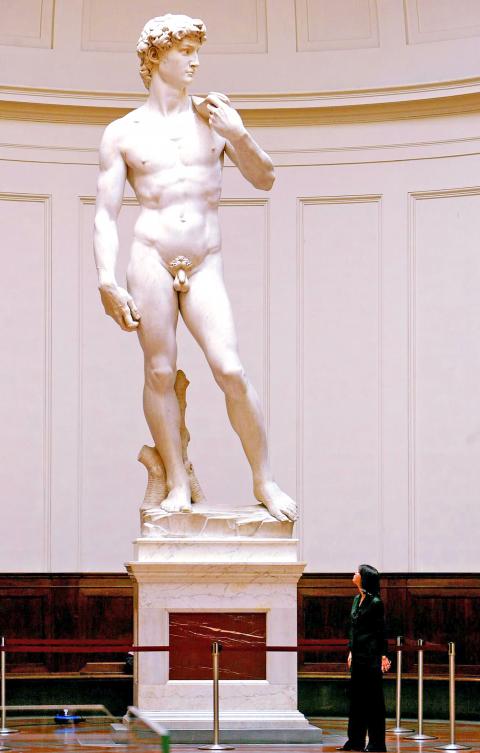
Photo: AFP
照片:法新社
The relatively poor quality of the marble used to sculpt David, the biblical slayer of Goliath and historically righteous king of Israel and Judah, is thought to have played a part in its present troubles. For hundreds of years it was displayed outdoors.
(Liberty Times)
義大利研究人員擔心,由於腳踝脆弱,米開朗基羅的大衛雕像可能有崩塌之虞。
專家一直很擔心這尊有約五百年歷史被視為史上最成功藝術成就的大理石雕像,可能有結構性損傷,英國《電訊報》如此解說。
何以如此?義大利「國家研究協會」與佛羅倫斯大學的專家發現,數百年來每天有成千上萬人造訪,這些腳步加上附近交通的擾攘,顯然對雕像造成傷害。
在聖經中殺死巨人哥利亞、在歷史上是以色列與猶大的正義的王的大衛,用來雕刻他的大理石品質較差,據信也在大衛雕像目前遇到的麻煩中扮演一定角色。數百年來,這尊雕像都被放在戶外展示。
(自由時報/翻譯:張沛元)
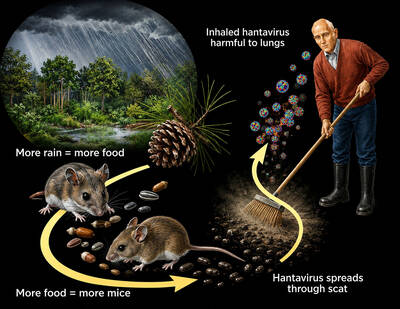
An outbreak aboard a cruise ship of a rare rodent-borne illness called hantavirus has left three passengers dead and sickened others, but global health officials say the risk to the general public remains low because the germ does not easily spread between people. “This is not the next COVID, but it is a serious infectious disease,” said Maria Van Kerkhove, director of epidemic and pandemic preparedness at the World Health Organization (WHO). “Most people will never be exposed to this.” The virus usually spreads when people inhale contaminated residue of rodent droppings. Hantaviruses have been around for centuries and are thought to
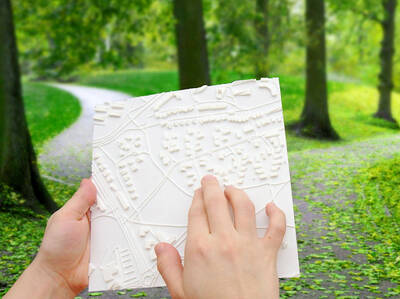
Have you ever wondered how people navigate the world when they can’t see a map? For individuals with visual impairments, conventional maps are nearly impossible to use. This is where tactile maps come in — essential tools that allow people to “see” the world through touch. A tactile map is specially designed with raised lines, textures, and symbols to represent geographical features such as roads, rivers, and buildings. Users explore it with their fingertips. However, these maps are not exclusively for people with visual disabilities. They serve as valuable multisensory learning tools that enhance spatial understanding for everyone, making

1. 他病了三天。 ˇ He has been sick for three days. χ He has been sick since three days. 註︰這裡現在完成時態 have / has been 表示從過去某一時日到現在的一段時間存在的行為或狀態,與它連用的時間副詞應為 「for +若干時」,如 for a year, for three hours 等,意思是歷時多少。 2. 他自從星期三以來都很忙。 ˇ He has been busy since Wednesday. χ He has been busy from Wednesday. 註︰「自從……以來」,該用 since。說從某一天(某一時刻)到某一天(某一時刻)才用 from,如 from Monday till Friday。 3. 房間角落裡散放著一些零星物件。 ˇ There were some odds and ends lying in the corner of the room. χ There were some odds and ends lying at the corner of the room. 註︰「在房間角落裡」該用介詞 in。例如: He stood in the corner. There is a lamp in the corner of the room. at the corner 指房子外部的拐角。例如: A little boy

A: In early May, there were concerts by Icyball, Chyi Yu, Korea’s EXO and Japan’s Anisama, but I missed them all. What a shame. B: That’s OK. There are shows coming up by various artists, including Power Station, Accusefive, Japanese singer Mika Nakashima, Chinese-Icelandic jazzer Laufey, and even Singaporean diva Stefanie Sun. A: After a 12-year hiatus, Stefanie is finally returning to Taipei again. B: In late May, there will be more shows by Crowd Lu, WeiBird, Korea’s Donghae, 2AM, EXID, and Thailand’s BUS. A: The Thai boyband is so popular. It looks like “T-pop” is catching up with J-pop


 RSS
RSS