


The science world has paid homage to Johnny Depp by giving his name to an extinct creepy-crawly with “scissor hand-like” claws reminiscent of one of the Hollywood actor’s best-known roles.
Kooteninchela deppi, a 505-million-year-old distant ancestor of lobsters and scorpions, has been named for Depp’s famous portrayal of a gentle freak named Edward Scissorhands in the 1990 eponymous film, according to a study in the Journal of Palaeontology.
“When I first saw the pair of isolated claws in the fossil records of this species, I could not help but think of Edward Scissorhands,” researcher David Legg of Imperial College London said in a statement.
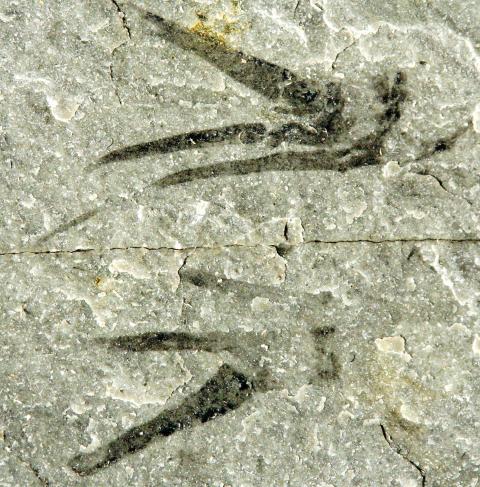
Photo: AFP
照片:法新社
The “chela” in the genus name Kooteninchela given to the recently-discovered fossilized critter is another reference to the film character, as it means “claws” or “scissors” in Latin.
The animal, about four centimeters long with millipede-like legs, lived in shallow seas off the coast of British Columbia in Canada during the Cambrian period. It was probably a hunter or scavenger, using its claws with their elongated spines to capture prey or probe the sea floor for creatures in hiding.
(AFP)
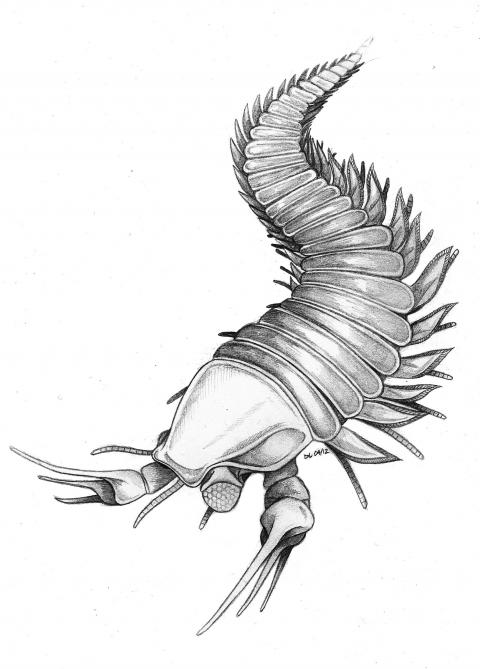
Photo: AFP
照片:法新社
科學界最近向好萊塢影星強尼戴普致敬,用他的名字來替一種長有類似「剪刀手」螯足的已絕種生物命名,因為這種螯足令人想起戴普所扮演過最知名的角色之一。
根據《古生物學期刊》上的一份研究指出,距今五億五百萬年的生物Kooteninchela deppi是龍蝦和蠍子的遠祖,因為令人想起戴普在一九九○年同名電影中所扮演的知名角色、性格溫和的怪胎剪刀手愛德華,而以戴普來命名。
「當我第一次看到這種生物化石紀錄裡的那對獨立螯足時,實在禁不住想起剪刀手愛德華。」倫敦大學帝國學院研究人員雷格在聲明中指出。
這個新近才被發現的化石生物所被給予的屬名Kooteninchela中,chela指的也是同一電影角色,因為這個字在拉丁文中意為「鉗子」或「剪刀」。
這種生物長約四公分,長有類似馬陸的腳,在寒武紀時代生活於加拿大英屬哥倫比亞海岸外的淺海地區。它很可能是獵食者或食腐動物,會伸長脊椎並使用螯足來捕捉獵物,或搜尋躲藏在海床裡的動物。
(法新社/翻譯:俞智敏)
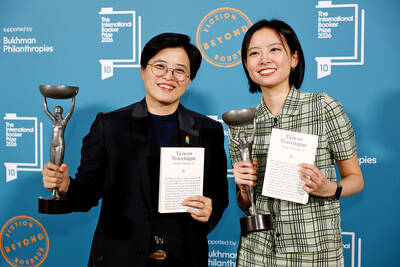
Taiwan Travelogue, the novel by Taiwanese author Yang Shuang-zi and translated into English by Lin King, won the prestigious International Booker Prize in London on May 19. It marks the first time a Taiwanese literary work has received the International Booker Prize, setting a historic milestone both for Taiwanese literature and for the award itself. Prior to this achievement, Taiwan had only once appeared on the Booker radar, when Taiwanese author Wu Ming-yi was longlisted for the Booker Prize in 2018 with The Stolen Bicycle. The International Booker Prize honors works of fiction translated into English and published in the UK or Ireland.

A: Time magazine recently released its list of “The 100 Most Influential People of 2026.” It’s categorized into six groups: Artists, Pioneers, Titans, Icons, Leaders and Innovators. B: TSMC chairman C.C. Wei made the list this year. Which category is he in? A: Wei is actually among the Pioneers, with figures including Disney CEO Josh D’Amaro and MrBeast — the first YouTuber ever to surpass 400 million subscribers. B: Led by Wei, Taiwan’s “silicon shield” TSMC is the sixth-largest company in the world. A: As Nvidia founder Jensen Huang wrote in his introduction, “C.C. Wei is truly one of the
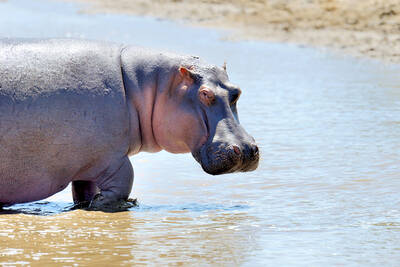
The animal kingdom is full of surprises that challenge our understanding of biology. From remarkable feeding mechanisms to extreme defense strategies, some creatures possess traits so unusual that they seem like pure fiction. Here are four fascinating examples that show nature’s endless creativity. The humble snail may appear simple, but its mouth tells a different story. Snails possess a ribbon-like tongue called a radula, densely covered with anywhere from 1,000 to 12,000 tiny teeth. This structure works like a cheese grater, allowing them to scrape and grind food with surprising efficiency. Far from being passive creatures, snails are actually
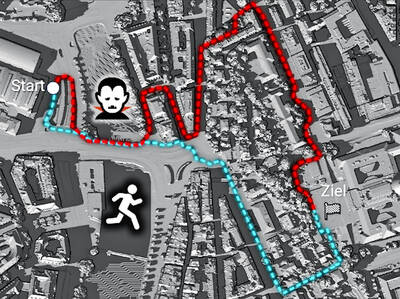
As climate change and urbanization push city temperatures higher, walking outdoors is becoming increasingly uncomfortable in many parts of the world, especially when prolonged time spent in sunlight is involved. As a result, outdoor lovers are now seeking cooler, shaded walking routes. However, most mainstream map apps still do not __1__ shaded footpaths. Enter routing.osm.ch — a Swiss web-based route planner that introduces a novel solution to this problem. Its “Vampire mode,” named after the legendary creatures’ fear of being __2__ natural light, was developed by a Swiss research team led by Professor Stefan Keller. The platform combines open data from


 RSS
RSS